Debate Over Abolishing the Prosecutors' Office Sparks Constitutional Controversy: 'Constitutional Institution' vs. 'Legislative Discretion'
- Input
- 2025-09-29 15:10:06
- Updated
- 2025-09-29 15:10:06
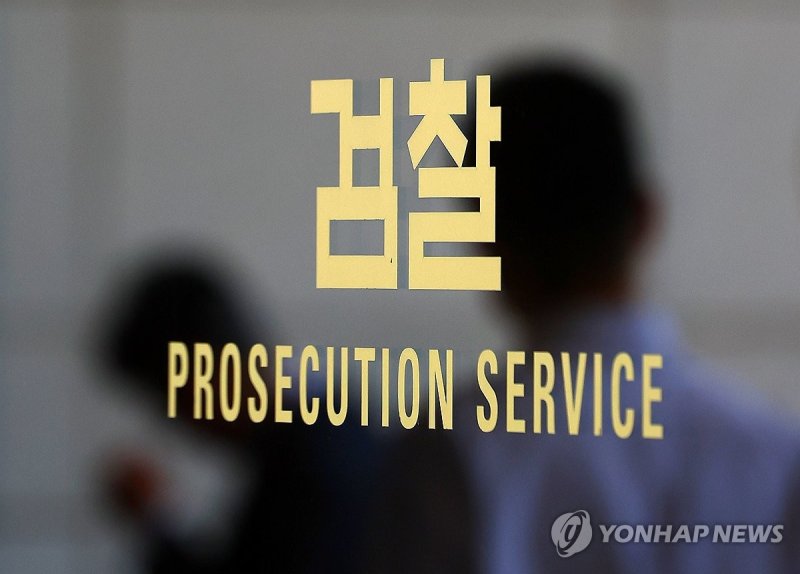
[Financial News] The proposed amendment to the Government Organization Act, which includes the abolition of the Prosecutors' Office, has ignited a full-scale constitutional debate. The Prosecutors' Alumni Association, a group of former prosecutors, has announced its intention to file a constitutional complaint. The main issues center on how to interpret the constitutional provisions regarding the appointment of the Prosecutor General of South Korea and the authority of prosecutors to request warrants.
According to the legal community on the 29th, the Prosecutors' Alumni Association raised concerns about the constitutional right of prosecutors to request warrants under Articles 12 and 16, and the appointment of the Prosecutor General of South Korea under Article 89. They argue that abolishing the Prosecutors' Office, a constitutionally established institution, by statute undermines the separation of powers and is therefore unconstitutional.
Under the proposed amendment, the 'Prosecutors' Office' would be renamed the 'Public Prosecution Office,' and 'prosecutors' would become 'prosecution affairs.' In a follow-up bill, Kim Yong-min, a lawmaker from the Democratic Party of Korea (DPK), proposed that the head of the Public Prosecution Office be designated as the Chief Prosecutor. The ruling party claims this will resolve constitutional concerns, but many in the legal field believe significant issues remain.
The most contentious point is whether the Prosecutors' Office is a constitutional institution. Article 89 of the Constitution stipulates that the President of South Korea appoints the Prosecutor General of South Korea following deliberation by the State Council of the Republic of Korea. However, the revised Government Organization Act would abolish the Prosecutors' Office and establish the Public Prosecution Office, with the new law specifying that the Chief Prosecutor of the Public Prosecution Office would serve as the Prosecutor General of South Korea. Notably, the new law does not mention deliberation by the State Council of the Republic of Korea for appointing the Chief Prosecutor.
While the ruling party insists this is merely a change in terminology, many legal experts argue that such an approach could violate the Constitution. Jang Young-soo, a professor at Korea University (KU) Law School, noted in a paper that changing a constitutionally mandated title by statute, without amending the Constitution, could create significant legal confusion and potentially serious problems.
In Kim Yong-min’s bill, the Chief Prosecutor of the Public Prosecution Office is defined as vice-ministerial level, whereas the Prosecutor General of South Korea holds ministerial rank, which has also sparked controversy. Yang Hong-seok, an attorney at Igong Law Firm, explained, “If the law equates positions that are distinct under the Constitution, it creates constitutional problems. If the bill passes as is, it could trigger further constitutional disputes.”
Another key issue is how to interpret the constitutionally guaranteed authority of prosecutors to request warrants. Articles 12 and 16 of the Constitution require a prosecutor’s request for compulsory measures such as arrest or detention. The question is whether the term 'prosecutor' must refer exclusively to those affiliated with the Prosecutors' Office.
The Constitutional Court of Korea has previously issued similar rulings in two cases. In a 2023 dispute over investigative authority, the majority opinion stated, “Investigation and prosecution are fundamentally administrative functions under the Constitution and are not exclusively assigned to any particular state institution.” In a 2021 constitutional complaint regarding the Corruption Investigation Office for High-ranking Officials (CIO), the court also found that the constitutional authority to request warrants is not limited to prosecutors under the Prosecutors' Office Act, leaving open the possibility that prosecutors of the Public Prosecution Office could be included.
However, both cases saw significant dissent. In the 2023 dispute, former Justice Lee Seon-ae and others argued that reducing prosecutors’ investigative and prosecutorial powers through the reallocation of authority infringed upon the Ministry of Justice (MOJ). Regarding the CIO Act, some justices contended that granting investigative and prosecutorial powers to an institution not under the executive branch violated Article 66, Paragraph 4 of the Constitution.
It remains uncertain whether the Constitutional Court of Korea will proceed to a substantive judgment. For a constitutional complaint to proceed, the complainant must demonstrate an infringement of fundamental rights. Since former prosecutors may lack standing, the case could be dismissed. Many legal experts believe it would be more appropriate for current prosecutors or the Prosecutor General of South Korea to file a competence dispute against the National Assembly for abuse of legislative power. However, even in such cases, it is expected to be difficult to prove exactly which 'authority' has been infringed.
[email protected] Choi Eun-sol Reporter