[Report] "60km/h Downhill, Autonomous Driving Uphill"... A Visit to 9.81 Park Jeju
- Input
- 2025-09-28 14:28:31
- Updated
- 2025-09-28 14:28:31
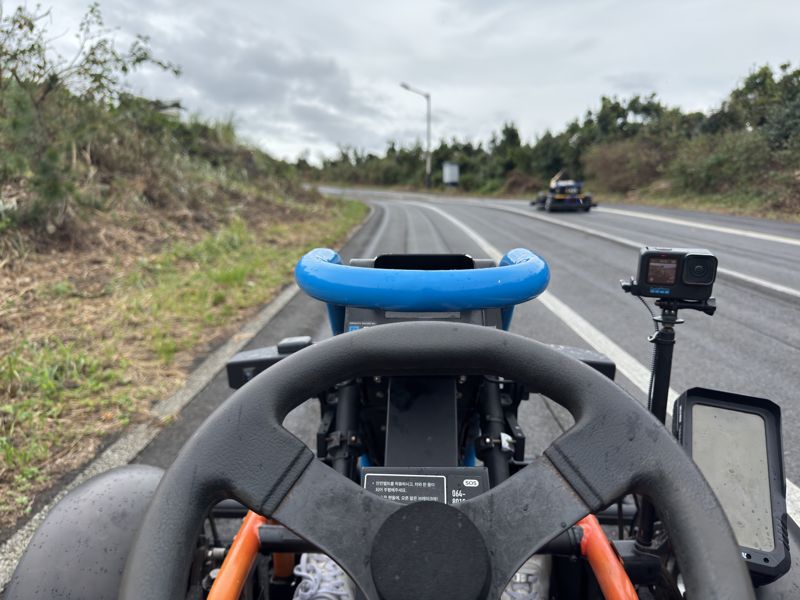
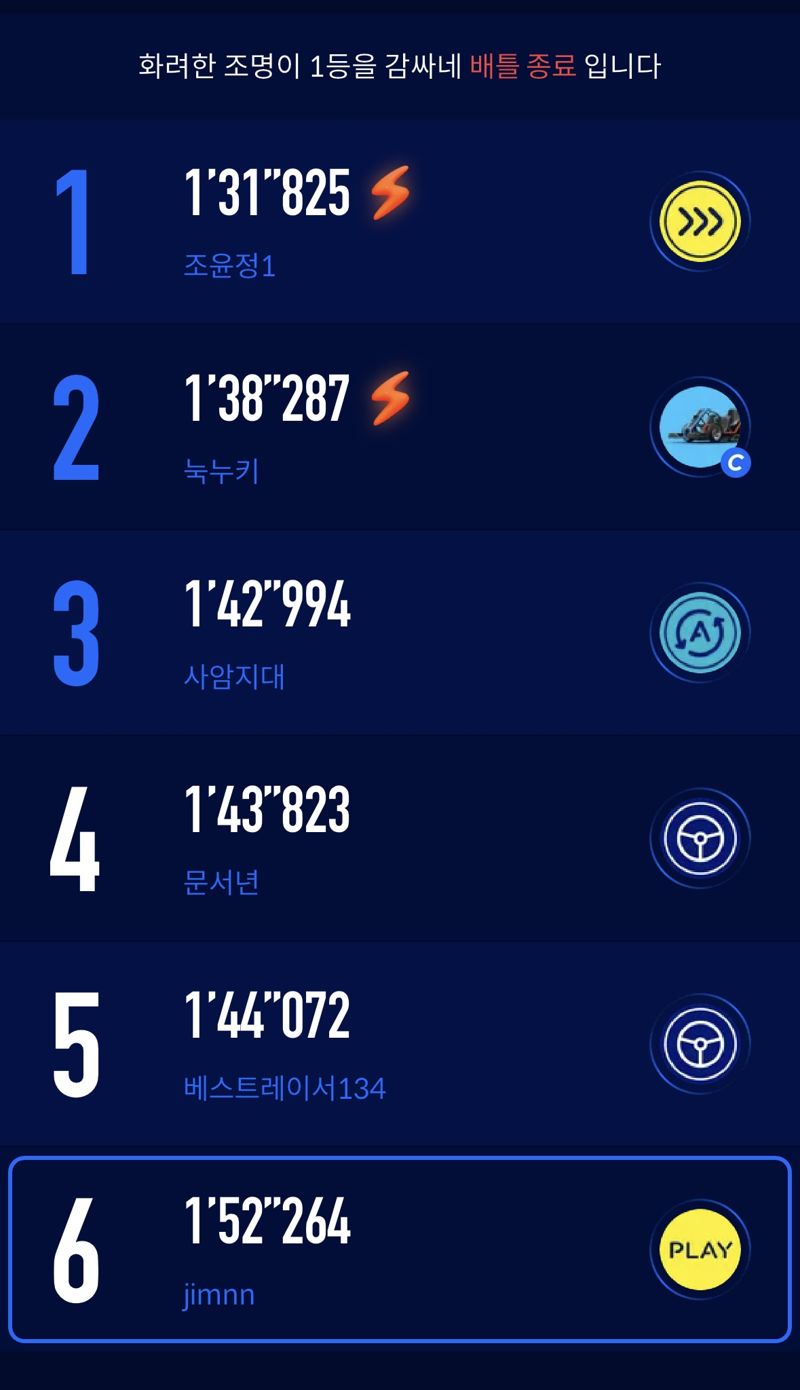
As the speed approached the maximum (40km/h), a warning sound rang out from the vehicle. However, my heart raced even faster. Wanting to claim first place, I charged through the curves without hesitation, never touching the brakes. My record for the first drive to earn a beginner license was 1 minute and 52 seconds—dead last.
After crossing the finish line, the vehicle slowed down on its own. Then, the Internet of Things (IoT) system, connected to the control center, switched the vehicle into autonomous mode. Without pressing the brakes, the car returned to the starting point automatically at an average speed of 12km/h. Meanwhile, the 9.81 Park app displayed my record and ranking in real time, and I could even watch a video of my run. It truly felt like becoming an avatar in a game.
The 9.81 Park Jeju I visited on the 26th was unlike traditional racing venues. Once the chip in your admission ticket is scanned, the app, vehicles, and control center are all interconnected. Driving data is collected via Global Positioning System (GPS) and sensors, and communicated to the Cloud Server in real time. Every action, from turning the steering wheel to pressing the brakes, is recorded as data. Even the booster, which activates when you shout, is made possible by this ICT integration.
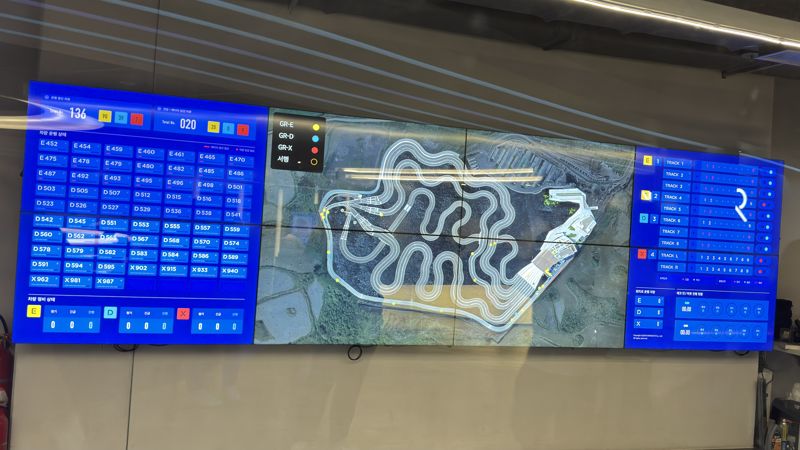
The control center simultaneously monitors the condition of over 1,000 vehicles. The entire track is visible at a glance on the electronic display, with each vehicle’s position and speed shown. After each run, the video is edited and sent to the app. Visitors’ comments that it feels like stepping into a game world are no exaggeration.
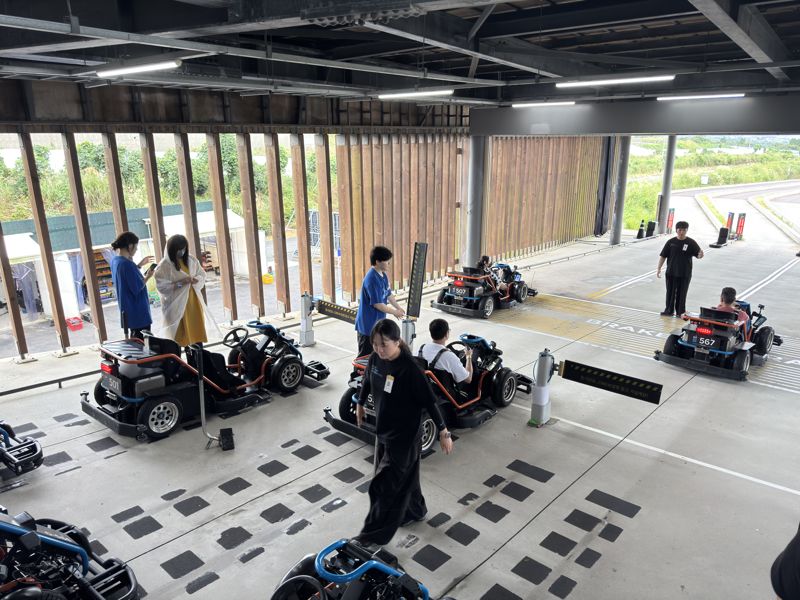
The main vehicles are divided into: GR-E (single-seater), GR-D (two-seater), and GR-X (for experts). The GR-E and GR-D vehicles have a maximum speed of around 40km/h. The GR-X, with a top speed of 60km/h, can only be driven by those who achieve a lap time under 1 minute 27 seconds and reach at least 39km/h on course E/2, earning a master license.
There are clear differences from traditional luge and other experience parks. Each participant drives on an individual course, minimizing collision risks, and the low center of gravity reduces the chance of rollovers. Helmets are not required. Most notably, after each run, the vehicle climbs the hill on its own, ensuring a seamless experience.
9.81 Park Jeju offers more than just racing. Indoor survival game zones such as ARENA and PRO ARENA feature laser shooting games. The Sports Lab provides experiences like basketball, soccer, and ski jumping, while Ringo Bumper Car and Cubeverse offer team-based competitive content. Thanks to a collaboration with Pokemon, the park is currently filled with popular Pokemon intellectual property.
Although 9.81 Park Jeju opened during the COVID-19 pandemic in 2020, it has established itself as a leading tourist destination in Jeju, attracting over 500,000 visitors annually. In 2021, it received the Korea Tourism Star Special Award, and in 2023, it was named a Korea Unique Venue. Appearances on variety shows such as I Live Alone and More Salty Tour have also boosted its public recognition.
Notably, in August this year, monthly sales reached 2.21 billion KRW, up 14.6% from the previous year and 20.3% from the previous month. This far outpaces the 4.7% increase in Jeju’s visitor numbers during the same period. Analysts attribute the sales growth to content collaborations with Pokemon and the success of the film F1: The Movie.
The operator of 9.81 Park Jeju, Monolith, recently merged with auto parts manufacturer Daesung Fine Tech. Co., Ltd. In addition, the company is preparing supercapacitor technology as a new growth engine. This next-generation energy device, which boasts more than four times the energy density and lower discharge rates compared to conventional batteries, is planned for use in the hybrid system of future GR Karts.
A second park is currently under construction near Incheon International Airport, with an opening targeted for early 2027. Expansion plans are also underway for Zhejiang Province in China and the Costa Valley Tourism and Resort District in Pohang, aiming to establish a global K-theme park presence.
[email protected] Shin Ji-min Reporter