While Chinese Companies Grow 95% Over 10 Years, Korean Companies Grow 15%.. Growth Content Also Lags
- Input
- 2025-09-23 16:01:44
- Updated
- 2025-09-23 16:01:44
KCCI, Analysis of Changes in Global Top 2000 Companies
Chinese Companies Grow 6.3 Times Faster Than Korean
Global Top 2000 Growth Companies Also
China, Diverse in Energy, Manufacturing, IT, etc.
Korea, Mainly Growing in Financial Sector
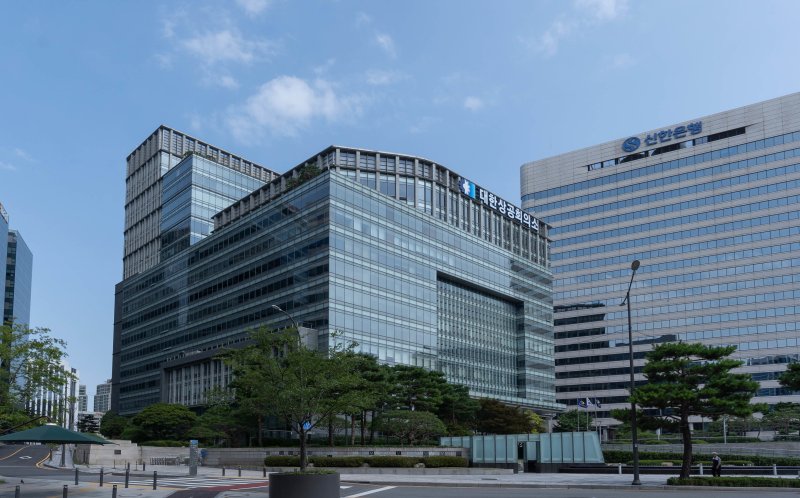
[Financial News] An examination of the growth trends of the global top 2000 companies over the past 10 years revealed that the growth rate of Chinese companies was more than six times faster than that of Korean companies. This means that Chinese companies have grown rapidly with many new entries. In terms of qualitative growth, China entered the global top 2000 companies in various industries including Alibaba, Xiaomi, energy, manufacturing, and information technology (IT), recording significant growth, while Korea mainly led growth in the financial sector with companies like KakaoBank and Kiwoom Securities. The economic community pointed out that the current corporate ecosystem, where regulations increase as companies grow, needs to change, given that Korean companies are lagging behind Chinese companies in this growth phase.
■Korean Companies' Growth Speed and Content, Both Lag Behind China
According to the 'Three Kingdoms of Korea, US, and China Corporations as Seen Through Changes in Global Top 2000 Companies' report, analyzed and published by the Korea Chamber of Commerce and Industry using statistics from the American economic magazine Forbes, the number of US companies in the global top 2000 increased by 6.5% from 575 in 2015 to 612 this year. During the same period, Chinese companies surged by 52.7% from 180 to 275, while Korean companies decreased by 6.1% from 66 to 62. In addition to the growth speed, Korean companies were also insufficient in terms of growth content compared to US and Chinese companies.
The combined sales of Korean companies in the global top 2000 amounted to only a 15% growth from 1.5 trillion dollars to 1.7 trillion dollars over the past 10 years.
However, the US grew by 63% from 11.9 trillion dollars to 19.5 trillion dollars, and China saw a rapid growth of 95% from 4 trillion dollars to 7.8 trillion dollars.
The Korea Chamber of Commerce and Industry diagnosed that China's corporate ecosystem has produced 'emerging powerhouses' to strengthen its position, while the US has grown through rapid transformation using advanced IT such as artificial intelligence (AI).
In fact, the US was led by growth in advanced industries and healthcare companies like Nvidia, UnitedHealth, and Microsoft, with new fields of companies like Tesla, which focused on electric vehicles, and Uber, a ride-sharing company, entering the market and growing the US corporate ecosystem.
Over the past 10 years, Nvidia's sales growth rate was 2787%, UnitedHealth's was 315%, Microsoft's was 281%, and CVS Health's was 267%.
In the case of China, Alibaba (e-commerce) grew by 1188%, BYD (electric vehicles) by 1098%, and Tencent Holdings (online media and games) by 671%, with advanced technology and IT companies mainly leading the growth.
Additionally, companies in various industries including PowerChina (energy), Xiaomi (electronics), and DiDi Global (ride-sharing) entered the global top 2000 companies.
In Korea, SK Hynix grew by 215%, and KB Financial Group and Hana Financial Group grew by 162% and 106% respectively, leading growth in manufacturing and finance, but newly listed companies in the global top 2000 were mainly financial companies (Samsung Securities, KakaoBank, Kiwoom Securities, iM Financial Group, Mirae Asset Financial Group, etc.).
■The Reality of More Regulations as Growth Occurs, Strategy Needs Change
Emphasizing the sense of crisis in this situation, the Korea Chamber of Commerce and Industry criticized the current Korean corporate ecosystem as a regressive structure where 'support' decreases and 'regulation' increases as companies grow. It pointed out that there are few incentives for companies to take risks and pursue growth.
According to a study by Professor Kim Young-joo of Pusan National University on 12 major laws including the Commercial Act and the Fair Trade Act, regulations increase to 94 when a small business becomes a medium-sized company, and to 343 when a medium-sized company becomes a large company or a conglomerate with mutual investment restrictions. The Korea Chamber of Commerce and Industry suggested that the focus should be on rewarding rather than regulating growing companies, and growth policies should shift from 'by size → by industry' strategies.
Lee Jong-myeong, head of the Industrial Innovation Division at the Korea Chamber of Commerce and Industry, said, "The proportion of small businesses becoming medium-sized in a year is about 0.04%, and the proportion of medium-sized businesses becoming large companies is about 1-2%." He added, "It's time to change the policy paradigm so that scary new companies in various industries can be quickly produced like in the US or China." [email protected] Kim Hak-jae, Cho Eun-hyo reporters