Supreme Court: 'Performance Bonuses Are Not Regular Wages... Minimum Payment Standard is the 'Target Period''
- Input
- 2025-09-22 15:37:48
- Updated
- 2025-09-22 15:37:48
"General performance bonuses are not included in regular wages"... Legal principle reaffirmed
Minimum payment standard based on 'target period' rather than 'current year'
Minimum payment standard based on 'target period' rather than 'current year'
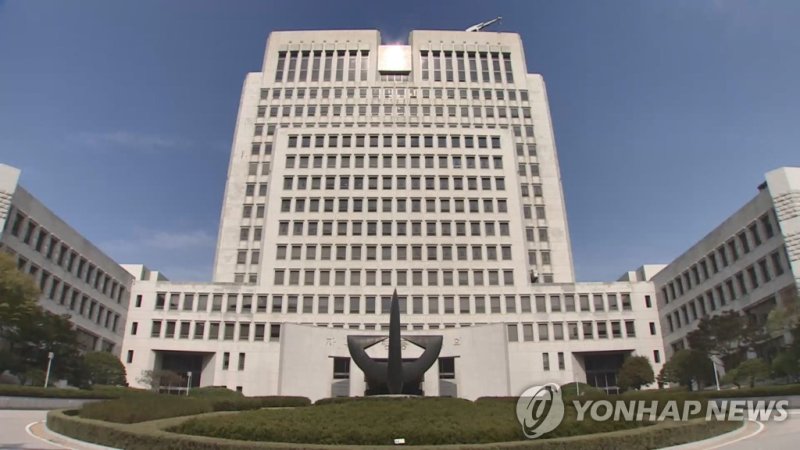
[Financial News] The Supreme Court reaffirmed the legal principle that performance bonuses paid according to the previous year's performance do not qualify as regular wages. Additionally, it introduced a new legal principle that the minimum payment of performance bonuses should be judged based on the target period, not the payment date.
According to the legal community on the 22nd, the Supreme Court's 3rd Division (Presiding Judge Lee Heung-gu) overturned the lower court's ruling, which partially ruled in favor of the plaintiffs, and sent the case back to the Seoul High Court in a wage lawsuit filed by Mr. A and 35 others against the Korean Red Cross.
Employees of the Korean Red Cross, including Mr. A, filed a lawsuit claiming that year-end bonuses, performance evaluation bonuses, transportation subsidies, and treatment improvement expenses qualify as regular wages, and demanded the payment of recalculated wage differences and increased severance pay. Regular wages are defined as payments agreed to be given to workers as compensation for predetermined labor, and serve as the basis for calculating overtime, night, holiday allowances, and severance pay.
The first and second trials had judged that performance evaluation bonuses were regular wages, but year-end bonuses were not, due to a lack of fixedness.
However, the Supreme Court overturned this decision based on the precedent changed by the full bench in December last year, stating that "year-end bonuses qualify as regular wages agreed to be paid regularly and uniformly as compensation for predetermined labor, regardless of the condition of the number of salary payment days (working days)."
At that time, the full bench had changed the precedent for the first time in 11 years, stating that "if a worker fully provides predetermined labor, the wage agreed to be paid regularly and uniformly as compensation qualifies as regular wages, regardless of the presence or achievement of conditions."
The Supreme Court ruled that "even if a performance bonus paid according to the previous year's work performance is paid in the current year, if only the payment timing is set to the current year, the performance bonus qualifies as the previous year's wage."
When judging the 'minimum payment' of performance bonuses, it introduced a new legal principle that the target period, not the payment timing, should be the basis. The full bench had previously stated that "performance bonuses generally do not qualify as compensation for predetermined labor and thus do not qualify as regular wages," but acknowledged that the minimum payment unrelated to work performance qualifies as compensation for predetermined labor. Only the minimum payment of the performance bonus was recognized as having the nature of regular wages.
The Supreme Court stated, "When viewed based on the previous year, which is the target period, it is difficult to conclude that there was a minimum payment agreed to be paid regardless of work performance, as long as predetermined labor was fully provided." It also cited the lack of a minimum payment rate or amount for performance evaluation bonuses in the Korean Red Cross's salary operation regulations and the change in the performance evaluation bonus rate as grounds.
A Supreme Court official explained, "This case is a follow-up ruling to the full bench case last December that excluded fixedness from the conceptual indicator of regular wages," adding, "It is significant in that it established a new legal principle regarding the determination of the nature of performance bonuses as regular wages according to the changed legal principle."
[email protected] Seo Min-ji Reporter