Discovery of Separate Charges During Search and Seizure... Supreme Court "Evidence Not Admissible"
- Input
- 2025-09-19 11:32:51
- Updated
- 2025-09-19 11:32:51
Indiscriminate Acquisition of All Information from Mobile Phones
Conviction in First and Second Trials for Separate Charges... Overturned by Supreme Court
Conviction in First and Second Trials for Separate Charges... Overturned by Supreme Court
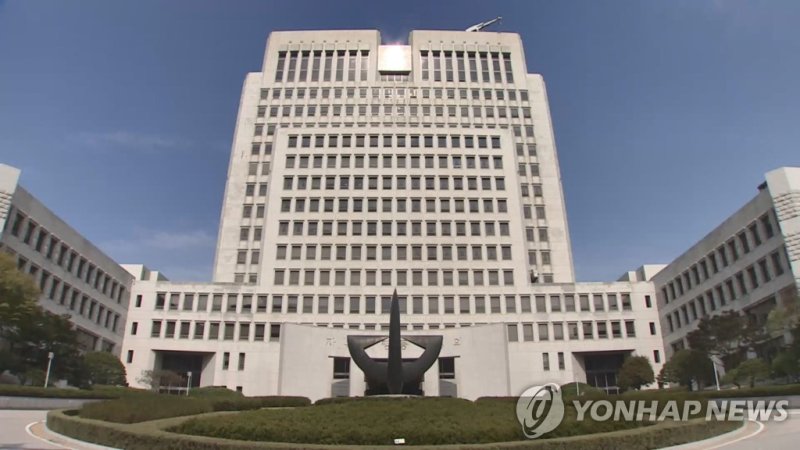
[Financial News] The Supreme Court has ruled that indiscriminately acquiring all information from a mobile phone during a search and seizure, and then proceeding with a separate investigation and indictment based on this, is illegal.
According to the legal community on the 19th, the Supreme Court's 3rd Division (Chief Justice Oh Seok-jun) overturned the original sentence of 8 months in prison with a 1-year suspended sentence for Mr. A, who was indicted on charges including leaking official secrets and abuse of authority, and sent the case back to the Seoul High Court.
Mr. A, a former military legal officer and reserve lieutenant colonel, was brought to trial on charges of delivering documents containing job-related secrets to prosecutors and lawyers from June to August 2018. It was investigated that he committed the crime to secure employment at a large law firm after discharge.
The issue in the case was whether a separate indictment could be made based on evidence obtained through indiscriminate search and seizure.
This case came to light during an investigation by the Ministry of National Defense's Special Investigation Team into the conspiracy case within the Defense Security Command, when Mr. A's mobile phone, who was a reference, was seized and analyzed.
The special investigation team copied Mr. A's mobile phone and extracted all information, delivering it in Excel file format to the military prosecutor. The military prosecutor, while analyzing this information, detected a suspicion of leaking military secrets and brought Mr. A to trial.
The first and second military courts recognized the admissibility of the evidence and sentenced Mr. A to a suspended prison sentence for some charges.
However, the Supreme Court overturned the decision, stating that the search and seizure were conducted illegally, violating the principle of warrant and due process.
The Supreme Court pointed out, "Mobile phones contain vast amounts of personal information, and the degree of infringement on basic rights due to unlimited search and seizure of electronic information on mobile phones can be significant," adding that "from the initial stage of search and seizure, measures should have been taken to limit the search and extraction targets to the scope related to the crime facts stated in the search warrant."
Furthermore, "The act of transforming and storing all electronic information recorded on storage media into Excel file format by investigative agencies, unless there are special circumstances, is likely to be considered as 'printing or copying electronic information arbitrarily stored without distinguishing its relevance to the alleged facts,'" it elaborated.
It continued, "The electronic information in this case was collected in violation of the warrant principle, and the violation of the seizure procedure does not fall under the exceptions that can recognize the exclusionary rule of illegally collected evidence," and thus the evidence was deemed inadmissible.
[email protected] Minji Seo Reporter