[fn Editorial] US Auto Tariff Reversal for Korea and Japan, Breakthrough with New Market Development
- Input
- 2025-09-16 18:39:17
- Updated
- 2025-09-16 18:39:17
Korea 25% Japan 15%, Export Impact Unavoidable
Need to Penetrate Alternative Markets like Southeast Asia and Europe
Need to Penetrate Alternative Markets like Southeast Asia and Europe
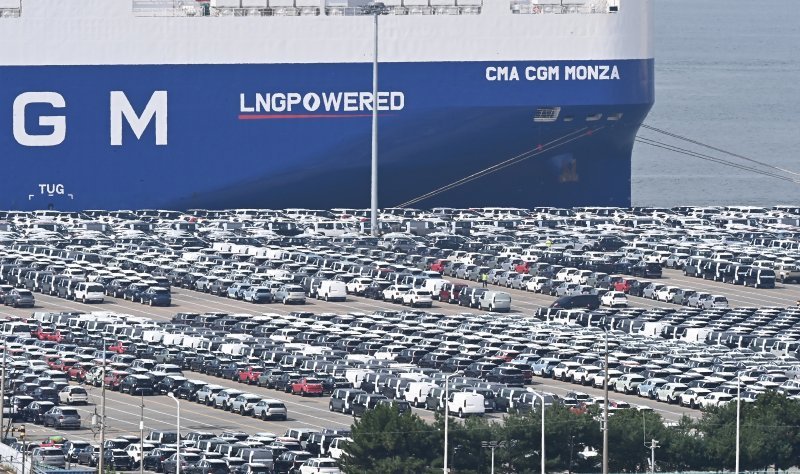
The tariff on Japanese cars imported by the US has been lowered by 10%p compared to Korean cars starting from the 16th (local time). The US government announced through the Federal Register that a 15% tariff will be applied to Japanese cars and auto parts. The previous tariff was 27.5%.
With the significantly lowered tariff on Japanese cars, Korean cars are now facing a tough battle. The tariff on Korean cars and auto parts is 25%. Previously, Korea had a 2.5%p advantage over Japan, but the situation changed overnight. Korean car exports will be severely impacted. It is an emergency for car companies. The government and companies must find a solution together.
The proportion of cars in Korean exports is enormous. Cars account for 35% of total exports. While semiconductor exports have plummeted due to the global recession, cars have offset this, maintaining Korean exports.
The market share in the US was overwhelmingly high. More than half of the cars exported last year went to the US. The tariff discrimination by the Trump administration inevitably affects our overall exports. Since the 25% tariff was imposed in April, exports to the US have continued to decline, adding insult to injury.
According to the government's August automotive industry trends announced that day, car exports to the US last month plummeted by 15%. Although it seemed to hold up with a 4% decrease in July, it returned to the level of a 16% drop in June. Earlier, exports plummeted by 19% in April and 27% in May, causing a major shock. The situation could worsen after the Korea-Japan tariff reversal began this month.
Until March this year, Korean cars benefited from the tariff-free advantage under the Korea-US Free Trade Agreement (FTA). They had a price advantage over Japanese cars, which were subject to a basic tariff of 2.5%. However, due to the price reversal, the damage to the hybrid car (HEV) market, which has recently been increasing in sales of high-profit models, could be particularly significant. The share of Japanese cars in the US HEV market is already over half. The gap with Korean cars could widen further.
The auto tariff issue must be resolved through agreement within the broader framework of US trade negotiations. However, we cannot accept all US demands like Japan did just because it's urgent. Japan promised a $550 billion investment in the US, signing a condition where the US takes 90% of the investment profits. The investment must be made during President Trump's term, and if Trump designates an investment destination, funds must be provided within 45 days.
If this is not implemented, the US could raise tariffs, which is an unreasonable condition entirely favorable to the US. The US demands that Korea's promised $350 billion investment follow Japan's method. Korea's foreign exchange reserves are about $416 billion. Handing over more than 80% of this amount to the US as a blank check is unreasonable.
Despite the difficult negotiations, the government must mobilize all diplomatic efforts. While prioritizing national interests, it must also exercise appropriate flexibility. The damage to companies must be minimized. In short, a clever negotiation strategy is needed. We must actively explore alternative markets in preparation for a prolonged situation.
The fortunate thing is that despite the decline in exports to the US, overall car exports have increased for three consecutive months. Last month's car exports recorded an all-time high, thanks to strong performance in the European Union (EU), Asia, and Middle Eastern markets. New market development must continue to prepare for unexpected situations.