[fn Editorial] Government must actively intervene to maintain the golden time for petrochemical restructuring
- Input
- 2025-09-14 18:08:22
- Updated
- 2025-09-14 18:08:22
Business restructuring self-agreement stagnates for a month
Consider incentives to boost negotiation vitality
Consider incentives to boost negotiation vitality
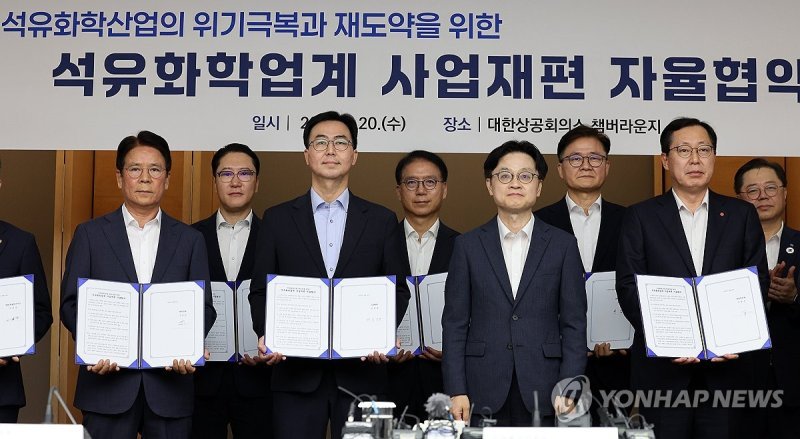
This situation was predictable. The government presented the principle of self-effort first, support later as a guideline for restructuring the petrochemical industry. This is based on the judgment that for restructuring in the private industrial sector, the industry must show efforts to cut their own bones, and then the government should support them. While the government's intention is fully understandable, reality is different. If the government announces follow-up support measures after observing the company's self-efforts, private companies will not readily present painful restructuring plans. If asset sales or plant closures damage corporate value, there is a possibility of breach of trust. It is a reality that companies cannot rashly make decisions that may harm shareholder value.
Moreover, if left entirely to the judgment of private companies, the typical 'prisoner's dilemma' phenomenon will inevitably occur. The psychology of seeking the reflexive benefits gained if a competitor first undertakes restructuring will operate strongly. Instead of proactive restructuring, everyone will consistently engage in a waiting game, waiting for 'someone else to go first.'
The government and companies must remember the essence and goal of this petrochemical restructuring. To survive the domestic petrochemical industry, which has been hit directly by oversupply from China and the Middle East, it is essential to strengthen competitiveness through economies of scale and efficient facility operation. However, it should not end in leveling down by extending the lifespan of uncompetitive industries. Instead, the focus should be on leveling up to elevate the competitiveness of our country's petrochemical industry to a global level through this restructuring effort.
Restructuring in the petrochemical industry is not a matter of choice but a matter of survival. It is not something that will naturally resolve itself by delaying time. Rather, as time is delayed, market encroachment from China and the Middle East becomes more severe, only reducing the standing of our companies.
The government should not stand by and watch the petrochemical restructuring, which is spinning like a squirrel in a wheel. The consolidation of a giant industry is by no means an easy task. Therefore, the government must step out of the role of a bystander and become an active mediator. Merely reducing tax burdens and applying exceptions to the Fair Trade Act, as requested by the industry, will not smoothly continue the consolidation work. A more predictable and systematic consolidation process must be presented to the industry. In this program, it is necessary to consider measures that provide extraordinary benefits to companies that actively participate in voluntary restructuring and disadvantages to passive companies. The government must play the role of a catalyst to inject vitality into negotiations between companies stuck in a stalemate.