What's the use of the 'K-Demon Hunter' craze... No K-goods to sell
- Input
- 2025-09-14 10:11:27
- Updated
- 2025-09-14 10:11:27
Starbucks 'Hojakdo' goods, sales increased by 20% year-on-year
Daiso 'Traditional Series', showcasing white porcelain miniatures priced between 1,000 and 5,000 won
National Museum of Korea goods shop 'Muze', daily sold out due to supply shortage
Experts say, "To avoid being a fleeting trend, national-level activation is needed"
Daiso 'Traditional Series', showcasing white porcelain miniatures priced between 1,000 and 5,000 won
National Museum of Korea goods shop 'Muze', daily sold out due to supply shortage
Experts say, "To avoid being a fleeting trend, national-level activation is needed"
[Financial News] Recently, as the traditional Korean culture craze continues, driven by the success of the Netflix original movie 'K-Pop Demon Hunters', there are criticisms that the supply infrastructure is insufficient to meet the rapidly increasing demand. Although products incorporating traditional elements are emerging in the distribution industry, there are structural limitations to expanding supply for artisans with authenticity and expertise without national support.
According to Netflix on the 14th, the movie 'K-Pop Demon Hunters', released in June, has accumulated 291.5 million views as of the 12th, maintaining its position as the number one Netflix movie of all time. Despite being released about three months ago, viewers continue to stream it steadily. Particularly, as traditional Korean cultural elements are emphasized in the costumes, props, and stage production of the main characters, traditional goods and cultural experiences are also gaining attention.
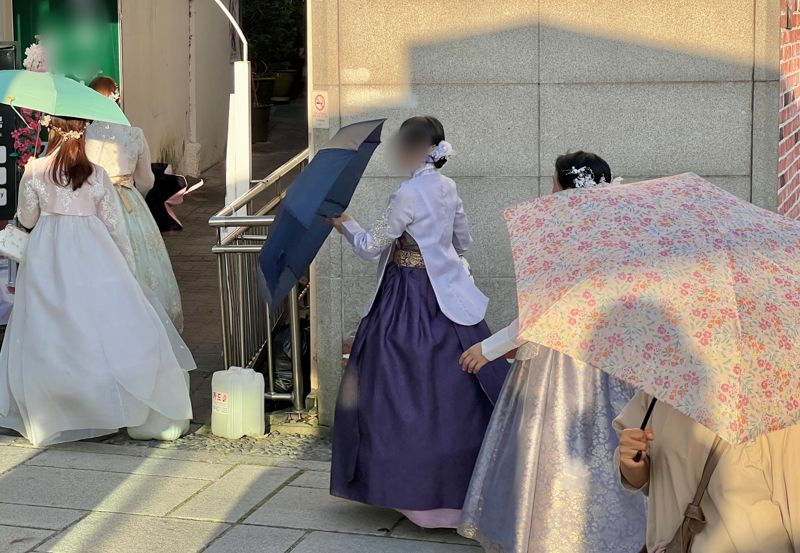
As a result, the National Museum of Korea has renewed its record for the highest annual number of visitors. According to the National Museum of Korea, from January 1 to August 25 this year, the number of visitors was approximately 4.19 million, and it is expected to exceed 5 million by the end of the year. Major tourist attractions such as Gyeongbokgung Palace are also attracting foreign tourists in hanbok, becoming 'photo spots'.
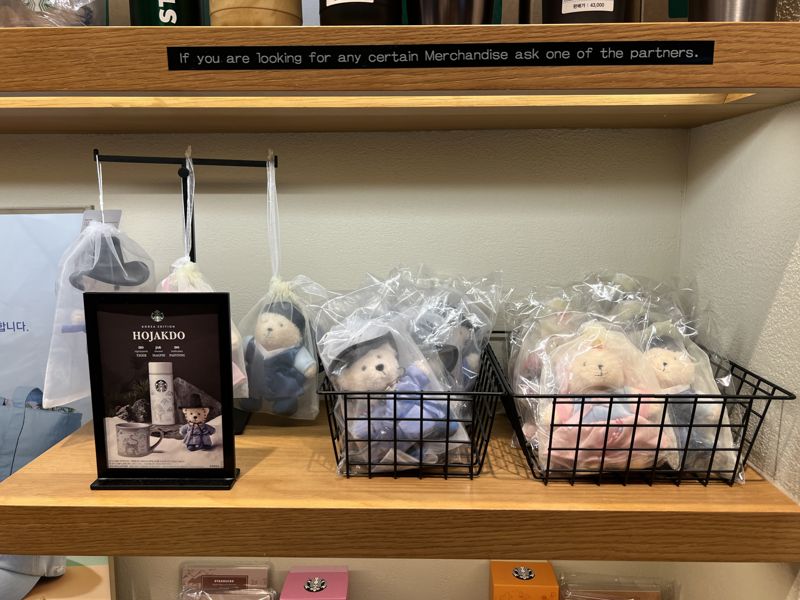
The distribution industry is also quickly responding to this trend by activating products that incorporate traditional elements. Starbucks launched three products (mug, tumbler, keychain) in June last year, reinterpreting the traditional folk painting 'Hojakdo', which has a traditionally auspicious meaning, in a modern way. It was revealed that this painting was the model for the tiger (Duffy) and magpie (Suzy) in K-Pop Demon Hunters, leading to a 20% increase in sales in July and August this year compared to the previous year. As a result, the 'Hanbok Bearista Keychain' 2 types, which were introduced as specialized goods at the Gwangjang Market store this year, were expanded to 100 stores nationwide from August.
Daiso will launch the 'Traditional Series' on the 15th with the slogan "Tradition, Reborn". It will showcase drawers, notebooks, and white porcelain miniatures inspired by mother-of-pearl and traditional patterns, priced between 1,000 and 5,000 won.
Experts say that national-level support measures are needed for the traditional culture craze to lead to long-term activation rather than being a 'flash trend'.
Professor Lee Eunhee of Inha University's Department of Consumer Science said, "For the unexpected traditional culture craze to be sustainable, local governments and related ministries need to devise strategies to upgrade related experiences," adding, "Currently, the National Museum of Korea goods shop is facing issues with limited space and insufficient stock compared to the demand, so there is a need to expand the infrastructure."
Currently, the goods sold at the National Museum of Korea, selected through public recruitment, are in a situation where it is difficult to increase supply due to structural limitations.
A representative from the National Museum of Korea Cultural Foundation, which is responsible for operating 'Muze', said, "For the official goods of the National Museum of Korea, we adhere to domestic manufacturing to ensure quality, but since most suppliers are small businesses such as one-person companies, it is difficult to flexibly expand supply without support measures for small businesses," adding, "Both online and offline shops cannot keep up with demand, so most popular items are 'sold out', and even the items on sale take more than two weeks to deliver."
localplace@fnnews.com Kim Hyunji Reporter