[fn Editorial] Goliath Sit-in After 4 Years Triggered by Yellow Envelope Act
- Input
- 2025-09-11 19:36:16
- Updated
- 2025-09-11 19:36:16
HD Hyundai Heavy Industries Union Begins High-altitude Sit-in
'Yellow Envelope Act' Fuels Strike Plans
'Yellow Envelope Act' Fuels Strike Plans
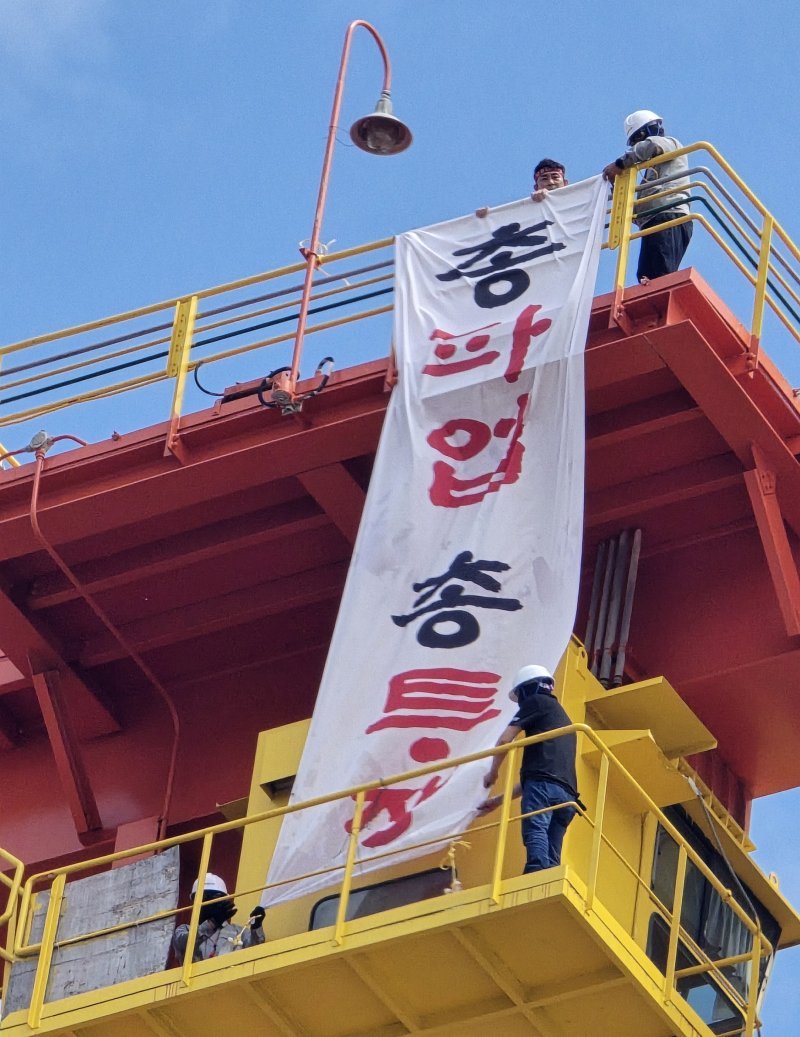
Dangerous scenes reappeared on site. About 30 Hyundai Heavy Industries union members climbed to the top of a 40m high turnover crane inside the shipyard, staging a high-altitude sit-in and demanding the company accept their demands. The turnover crane is equipment used to flip ship structures. This so-called 'Goliath sit-in' is the first in 4 years and 2 months.
The union blocked the company's access by densely parking hundreds of motorcycles in the space leading to the crane. The escalating intensity of the union's struggle is not unrelated to the Yellow Envelope Act passed by the National Assembly. The Yellow Envelope Act strictly limits companies' claims for damages caused by strikes. It means they don't have to worry much about the cost even if they damage equipment or cause property loss.
The Yellow Envelope Act's allowance for subcontractor unions to demand negotiations with the primary contractor also fuels the union's fervor for struggle. Previously, the non-regular workers' union of Hyundai Steel demanded direct negotiations and filed a complaint with the prosecution against Chung Eui-sun, chairman of Hyundai Motor Group, and the management. Similar incidents are reportedly occurring at various workplaces. Companies' concerns have already become a reality.
The shipbuilding industry is attempting a new leap forward after a long recession. There are concerns that the successive strikes may pour cold water on the recovering shipbuilding market. Strikes will also negatively impact the credibility of the Korean shipbuilding industry. The order backlog of Hyundai Heavy Industries' three shipbuilding companies is 76.1 billion dollars (about 105 trillion won), which is more than three years' worth of work. If the strike is prolonged, it will be impossible to meet delivery deadlines. Failing to meet deadlines means paying a penalty of 10% of the contract amount. It is only natural that they will be at a disadvantage in future bidding wars.
The 'MASGA (Make American Shipbuilding Great Again)' project, which played a significant role in the US tariff negotiations and emerged as a new driving force for the shipbuilding industry, will also become unstable. The US Navy may feel considerable burden in entrusting Korean shipyards with the construction, operation, and maintenance (MRO) of warships. Labor-management coexistence is that important for the company's future and national growth.
Empowered by the Yellow Envelope Act, the labor sector is planning a series of strikes. The financial union has declared a general strike on the 26th, and the Kia union is also taking a hard stance. Unions are intervening in almost all management activities, from wage increases to decisions on mergers and the establishment of overseas subsidiaries. Extending retirement age to 65 and a 4.5-day workweek are common demands in this autumn struggle.
As the union makes unreasonable demands that the company cannot possibly accept, resolution becomes difficult and the period of dispute lengthens. Despite concerns that extending retirement age and a 4.5-day workweek will exacerbate youth unemployment, the union remains indifferent. The feared events are actually unfolding. To escape the tunnel of low growth, the union must relinquish vested interests and seek coexistence.