"Constitutional Amendment Vote During Next Year's Local Elections and 2028 General Elections"... Unclear Formation of Constitutional Amendment Special Committee Due to Opposition's Distrust [100 Days Since Lee Government's Inception]
- Input
- 2025-09-10 18:27:06
- Updated
- 2025-09-10 18:27:06
The first national policy of the Lee government is 'constitutional amendment'
Proposals include a four-year presidential term and restructuring of power
Speaker Woo proposes a two-step constitutional amendment
The Moon government also attempted constitutional amendments but failed
Proposals include a four-year presidential term and restructuring of power
Speaker Woo proposes a two-step constitutional amendment
The Moon government also attempted constitutional amendments but failed
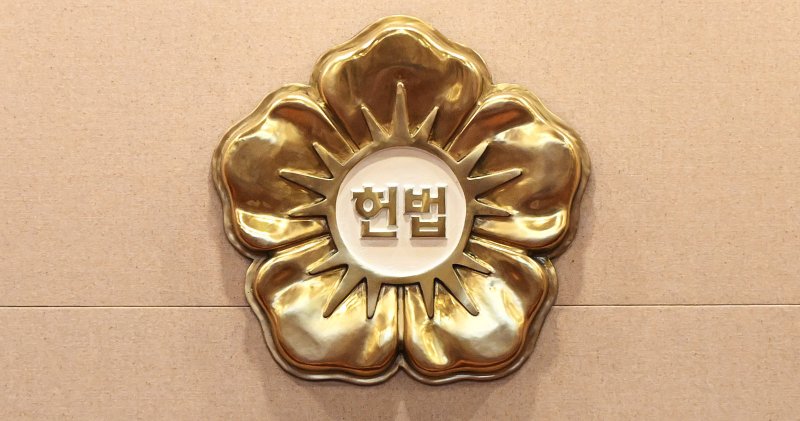
According to political circles on the 10th, the government and the Democratic Party plan to include only non-controversial issues, such as basic rights of the people, in the first phase of the constitutional amendment to facilitate bipartisan agreement. However, there is also a point that resolving the deep-rooted distrust between the parties is a priority.
Constitutional amendment is the first national policy task of the Lee Jae-myung government. The National Planning Committee has announced a plan to promote constitutional amendments, including restructuring the power structure with a four-year presidential term and abolishing the monopoly on prosecutorial warrant requests.
However, for the constitutional amendment bill to pass the National Assembly, it requires the consent of more than two-thirds of the incumbent lawmakers, making the cooperation of the main opposition party, the People Power Party, essential. Therefore, considering the discussion status, the plan is to conduct two constitutional amendments, using the local elections next year and the 2028 general elections as milestones.
This was further detailed by Woo Won-sik, the Speaker of the National Assembly from the Democratic Party. Speaker Woo proposed forming a Special Committee on Constitutional Amendment in early October, aiming to submit the first constitutional amendment bill to a national referendum simultaneously with next year's local elections. He also suggested completing amendments to correct unconstitutional issues such as overseas voting rights and voting age under the national referendum law.
Speaker Woo's position is that the first constitutional amendment should include only non-controversial issues. Examples presented include the inclusion of the May 18 Gwangju Democratization Movement in the preamble of the Constitution, the National Assembly's approval rights for martial law, the transfer of the Board of Audit and Inspection to the National Assembly, local autonomy decentralization, and basic rights of the people.
Although the push for constitutional amendment seems to be progressing rapidly, it has been confirmed that the People Power Party is not participating in the discussions. It is reported that Speaker Woo discussed the constitutional amendment roadmap with Joo Ho-young, the Deputy Speaker of the National Assembly from the People Power Party, but only general opinions were exchanged. In particular, it is said that there has been no consultation with the leadership of the People Power Party, according to a source within the party.
A senior official from the People Power Party pointed out, "With the Democratic Party engaging in antagonistic politics against the opposition, how can the National Assembly's Special Committee on Constitutional Amendment be operated? Even the party's own Special Committee on Constitutional Amendment is not operational," adding, "There is a lot of suspicion that if the National Assembly's Special Committee on Constitutional Amendment is convened as it is, the Democratic Party might suddenly propose including not only non-controversial issues but also restructuring of the power structure after gathering the quorum for the constitutional amendment bill."
The constitutional amendment bill currently requires the consent of 199 members based on 298 incumbent lawmakers. The ruling party coalition, led by the Democratic Party, holds 188 seats, so they only need to persuade 11 members from the People Power Party and the Reform New Party to pass the National Assembly threshold. As the Special Committee on Constitutional Amendment progresses, if the ruling party coalition co-opts non-mainstream opposition lawmakers and gains the initiative, they could pass a constitutional amendment bill containing sensitive issues such as restructuring of the power structure without complete bipartisan agreement, which is a concern within the People Power Party.
Similar situations have occurred in the past. The Moon Jae-in government initially pushed for constitutional amendments with high public support and aimed for a simultaneous national referendum during the June 2018 local elections. At that time, the National Assembly's Special Committee on Constitutional Amendment was operational, and specific constitutional amendment discussions took place, but the differences in opinions between the ruling and opposition parties over restructuring of the power structure caused delays.
Eventually, then-President Moon Jae-in abruptly proposed a constitutional amendment bill to accelerate the process, but due to the content solely reflecting the Democratic Party's claims, the opposition fiercely opposed it, and it ultimately failed to pass the National Assembly's plenary session, leading to its abandonment. The attempt to push through without securing opposition cooperation extinguished the momentum for constitutional amendment.
uknow@fnnews.com Kim Yun-ho reporteruknow@fnnews.com Kim Yun-ho reporter