Government Launches 'Ultra-Innovative Economy Project'... Comprehensive Investment from SiC Semiconductors to K-Food
- Input
- 2025-09-10 13:42:13
- Updated
- 2025-09-10 13:42:13
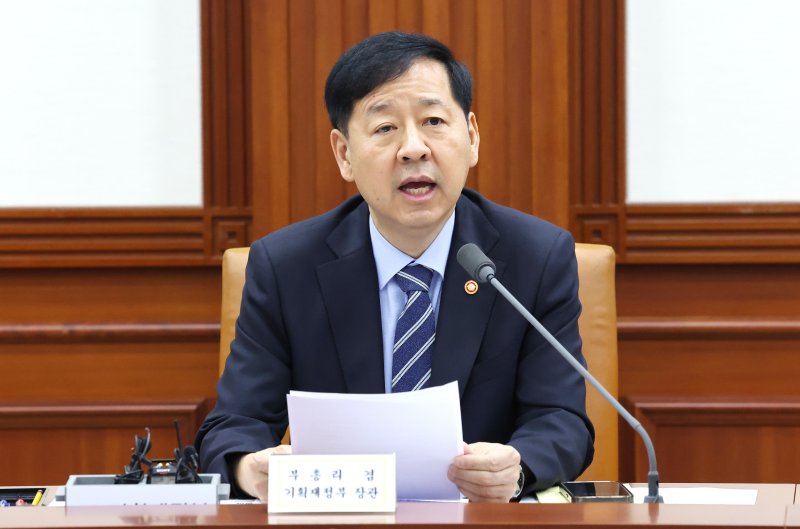
The government has officially launched a comprehensive national strategic project to boost the declining potential growth rate. The plan is to reignite the weakened growth engine due to changes in population structure, investment contraction, and productivity stagnation, and to achieve concrete results by considering the next five years as the 'golden time'.
"Recover Growth Potential Within 5 Years"
On the 10th, the Ministry of Economy and Finance announced the plan to promote the 'Ultra-Innovative Economy Project' at the Growth Strategy Task Force and Industrial Competitiveness Enhancement Ministers' Meeting, and stated that they will focus on investment and package support in 20 strategic areas to achieve visible results by 2030. The project consists of three main pillars: securing technology sovereignty, responding to climate and energy, and fostering new industries.
The government plans to complete the formation of task forces for each of the 20 projects within this month and finalize detailed operational plans through regular meetings.
Each task force will consist of about 20 members, including the lead ministry, related agencies, the Ministry of Economy and Finance, and private experts, centered around companies.
The Ministry of Economy and Finance will designate an 'Ultra-Innovative Economy Support Officer' to exclusively address issues across finance, taxation, finance, and regulation. In particular, they plan to actively encourage local government participation to promote regional balanced growth. Detailed roadmaps for each project will be completed between October and November.
The first core tasks announced on this day include five areas: next-generation power semiconductors (SiC), LNG cargo tanks, graphene, special carbon steel, and K-food.
Securing Technology Sovereignty... Focused Support for SiC, Graphene, and Special Carbon Steel
The government plans to increase the technology self-sufficiency rate of next-generation power semiconductors (SiC), which is currently at 10%, to 20% by 2030. Along with a total of 90.2 billion won in national funding, the government will also promote the training of master's and doctoral-level talents centered around universities and the establishment of regional demonstration infrastructure.
Graphene is a field with significant original technology in Korea, supporting commercialization and global entry for applications such as electric vehicles, secondary batteries, and high thermal conductivity materials for displays. The goal is to achieve full commercialization by 2030, including demand-supply company cooperation, demonstration infrastructure establishment, and global marketing.
Special carbon steel is a key material for major manufacturing industries such as shipbuilding, energy, and automobiles. The goal is to become the world's number one in special steel for shipbuilding and energy and the world's second in low-carbon steel for automobiles by 2030 through the development of carbon-reducing steel materials and response to extreme environments.
LNG Cargo Tanks and K-Food... Maximizing Export Competitiveness
Although Korea ranks first in the world in LNG carrier orders (55% market share), it has not achieved localization of the core technology, LNG cargo tanks. The government plans to start a demonstration project for Korean-style cargo tanks in 2026 and aims to continue ship orders equipped with domestic cargo tanks by 2030. The establishment of a production base for related equipment and financial support will also be pursued in parallel.
K-food, which is being nurtured as a global industry in combination with Korean Wave content, is also included as a strategic task. The government plans to expand K-food exports from 9.98 billion dollars in 2024 to 15 billion dollars by 2030 through Korean Wave marketing linked with K-content, operation of export hub missions, expansion of logistics infrastructure, and targeting the halal market.
In addition, the government will sequentially announce promotion plans for 15 projects, including small modular reactors (SMR), K-bio, K-digital healthcare, green hydrogen, ultra-high-resolution satellites, and smart agriculture.
Gyu Yun-chul, Deputy Prime Minister and Minister of Economy and Finance, emphasized, "In an era where one world-class product is more important than ten second-class products, the government will maintain constant communication with companies, clear obstacles, and provide unwavering support until definite results are achieved."
[email protected] Hong Ye-ji Reporter