[fn Editorial] 4.5-Day Workweek and Retirement Extension: Avoid Rushing While Considering Corporate Realities
- Input
- 2025-09-08 18:10:39
- Updated
- 2025-09-08 18:10:39
Youth employment decline and productivity drop expected
Extending retirement increases corporate costs by 30 trillion won
Extending retirement increases corporate costs by 30 trillion won
The government, ruling party, and labor circles are pushing for a 65-year retirement extension and a 4.5-day workweek, which are advantageous only to regular workers with vested interests, following the unilateral handling of the Yellow Envelope Act. If policies that deviate from corporate-led growth are pursued with the accelerator pedal pressed, the damage will return to young people thirsty for jobs and non-regular workers in poor environments. It should be promoted carefully while fully listening to the opinions of stakeholders.
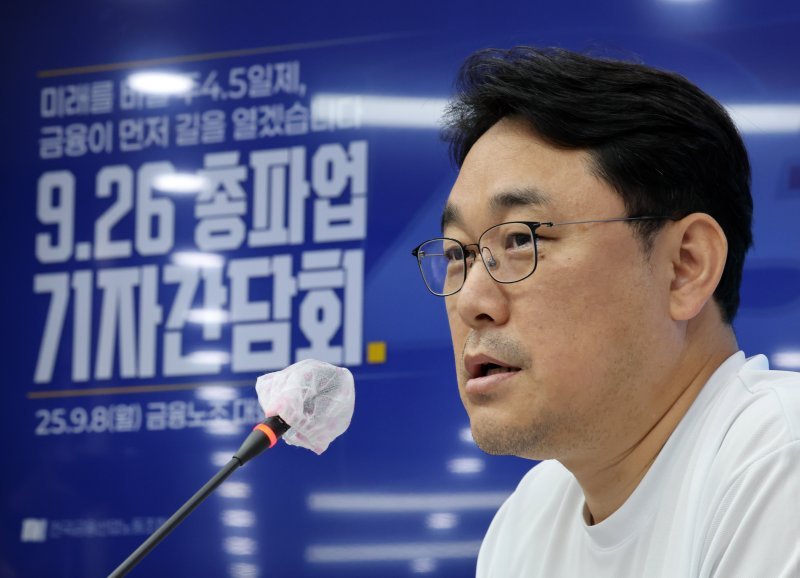
The common demands of the unions currently on strike are a 4.5-day workweek and retirement extension. It is a key agenda item for the National Financial Industry Union, which has decided to go on a general strike on the 26th, breaking a 7-year period without disputes, including the Hyundai Motor Union. The labor community, which gained momentum with the passage of the Yellow Envelope Act, intends to achieve it through this year's autumn struggle. The Kia Motors Union is taking it a step further by demanding a 4-day workweek.
The government's offensive by the senior union leadership is expected to intensify. Kim Dong-myeong, head of the Federation of Korean Trade Unions, recently met with President Lee Jae-myung and argued that "extending the retirement age to 65 is a task that cannot be delayed even for a day." He also proposed boldly introducing a 4.5-day workweek pilot project to make next year the historic first year of working hour reduction.
The recent decision by the Korean Confederation of Trade Unions to participate in social dialogue for the first time in 26 years is also seen as an intention to demand the legislation of these two agendas. During the presidential election, President Lee promised to reduce the average working hours in Korea to below the OECD average and pledged a 4.5-day workweek. He also promised to gradually extend the statutory retirement age and push for legislation within the year.
Reducing working hours without cutting wages and delaying retirement in line with the aging trend is the desire of all workers. However, companies that have to bear the costs may think differently. Forcing such things by law can only lead to side effects. Already weakened industrial competitiveness may further decline. The benefits may only go to elderly workers in large corporations, worsening labor market polarization.
It is a confirmed fact through research that the dual structure of the labor market has become more entrenched since the retirement age was extended from 55 to 60 ten years ago. Companies with limited labor costs have no choice but to reduce youth hiring. According to the Korea Employers Federation, if the retirement age is extended, the employment cost of elderly workers aged 60 to 64 will exceed 30 trillion won in five years. This is money that can hire 900,000 young people aged 25 to 29.
What is more urgent in the current labor system is a flexible working system that can increase productivity. As of 2023, Korea's hourly labor productivity was ranked 33rd out of 38 OECD member countries, at the bottom. The difference is very large compared to Japan or Germany, where the manufacturing industry has a large share like ours. A 4.5-day or 4-day workweek is likely to further lower productivity.
The reason for low productivity is largely due to rigid working hours. The demand to release the 52-hour workweek shackles, at least for advanced industries, has ultimately been ignored. An inflexible working system reduces productivity and eats away at corporate competitiveness. Moreover, the evaporation of jobs due to the advent of artificial intelligence (AI) is an imminent reality. In this situation, if retirement is recklessly delayed, young people will have no place to stand.