[fn Editorial] Need to Change the Investment Environment in the U.S. Following the Detention of Koreans
- Input
- 2025-09-08 18:10:25
- Updated
- 2025-09-08 18:10:25
Resolve Employment Visas for Skilled Workers First
Trump: "Will Ensure Quick Entry"
Trump: "Will Ensure Quick Entry"
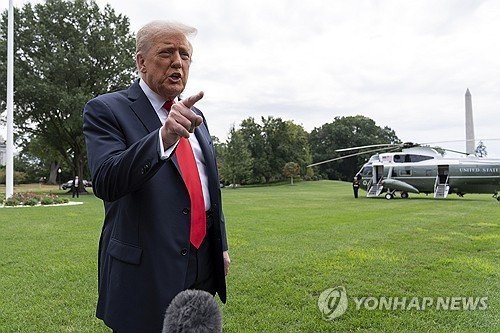
Nevertheless, the shock of this Korean detention incident cannot be erased from our minds. This is because, in the U.S., which has actively attracted large-scale investments from Korean companies, even the human rights of the personnel necessary to execute those investments have been threatened. There is still concern that the U.S., which wants to receive large-scale investments, has not adequately prepared the institutional support for legal residency.
Despite this, the incident should be used as an opportunity to propose institutional improvements through discussions between the two countries regarding U.S. investments. It should be an opportunity to boldly demand and question the U.S. for measures to prevent recurrence, as they have ignored institutional flexibility for foreign personnel and investors in their country while accepting investments.
To prevent such incidents from happening again, the visa issue must be resolved first. In fact, our government has been striving to establish up to 15,000 E-4 employment visas for skilled Korean workers. However, the related bill failed to pass the U.S. Congress, leading to this incident. Our government should firmly resolve the visa issue through diplomatic negotiations with the U.S. in light of this incident.
Upgrading employment visas does not solve all problems. The detention incident caused by employment visas is not the end. Larger issues may arise in the future. There is still a high possibility of unilateral trial and error by the U.S. during the investment and factory establishment process. Specifically, there are many potential conflicts in hiring local employees, the factory construction process, relationships between partner companies, and the import and export of raw materials and semi-finished products.
The U.S. clearly bears responsibility for this incident due to hastily proceeding with foreign investment. The inadequacy of their related systems has also been exposed. The U.S. investment case began at the request of the U.S. during the process of tariff pressure. There is a significant gap between the complex regulatory system of the U.S. and the investment practices of Korean companies, which has not been adjusted.
If the ongoing investment case is to proceed, it is natural to establish an investment environment where economic value is created. As a result of this Korean detention incident, the two countries must discuss and produce results such as enhancing regulatory transparency, establishing a pre-consultation system, and preparing a dispute resolution mechanism. A foundation must be created for Korean companies to invest in the U.S. stably. The process of private companies cooperating in intergovernmental policy discussions does not look very favorable. Therefore, it is an urgent task to improve the investment environment through diplomatic negotiations between countries to prevent further issues from arising.