'Prosecutorial Reform' in Controversy Over Unconstitutionality, Supplementary Investigation Rights as Key Issue
- Input
- 2025-09-08 16:35:00
- Updated
- 2025-09-08 16:35:00
Discussion on the Key Issue of Supplementary Investigation Rights is Still Ongoing
'Prosecutor General' Constitutional Specification Also a Problem
'Prosecutor General' Constitutional Specification Also a Problem
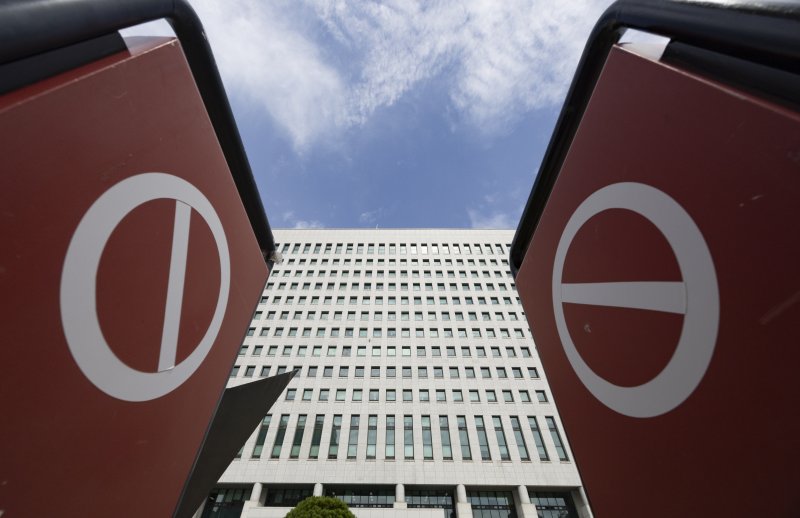
According to the legal community on the 8th, as the government reorganization plan focusing on the 'abolition of the Prosecutors' Office' was announced, the supplementary investigation rights of the prosecution are emerging as a key issue. The discussion on whether to grant supplementary investigation rights, one of the investigative powers, to prosecutors is a conflict between the hardliners of the Democratic Party, who argue 'it should not be granted,' and concerns from the legal community, who argue 'it should be granted.'
The hardliners worry that if supplementary investigation rights are granted to prosecutors, the prosecution will use this as an excuse to expand its investigative domain and resume direct investigations such as initiating and concluding investigations. In fact, during the Moon Jae-in administration, the prosecution was only allowed to directly investigate corruption and economic crimes through amendments to the Criminal Procedure Act and the Prosecutors' Office Act, known as the adjustment of investigative powers between the prosecution and the police. However, during the Yoon Seok-yeol administration, the scope of direct investigation was expanded through changes in enforcement ordinances and the establishment of joint investigation teams across ministries.
On the other hand, the legal community argues that the prosecutor's supplementary investigation rights are a practical means to control the anti-human rights investigations of investigative agencies such as the police, which have the power to detain citizens. Hong Jin-young, an associate professor at Seoul National University's School of Law and a former judge, stated at the joint conference of the five major criminal law societies on the 5th, "The prosecutor's supplementary investigation rights are necessary to block the risk of confirmation bias inherent in police investigations and to ensure the legality and appropriateness of investigations by effectively checking them according to the principle of separation of powers," adding, "Many studies point out that confirmation bias of investigators poses a risk of innocent suspects being accused of crimes and having their basic rights violated as objects of criminal proceedings for a long time."
There is also an argument that even without the prosecutor's supplementary investigation rights, the anti-human rights investigations of investigative agencies such as the police can be sufficiently controlled. A lawyer who is a former chief judge said, "By not prosecuting cases submitted by the police or not requesting warrants, the prosecution and warrant request rights alone can sufficiently control the anti-human rights investigations of the police," adding, "Some suggest activating a system where police investigators can be sued if they violate citizens' rights without the prosecutor's control, such as through emergency arrests, to control the reckless investigations of investigative agencies."
The establishment of the National Investigation Committee is also controversial. The ruling party proposes to install the National Investigation Committee as a direct organization under the Prime Minister to oversee multiple investigative agencies such as the National Police Agency and the Serious Crime Investigation Office, but questions continue to be raised about how the committee can effectively control investigative agencies with substantial authority.
There is also an argument that the amendment to the Government Organization Act violates the constitution. Since the Prosecutor General is a constitutionally specified head, it is argued that a law aiming to dismantle the prosecution is unconstitutional. Article 89 of the Constitution specifies that the appointment of the Prosecutor General must be deliberated by the State Council, and this content is found similarly in the first constitution, albeit with different clauses.
There have been instances where the abolition of a constitutionally specified institution was thwarted. In 1989, the government proposed an amendment to the National Defense Organization Act to change the Joint Chiefs of Staff to the National Defense Chiefs of Staff and the Chairman of the Joint Chiefs of Staff to the Chairman of the National Defense Chiefs of Staff, but did not change the name due to concerns of unconstitutionality as the Chairman of the Joint Chiefs of Staff is specified in the constitution.
In this regard, Cha Jin-ah, a professor at Korea University's School of Law, argued at the National Assembly's Legislation and Judiciary Committee's public hearing on prosecutorial reform on the 4th, "The Prosecutor General is a constitutionally essential institution, so the Prosecutors' Office is established as a permanent institution," adding, "Therefore, it cannot be arbitrarily abolished, which is the prevailing view in constitutional academia."
[email protected] Kim Dong-kyu Reporter