Western Arterial Road, Expansion Instead of Flattening... Commencement of Underpass Restoration
- Input
- 2025-09-08 10:00:00
- Updated
- 2025-09-08 10:00:00
Existing road capacity expansion... Expansion to 5 lanes
Immediate halt to Omokgyo intersection flattening construction
Monitoring after the opening of the Seoul~Gwangmyeong Expressway
Immediate halt to Omokgyo intersection flattening construction
Monitoring after the opening of the Seoul~Gwangmyeong Expressway
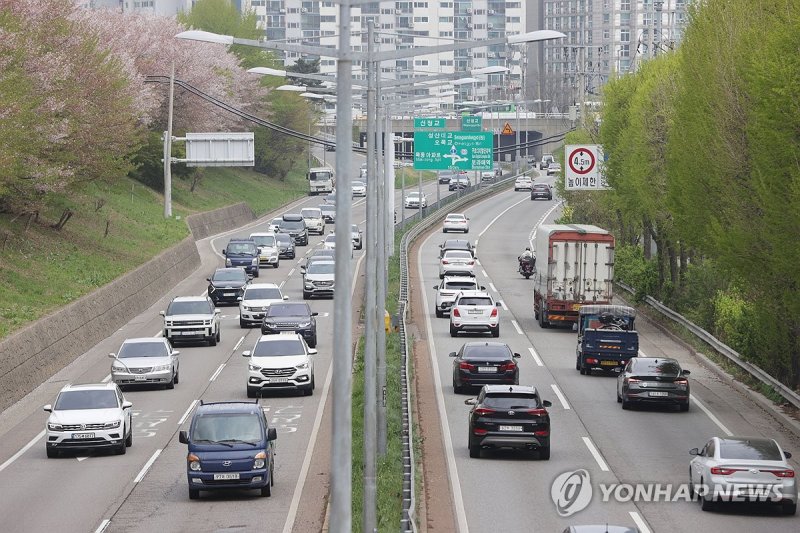
[Financial News] Seoul City announced on the 8th that instead of flattening the Western Arterial Road, it will pursue a new direction by expanding the capacity of the existing road and enhancing its function to connect the region.
The flattening of the Western Arterial Road was designed with a focus on 'pedestrian-friendly' and 'green space expansion' during the basic plan establishment that began in 2013. Seoul City emphasized, "We judged that the existing plan does not fit the current traffic situation and urban conditions," and "This is an active decision to balance the two values of traffic and living environment, beyond simply changing the existing plan."
The city plans to prioritize alleviating traffic congestion during rush hours as the top priority, quickly restoring road functions, and focusing on improving traffic flow by increasing road capacity.
To alleviate chronic vehicle congestion, the central divider in the middle of the road will be reduced. An additional lane will be secured in the place of the existing divider, increasing from 4 lanes to 5 lanes. The increased lane will be considered for operation as a variable lane according to traffic volume during rush hours. The signal intersection, which was initially planned to be installed for general road conversion, will be fully deferred to ensure the continuity of vehicle travel.
The ongoing flattening construction of the Omokgyo intersection will be immediately halted. The underpass will be restored to its original state to recover the road's original function. The construction of the underpass in the Iljik direction will be immediately stopped, and the restoration work will be completed before the Chuseok holiday to minimize inconvenience to citizens.
This decision actively accommodates the opinions of citizens who are concerned about traffic inconvenience due to construction and the deterioration of traffic flow after the intersection flattening in a situation where alternative roads are lacking.
In the short term, the focus will be on solving traffic problems, while in the long term, various methods will be explored to connect the severed southwestern east-west living area due to the Western Arterial Road and increase access to Anyangcheon.
Plans are actively underway to install pedestrian overpasses that are wide and easy to use, and to create a cover park utilizing the upper part of the road, developing it into a space that maintains traffic functions while also incorporating the living convenience and urban vitality of residents.
It is expected that once the Seoul~Gwangmyeong Expressway, which is currently being promoted by the government, is completed and additional alternative roads are secured, traffic volume will be dispersed. Seoul City plans to closely analyze the traffic situation and review and decide on whether to pursue the general road conversion and flattening of the Western Arterial Road.
Han Byeong-yong, head of Seoul City's Disaster and Safety Office, said, "Seoul City prioritizes resolving traffic congestion and minimizing inconvenience to citizens," and "We will gradually implement policies that can enhance the convenience of road users and nearby residents by considering the two tasks of solving traffic problems and resolving regional disconnection."
[email protected] Lee Chang-hoon Reporter