Taiwanese Company Steals Domestic Technology... Supreme Court: "Trial Possible in Korean Court under Dual Punishment Regulation"
- Input
- 2025-09-07 11:50:44
- Updated
- 2025-09-07 11:50:44
Former Seoul Semiconductor Employee Leaks Technology... Taiwanese Company Claims "No Jurisdiction in Korea"
Supreme Court: "Crime Committed within the Territory of the Republic of Korea"... Fine Confirmed
Supreme Court: "Crime Committed within the Territory of the Republic of Korea"... Fine Confirmed
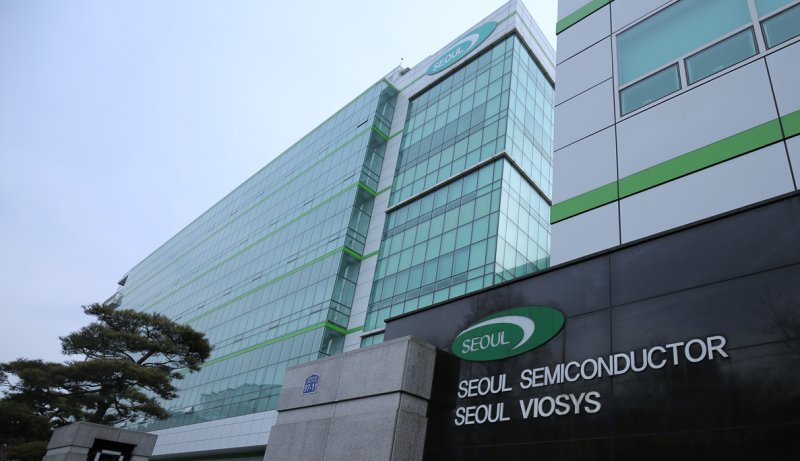
[Financial News] If a crime is committed domestically, the Korean court can apply the 'dual punishment regulation' to try a foreign corporation, according to a Supreme Court ruling.
According to the legal community on the 7th, the Supreme Court's 2nd Division (Presiding Judge Eom Sang-pil) confirmed the original verdict sentencing Taiwanese Everlight to a fine of 60 million won for charges including violation of the Act on Prevention and Protection of Industrial Technology Leakage.
Three employees who worked at the domestic LED company Seoul Semiconductor were indicted for leaking trade secrets to Everlight after joining the company. They were found guilty and received suspended sentences. Under the dual punishment regulation, which punishes the corporation along with the employee who committed the crime, Everlight was separately brought to trial.
The issue was whether the dual punishment regulation could be applied to a foreign corporation for trial in Korea. Everlight argued that Korea's jurisdiction could not be recognized for the negligent acts of a foreign corporation abroad.
However, the first trial did not accept this argument. The first trial court stated, "The Criminal Act applies to foreigners who commit crimes within the territory of the Republic of Korea, including cases where the result occurs within the territory," and "As the victim company is a Korean corporation located in Korea, it falls under cases where the result occurs within the territory."
Everlight appealed, but the second trial and the Supreme Court's judgment were the same. The Supreme Court stated, "The relationship between the actor punished under the dual punishment regulation and the corporation or individual is inseparable in content, as the actor's violation of the law is identical or at least defines an important part of the employer's violation of the law."
It added, "The defendant's three employees accessed the Seoul Semiconductor system to view and photograph industrial technology and trade secrets, and then exported the USB storage device containing the files without returning it," explaining, "As this act was committed within the territory of the Republic of Korea, even if the leakage, disclosure, use, or acquisition of trade secrets occurred outside the territory, it can be considered a crime committed within the territory."
It continued, "The employees' violations are part of the criminal act constituting Everlight's crime under the dual punishment regulation," and "As long as the employees can be seen as having committed a crime within the territory of the Republic of Korea, it is reasonable to see Everlight as having committed a crime within the territory as well."
[email protected] Seo Min-ji Reporter