Judges Oppose 'Special Tribunal for Insurrection'... Academic Opinions 'Divided'
- Input
- 2025-09-03 15:49:56
- Updated
- 2025-09-03 15:49:56
'Violation of Judicial Independence' Sparks Strong Opposition Within the Court
"If the bill passes without constitutional amendment, it is unconstitutional"
"No issue if the judge meets the qualifications set by the Constitution and laws"
"If the bill passes without constitutional amendment, it is unconstitutional"
"No issue if the judge meets the qualifications set by the Constitution and laws"
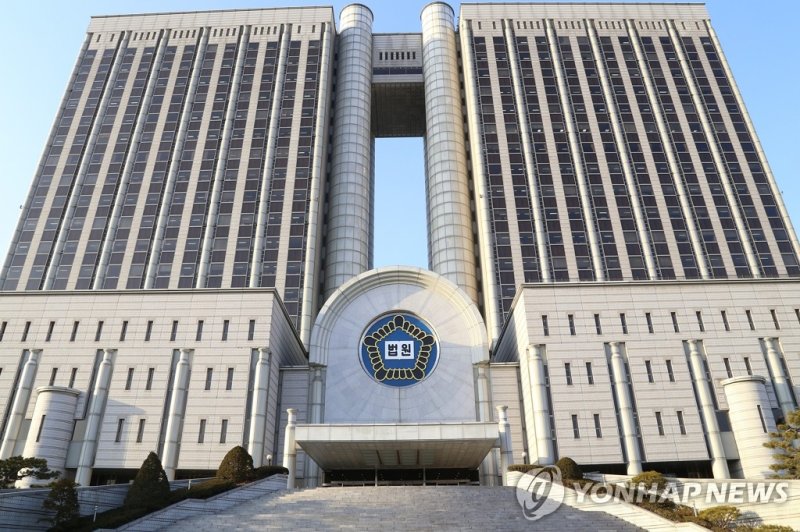
[Financial News] The controversy surrounding the Democratic Party's proposed 'Special Law on Follow-up Measures for the December 12 Martial Law and Protection of Whistleblowers', also known as the 'Special Law for Insurrection', continues. Although it is presented as a means to enhance political independence and the credibility of trials, there are concerns about its unconstitutionality and potential to undermine judicial independence and fairness.
According to the legal community on the 3rd, the Special Law for Insurrection proposed by Democratic Party lawmaker Park Chan-dae and others aims to establish a special warrant judge and a special tribunal for insurrection cases related to the December 12 Martial Law. A committee of nine members, composed of recommendations from the National Assembly, the court, and the Korean Bar Association, will form a Special Tribunal Candidate Recommendation Committee to recommend candidates. The Chief Justice will appoint one special warrant judge and three special tribunal judges from among the candidates.
Special tribunals have been formed in the past. In 1948, the Special Tribunal for Anti-National Activities was established, and in 1960, the Special Tribunal for the March 15 Election Fraud was set up. In both cases, constitutional provisions were included to eliminate unconstitutional elements, stating that 'a special law can be enacted' and 'a special tribunal and special prosecution can be established' for the relevant cases.
In contrast, the current Special Law for Insurrection is being pursued without a constitutional amendment, raising concerns of unconstitutionality. It is argued that it contradicts Article 27 of the Constitution, which states that 'all citizens have the right to a trial by a judge determined by the Constitution and laws', and Article 104, which states that 'judges are appointed by the Chief Justice with the consent of the Supreme Court Council'.
Cheon Dae-yeop, head of the Court Administration Office, pointed out that past special tribunals were based on the Constitution, warning that if the Constitutional Court finds the Special Tribunal for Insurrection unconstitutional, it could invalidate a historic trial, leading to a grave situation.
A chief judge stated, "According to the Court Organization Act, there is a right to be tried by a qualified judge through formal procedures such as case assignment and division of duties," adding, "Even if it is not immediately deemed unconstitutional, it could be grounds for retrial in the future."
There is also concern that if defendants in insurrection cases, such as former President Yoon Seok-yeol, request a constitutional review, trials could be delayed. Some voices argue that it could provide defendants with an excuse of 'procedural flaws', raising questions about the objectivity and fairness of the trial.
Particularly, there is strong opposition due to concerns about violating the independence of the judiciary. Some interpret it as an attempt by the political sphere to 'tame the judiciary' to obtain favorable rulings.
Another chief judge said, "Regardless of whether the bill passes, it seems to have been proposed as a means to pressure the tribunal," adding, "Ultimately, it seems to aim at fostering distrust in the judiciary to push for judicial reform such as increasing the number of Supreme Court justices."
Academic opinions are divided. Jang Young-soo, a professor at Korea University Law School, said, "Establishing a special tribunal solely by law without constitutional amendment has significant unconstitutionality," agreeing with the judges' opinions that "not assigning cases randomly and sending specific cases to a special tribunal itself can be controversial."
On the other hand, Lee Heon-hwan, a professor at Ajou University Law School, stated, "Even if candidates are selected by the recommendation committee, the Chief Justice ultimately makes the appointments, so there are no unconstitutional elements regarding the composition of judges," adding, "As long as it does not deviate from the basic qualifications of members set by the Constitution, it cannot be deemed unconstitutional."
Furthermore, given the extraordinary and special nature of dealing with martial law, and due to unusual court decisions such as the cancellation of former President Yoon's arrest and the remand of President Lee Jae-myung's Public Official Election Act case, which have eroded trust in the judiciary, a special tribunal is deemed necessary.
Accordingly, there are suggestions to create provisions that do not violate the Constitution. Kim Sun-taek, a professor at Korea University Law School, said, "If the judges forming the tribunal do not have the qualifications of ordinary judges, or if the trial process is an 'exceptional court' different from ordinary trials, there is room to view it as unconstitutional unless it is based on the Constitution," but added, "If it is composed of judges with qualifications set by the Constitution and laws, and the trial is conducted according to general judicial procedures, it can be legislated by the National Assembly under Article 102 of the Constitution, which states that 'the organization of the Supreme Court and other courts is determined by law'."
[email protected] Seo Min-ji Reporter