"It was a flash and then back to square one".. Consumer coupons, will it become a 'one-time event' like this
- Input
- 2025-09-08 16:51:23
- Updated
- 2025-09-08 16:51:23
In July this year, sales of the three convenience store chains increased by 3.9% year-on-year... Rebounded in four months
To avoid being just a flash effect, a mid- to long-term strategy such as 'store efficiency' is needed
Food industry "Feel the effect of increased disposable income, one-time consumption, and increased customer unit price"
To avoid being just a flash effect, a mid- to long-term strategy such as 'store efficiency' is needed
Food industry "Feel the effect of increased disposable income, one-time consumption, and increased customer unit price"
[Financial News] Since the distribution of the first round of livelihood recovery consumer coupons began at the end of July, there has been a continued effect of stimulating consumption centered on convenience stores, dining franchises, and public delivery apps. However, industry and academic experts are concerned that if the second distribution does not lead to a 'lock-in effect' for consumers through expanded usage locations and enhanced products and services, the consumer coupons will remain a 'one-time event'.
Convenience stores, dining, delivery apps, reaping benefits
According to the industry on the 8th, since the consumer coupon distribution through credit and debit cards began on July 22 to August 31, GS25 saw about a 10% increase in the number of customers and customer unit price in residential area markets. In particular, essential food sales grew by more than 100% compared to the same period last year, showing rapid growth.
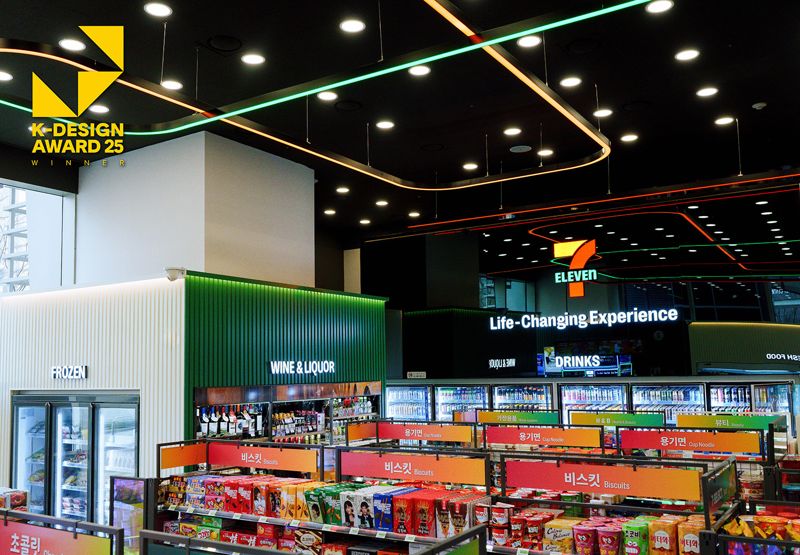
During the same period, CU and Seven Eleven also saw a 30-40% increase in frozen and fresh food sales compared to the previous year, analyzing that consumer coupons were mainly used for essential consumer goods. A Seven Eleven franchise owner said, "It seems that the use of consumer coupons was concentrated at the beginning of the distribution," and "As the demand for daily necessities was prominent, we are preparing to respond with a similar consumption pattern for the second distribution."
According to the Ministry of Trade, Industry and Energy, the sales of the three convenience store chains in July increased by 3.9% compared to the same period last year, marking a rebound in four months. It was the highest growth rate since November last year (5.1%). According to a survey by NH Nonghyup Bank, the top usage locations based on consumer coupon payment amounts were Korean restaurants (19.4%), supermarkets (9.1%), and convenience stores (8.5%).
The dining industry, which has many small franchises, is also seeing significant effects from the consumer coupons. From July 27 to August 27, the sales of chicken company bhc increased by 25% compared to the previous year. Kyochon Chicken also saw a 5% increase in orders compared to the same period last year after the consumer coupon distribution. Pizza, coffee, and burger brands, mainly operated by franchise owners, also experienced sales growth.
Public delivery apps, which launched extensive marketing along with the consumer coupon distribution, also enjoyed a boom. The monthly active users (MAU) of the public delivery platform 'Ttaenggyeoyo' in July surged more than three times compared to a year ago.
Without long-term measures, it will become a one-time event
As of the 28th of last month, the first round of livelihood recovery support funds, amounting to 9 trillion won, was distributed to 98.2% of the entire population, which has generally been seen as helpful for temporary consumption stimulation and performance improvement.
However, there is also a strong voice that the consumer coupon distribution is insufficient to become a catalyst for fundamental consumption recovery and business improvement. A dining industry official said, "(With consumer coupons) there is additional consumption capacity, leading to temporary consumption of items like beef and glasses that people hesitated to buy before, or ordering more expensive menus like pizza or burgers," but added, "Although companies have made efforts such as promotions, it is uncertain whether this consumption change will continue." The official added, "The remaining challenge for companies that are usage locations for consumer coupons is how to make consumers continue to purchase the products they experienced with the coupons."
An office worker whose wife runs a coffee shop said, "Unlike the rise in stocks and real estate, the temporary release of consumer coupons has indeed brought vitality to local markets like cafes," but added, "However, to avoid it being just a one-time event, economic policies that can generally increase consumption capacity are also needed."
Ultimately, the recovery of consumption and economic revitalization depends on a policy direction that continues the chain of consumption rather than one-time cash support.
Professor Lee Young-ae of Incheon University's Department of Consumer Science said, "Consumer coupons have had the effect of supporting self-employed people whose policy funds were cut off and closure rates were increasing after COVID-19," and added, "To maximize the priming effect for economic revitalization, the usage locations and support scope of the second consumer coupons need to be prepared more meticulously."
localplace@fnnews.com Kim Hyunji, Lee Hwanju reporters