Supreme Court Opposes Special Court for Rebellion, Citing 'Politicization of Judiciary'
- Input
- 2025-09-01 16:56:17
- Updated
- 2025-09-01 16:56:17
Democratic Party pushes for establishment of special court for rebellion
Court Administration Office states "careful review needed"
Expresses opposition in essence
Court Administration Office states "careful review needed"
Expresses opposition in essence
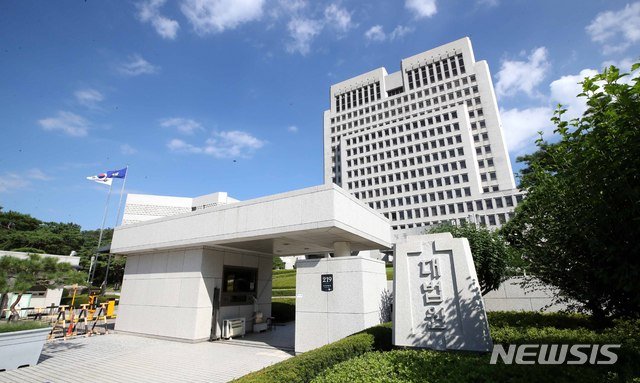
According to Song Seok-jun, a member of the National Assembly's Legislative and Judiciary Committee from the People Power Party, the Supreme Court's Court Administration Office recently submitted a review opinion to the National Assembly on the 'Special Act on Follow-up Measures for the Emergency Martial Law of December 3 and Protection of Informants'.
The bill, proposed by Park Chan-dae and other members of the Democratic Party, aims to establish a special court for rebellion-related trials. The special warrant judge and special court are to be appointed by the Chief Justice of the Supreme Court from candidates recommended by the 'Special Court Candidate Recommendation Committee', which is composed of recommendations from the National Assembly, the court, and the Korean Bar Association.
The Court Administration Office stated in its opinion that "the establishment of a special warrant judge and special court to judge specific cases is an unconstitutional system not anticipated by the Constitution," and pointed out that "there is room for constitutional controversy from various perspectives, such as infringement of judicial independence and concerns about the independence and fairness of trials."
Article 110 of the Constitution stipulates that "a military court can be established as a special court to have jurisdiction over military trials," but other special courts are generally not allowed, according to the majority view in academia.
It also stated that "defendants may refuse to cooperate with trial proceedings by challenging the unconstitutionality of the court composition," and "if a request for a constitutional review is made, the trial may be suspended according to the Constitutional Court Act, leading to disruptions in trial proceedings and continued disputes over the validity and legitimacy of the trial, contrary to the legislative purpose of this bill."
Since it affects the exclusive authority of the court in case allocation and assignment, it also pointed out that "involvement of the National Assembly or the Bar Association in the composition of a special warrant judge or special court for specific cases inherently infringes on judicial independence."
The court assigns cases randomly to ensure trust in the independence and fairness of trials, but the special court does not guarantee randomness, which is also a concern. The administration office emphasized that "if judges responsible for specific cases are arbitrarily or retrospectively determined, trust in the independence and fairness of trials may be undermined, and the public and parties may not accept the trial results," and "especially, it is crucial to guarantee neutrality and objectivity, and trust in judges deciding on warrant issuance."
Concerns about the 'politicization of the judiciary' were also expressed. The administration office stated that "the composition of the candidate recommendation committee, the recommendation and appointment structure of candidates, inherently contains significant political elements," and "it may raise new suspicions and distrust regarding the political neutrality, independence, and objectivity of individual trials by the special warrant judge and special court, and expand controversies over the political nature of the judiciary's judicial actions."
Cheon Dae-yeop, head of the Court Administration Office, also directly expressed opinions on the special court for rebellion at the National Assembly's Budget and Settlement Special Committee plenary meeting that day. Cheon stated that "judicial power under the Constitution is vested in the judiciary with the Supreme Court as the highest court, and the people are guaranteed the right to a trial by judges as prescribed by the Constitution and laws," and if external bodies such as the National Assembly are involved in appointing judges for the special court, "it may raise issues regarding the independence of the judiciary, and the objectivity and fairness of trials."
[email protected] Minji Seo Reporter