Norangbongtu Act, 'Expansion of Negotiation Rights to Delivery Drivers and Home Study Teachers'... Impact 'Under Scrutiny'
- Input
- 2025-08-27 15:50:46
- Updated
- 2025-08-27 15:50:46
Expansion of User Scope... Corporate Negotiation Obligations Expected to Expand
Tension in Delivery and Education Industries... "Concerns About Realization of Disputes Exist"
Experts: "Risk Management and Policy Supplementation Must Be Concurrent for System Settlement"
Tension in Delivery and Education Industries... "Concerns About Realization of Disputes Exist"
Experts: "Risk Management and Policy Supplementation Must Be Concurrent for System Settlement"
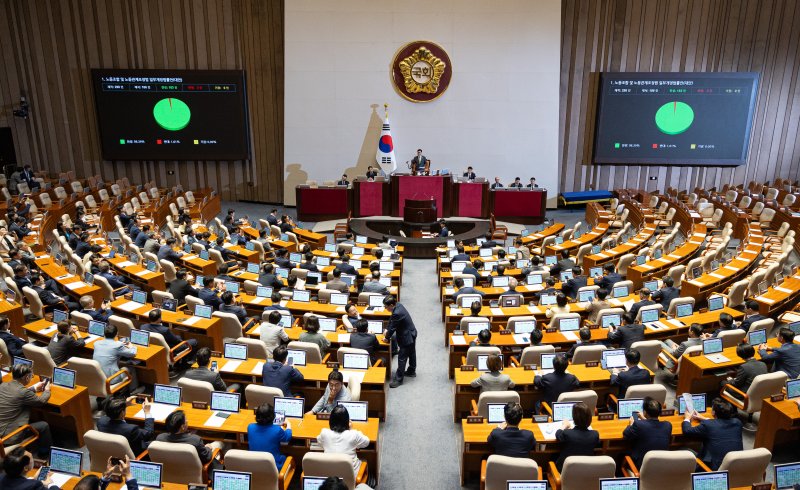
[Financial News] As the Norangbongtu Act is set to be implemented early next year, anxiety in corporate sites is growing. Although it aims to guarantee the right to strike for labor unions, there are concerns that it could have a significant impact on industries centered around special employment, where labor conflicts are frequent.
According to related industries on the 27th, the Norangbongtu Act (amendment to Articles 2 and 3 of the Labor Union Act) imposes negotiation obligations on primary companies if they have de facto control, even if they do not directly contract with subcontractors. Special form workers, such as delivery drivers and home study teachers, have secured collective bargaining rights, bringing labor conflicts that remained in unofficial areas into the institutional framework.
Major delivery industry conglomerates like CJ Logistics, Hanjin, and Lotte Global Logistics have operated under a structure where headquarters contract with nationwide agencies, which in turn contract with delivery drivers. Drivers have claimed "the primary company is the de facto employer" and have demanded negotiations, but legal disputes have been repeated. With this amendment, if their status becomes clear, the primary company must directly negotiate, and exercising the right to strike becomes easier.
A delivery industry official said, "There is already a basic agreement, so there won't be immediate major changes, but there is anxiety that strikes could become regular after the law is implemented." Companies have recently reached some agreements by signing basic agreements between the delivery union and the agency association, but the industry, which has experienced past logistics crises, finds it difficult to relax regarding the potential recurrence of transport network paralysis.
The education industry is no different. Home study teachers and door-to-door salespeople are individual business owners under delegation or subcontract contracts, but the possibility of recognizing their collective bargaining rights has increased with the law amendment. Given that the Supreme Court and the Central Labor Committee have already recognized the 'worker status' of teachers, this amendment could further fuel the issue.
In fact, Kyowon Kumon refused the demand for collective bargaining from teachers in 2023 and received an unfair labor practice ruling from the Central Labor Committee. Daekyo signed the first collective agreement with the National Home Study Industry Union, which includes special employment workers as members, and is proceeding with negotiations. An education industry official said, "With the new government, we have been internally reviewing changes in labor policies such as extending retirement age and reducing working hours," and "We plan to prepare response measures by examining government supplementary measures before the implementation of the Norangbongtu Act."
The business community believes the Norangbongtu Act could incite illegal strikes and restrict corporate management rights. Especially in industries where service disruption directly leads to consumer inconvenience, risks are doubled.
Professor Dong-Yeol Yoon of Konkuk University's Business Administration Department said, "For medium-sized companies, the labor risks of existing subcontracting and consignment structures could suddenly become a reality," and "In the short term, it is necessary to check the legal consistency of contract structures and consignment relationships, and to reorganize whether to subscribe to social insurance such as industrial accident and employment insurance."
[email protected] Shin Ji-min Reporter