'Iron Rice Bowl' Lost Its Charm... Number of Civil Service Exam Candidates Halved in 4 Years
- Input
- 2025-08-25 08:49:09
- Updated
- 2025-08-25 08:49:09
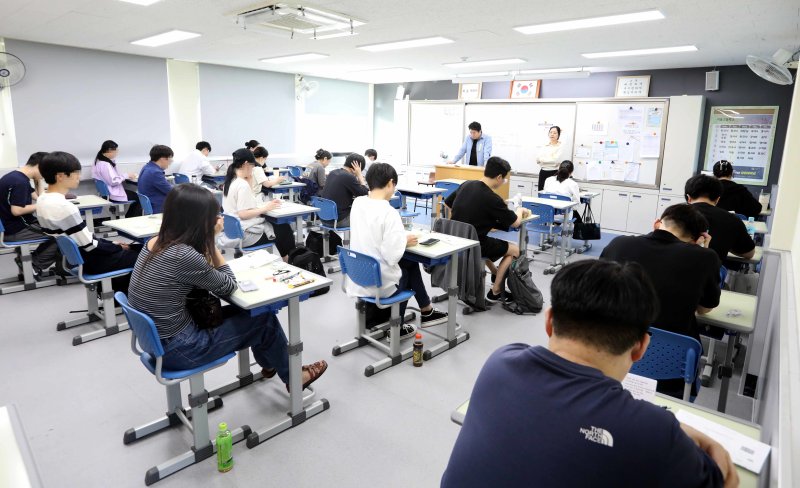
[Financial News] The preference for civil service among the youth is noticeably declining. Once referred to as the 'Iron Rice Bowl' and considered the most stable job, public service is now being shunned due to low compensation and rigid organizational culture.
According to the National Statistical Office's (KOSIS) and the Economically Active Population Survey's youth supplementary survey on the 25th, as of May this year, the number of youths preparing for general civil service exams (including levels 7 and 9, police, fire service, military service, etc.) among the economically inactive population aged 20-34 was recorded at 129,000.
This is a decrease of 30,000 compared to the previous year, marking the lowest since related statistics began being compiled in 2017.
The number of youth civil service exam candidates peaked at 313,000 in 2021 and has been declining for four consecutive years. It decreased to 239,000 in 2022, 214,000 in 2023, and fell to 159,000 last year, dropping below 100,000 for the first time. It has decreased to less than half compared to 2021.
The number of candidates preparing for professional exams also decreased. The number of youths preparing for level 5 open competitive exams (administrative exams), patent attorneys, and accountants decreased from 105,000 in 2021 to 81,000 this year, marking a four-year consecutive decline.
The number of people preparing for teacher certification exams also fell from 40,000 in 2020 to 24,000 this year.
On the other hand, the number of youths preparing for private sector jobs is steadily increasing. The number of youths preparing for employment in general companies, including large and small-medium enterprises, was 230,000 as of May this year, an increase of 41,000 compared to the same month last year. This is the highest since statistics began being compiled.
Overall, the total number of youths responding that they are preparing for employment-related exams, including civil service and private sector jobs, was 674,000 this year, an increase of 19,000 from the previous year. However, the overall increase does not offset the decrease in civil service candidates.
The main reason for the aversion to civil service was found to be 'low pay'. In a survey conducted by the Ministry of Personnel Management last November (targeting 27,000 civil servants), 88.3% of respondents cited low pay as the reason for avoiding support.
Other major reasons included malicious complaints (39.8%) and hierarchical organizational culture (15.9%).
In a survey targeting the general public, 62.9% pointed to low pay, and 53.7% cited stress from malicious complaints.
The government increased civil servant pay by 3.0% this year. This is the largest increase since 2018 (2.6%). The government explained that this reflects the suppressed pay increase rate during the COVID-19 period, accumulated inflation, and the pay gap compared to the private sector. Next year's civil servant pay increase rate will be included in the soon-to-be-announced budget proposal.
[email protected] Hong Yeji Reporter