The Clause 'Child Abuse Resulting in Death Punished More Severely than Injury Resulting in Death' is Constitutional
- Input
- 2025-08-24 13:49:55
- Updated
- 2025-08-24 13:49:55
Ordered partner to abuse child, resulting in death... Received heavy sentence as accomplice, filed constitutional appeal
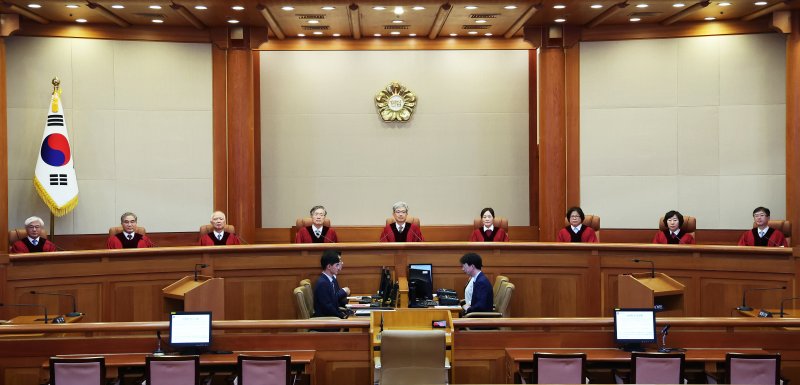
[Financial News] The Constitutional Court has ruled that the clause applying the crime of child abuse resulting in death, which is punished more severely than the crime of injury resulting in death, does not violate the Constitution.
According to the legal community on the 24th, the Constitutional Court unanimously dismissed the constitutional appeal filed by Mr. A regarding the relevant part of Article 4, Section 2, Clause 4 of the Special Act on the Punishment of Child Abuse Crimes (Child Abuse Punishment Act).
In March 2020, Mr. A instructed his partner, Mr. B, to abuse Mr. B's biological children under the pretext of helping with discipline. Mr. B beat the children with a laundry stick, and one of the children eventually died. As a result, both Mr. B, who beat his own child, and Mr. A, who gave the orders, were brought to trial.
Initially, the appellate court sentenced Mr. A to 10 years in prison for the crime of injury resulting in death under the Criminal Act. However, the Supreme Court overturned the decision, stating that the joint principal offender of the violation of the Child Abuse Punishment Act was established, and in the retrial, the sentence was increased to 15 years.
During the trial, Mr. A filed a constitutional appeal, arguing that the provision for punishing the crime of child abuse resulting in death with life imprisonment or imprisonment for more than five years was excessively high. He also claimed that applying the Child Abuse Punishment Act to accomplices who are guardians, while applying the crime of injury resulting in death under the Criminal Act to non-guardians, violated the principle of equality.
First, the Constitutional Court stated, "The Child Abuse Punishment Act was introduced to eradicate child abuse by strengthening the punishment of abusers and protecting victimized children, as cases of child abuse continue to increase and become a constant social issue," and judged that the statutory penalty for the crime of child abuse resulting in death did not violate the principle of proportionality.
The Constitutional Court also explained, "The crime of injury resulting in death under the Criminal Act protects the legal interest of the complete integrity of life and body," and "In contrast, the clause of the Child Abuse Punishment Act includes the protection of 'child welfare,' which encompasses ensuring that children grow up healthily and safely, in addition to the integrity of life and body."
Furthermore, they stated, "The illegality and culpability of a guardian who commits violence or harsh acts, or neglects or abandons a child, causing injury and ultimately leading to the child's death, can generally be considered greater than those of a person not in a protective relationship committing the crime of injury resulting in death."
The Constitutional Court dismissed Mr. A's claim that non-guardian joint principal offenders should be punished for the crime of injury resulting in death, stating, "The appeal is merely disputing the court's decision, making the constitutional appeal inadmissible."
[email protected] Seo Min-ji Reporter