Key Agenda of the Summit, 'Nuclear Cooperation' in Masga
- Input
- 2025-08-24 12:00:24
- Updated
- 2025-08-24 12:00:24
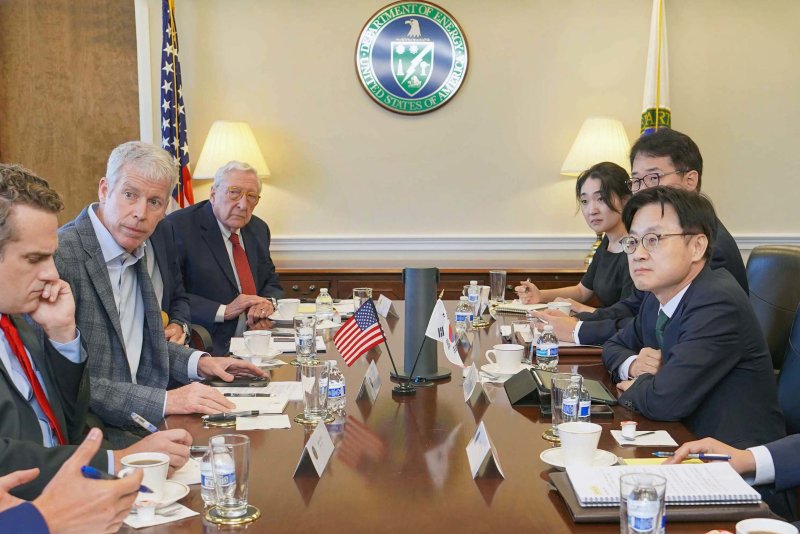
As the Korea-U.S. summit approaches, with the mobilization of diplomatic and trade leaders and CEOs of nuclear power public enterprises, nuclear cooperation has emerged as the main agenda of the summit. Initially, semiconductors, batteries, and shipbuilding were considered major agendas, but discussions on establishing a joint venture (JV) with Westinghouse have surfaced, suggesting that the scope of cooperation could significantly expand. Additionally, attention is being paid to whether the Korea-U.S. nuclear cooperation agreement signed in 2015 will be revised.
Expectations for Global Order Expansion with Nuclear Cooperation
According to the Ministry of Trade, Industry and Energy, Korea Electric Power Corporation, and Korea Hydro & Nuclear Power on the 24th, Minister Kim Jeong-gwan of the Ministry of Trade, Industry and Energy departed for the U.S. on the 22nd with Park Jong-won, Deputy Minister for Trade, and Ahn Se-jin, Director of the Nuclear Industry Policy Bureau. Minister Kim met with Howard Lutnick, Secretary of Commerce, and Chris Wright, Secretary of Energy, to discuss Korea-U.S. industrial cooperation plans. It is considered unusual for the Minister of Trade, Industry and Energy to visit the U.S. ahead of the President for the summit.
The heads of nuclear power public enterprises also moved quickly. Kim Dong-chul, President of Korea Electric Power Corporation, and Hwang Joo-ho, President of Korea Hydro & Nuclear Power, arrived in the U.S. on the 21st and 23rd, respectively. With the mobilization of industry and energy leaders, the focus of the summit is shifting towards nuclear cooperation.
Initially, the Korea-U.S. summit was expected to focus on semiconductor, battery, and shipbuilding cooperation, with specific implementation plans for the 'MASGA (Make American Shipbuilding Great Again)' project expected to be discussed.
However, the Ministry of Industry draws a line, stating that the establishment of a JV with Westinghouse is not an official agenda. Nonetheless, with high-level officials related to nuclear power gathering in the U.S., there is a strong expectation that visible results may emerge.
If the JV establishment between Korea Electric Power Corporation, Korea Hydro & Nuclear Power, and Westinghouse becomes a reality, it could significantly resolve the 'unfair contract' controversy that arose during the Czech nuclear power plant bidding process. Previously, Korea Electric Power Corporation and Korea Hydro & Nuclear Power promised not to engage in bidding activities in North America (U.S., Canada, Mexico), European Union member countries (excluding Czech Republic), the United Kingdom, Japan, and Ukraine, in accordance with the intellectual property agreement with Westinghouse. The establishment of a JV is expected to open the U.S. market and enable unrestricted global bidding activities.
Attention on Uranium Enrichment and Reprocessing Agreement Revision
The diplomatic line also hastened its steps. Cho Heon, Minister of Foreign Affairs, visited the U.S. on the 21st to prepare for the summit. Along with this, the revision of the Korea-U.S. nuclear cooperation agreement signed in 2015 is being re-emphasized.
Currently, under the agreement, Korea cannot enrich uranium below 20% without U.S. consent, and reprocessing of spent nuclear fuel is prohibited. The U.S. maintains a negative stance on Korea's uranium enrichment, and there are no enrichment facilities domestically, so all low-enriched uranium for power generation is imported. However, limited research on pyroprocessing (recycling) that cannot be used for nuclear weapons is allowed.
The structure of having to import all low-enriched uranium has been pointed out as a weakness in domestic energy security. In particular, small modular reactors (SMRs), which are gaining attention as a future energy source, use only high-purity low-enriched uranium. This raises the need for agreement revision.
Additionally, securing reprocessing technology would allow for the extraction of plutonium from spent nuclear fuel for use in fast breeder reactors, and reduce storage volume. With the domestic limit on spent nuclear fuel storage reaching its capacity, this is a positive aspect. However, high-enrichment technology or plutonium can be directly linked to nuclear weapons development, making it unclear whether the U.S. will allow this. It is reported that the U.S. is also paying attention to domestic opinions on independent nuclear armament.
[email protected] Lee Yu-beom Reporter