"Judiciary Must Actively Address Youth Drug Addiction"... Call for Introduction of Problem-solving Courts
- Input
- 2025-08-24 14:41:39
- Updated
- 2025-08-24 14:41:39
[Financial News] There is a call for the Korean judiciary to transform into problem-solving courts in response to the rapidly increasing youth drug crimes. The judiciary should establish a judicial system that proactively addresses social issues, such as intervening in the treatment of drug offenders' addiction.
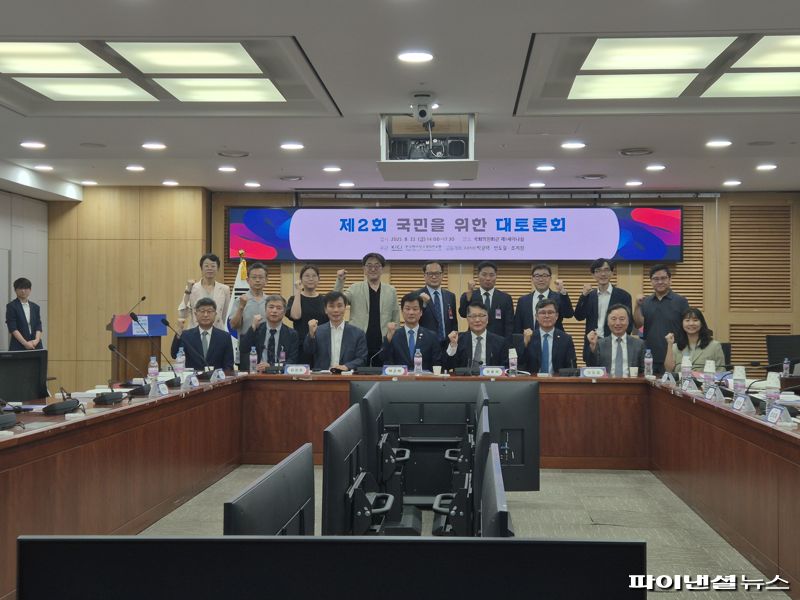
According to the legal community on the 24th, Judge Cho Ui-yeon of the Cheongju District Court conveyed this during the "2nd National Discussion for the People" held by the Korea Institute of Criminology and Legal Policy at the National Assembly Members' Office Building in Yeongdeungpo-gu, Seoul, on the afternoon of the 22nd. Judge Cho stated, "Under our current law, if the prosecution does not request treatment custody for drug offenders, the court has no means to mandate treatment instead of punishment or to enforce treatment as part of the criminal procedure."
The treatment measures for youth drug offenders' addiction under current law are fourfold: △ Treatment Order △ Probation and Completion Order △ Treatment Protection △ Conditional Prosecution Suspension. Treatment Order and Probation and Completion Order were introduced in 2015 and 2019, respectively, to address the issue that Treatment Protection and Conditional Prosecution Suspension are only carried out at the prosecution's request.
Judge Cho also pointed out regarding the court's final disposition, "The biggest problem is that the court cannot intervene in the defendant's treatment, such as supervising treatment or receiving treatment results, as the disposition in the current criminal justice system is fundamentally a judgment imposed by the court as the result of a trial."
The legal community points out that youth drug crimes are at a serious level. Kim Hee-jun, a former chief prosecutor and CEO attorney of Law Firm LKB Pyeongsan, said, "The main age group of drug offenders has shifted from being predominantly in their 40s ten years ago to those in their 20s from 2021, indicating that drug crimes are rapidly becoming younger," and "In fact, over the past ten years, drug offenders in their teens have increased 24 times."
The introduction of problem-solving courts is emphasized as an international trend by the legal community. Judge Cho stated, "In many advanced countries, including the United States, the approach to criminal justice for drug offenders is expanding according to the thinking of problem-solving courts and therapeutic jurisprudence," and "The trend is clear that courts are stepping forward to fundamentally solve the problem by actively providing treatment to addicts within a transformed criminal justice system framework, moving away from a punishment-only approach."
[email protected] Kim Dong-kyu