Strengthening the Capabilities of Regional Responsible Medical Institutions... 75.9 Billion Won Support for Severe and High-Difficulty Treatments
- Input
- 2025-08-24 12:00:00
- Updated
- 2025-08-24 12:00:00
Government Promotes Core Tasks to Strengthen Regional, Essential, and Public Healthcare
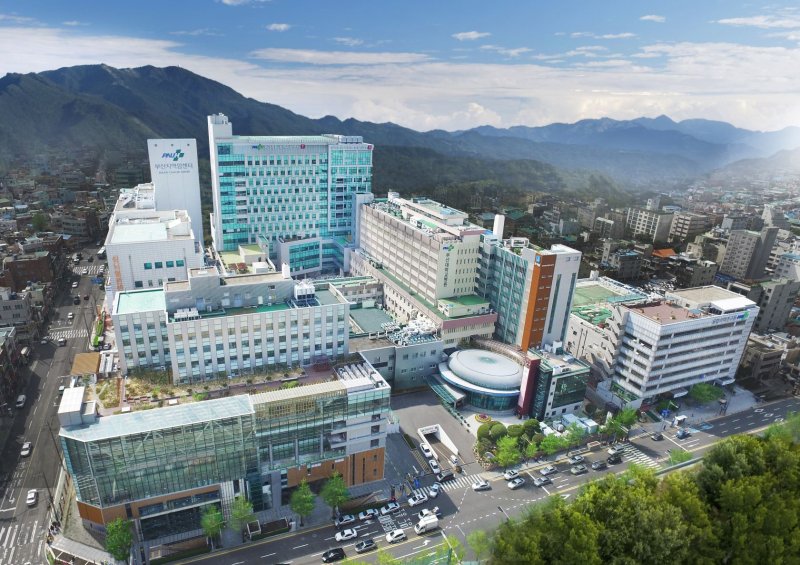
[Financial News] The Ministry of Health and Welfare will support facilities and equipment worth 75.9 billion won to strengthen the capabilities of regional responsible medical institutions centered around national university hospitals for severe and high-difficulty treatments.
The government, which has set strengthening regional, essential, and public healthcare as a national task, is investing large-scale finances to enhance final treatment capabilities within regions.
The Ministry of Welfare announced on the 24th, "We have decided to support intensive care and severe disease treatment facilities and equipment costs for regional responsible medical institutions in 17 cities and provinces nationwide," and "This support was selectively provided reflecting local government business plans and expert evaluations."
This project will be carried out with a total scale of 203 billion won, including 81.2 billion won in national funds and 81.2 billion won in local funds. Among these, 75.9 billion won in national funds was allocated as the first support. Initially, 17 cities and provinces applied for a total of 235.5 billion won, but after expert evaluation, it was adjusted to 189.8 billion won, and the national fund share of 75.9 billion won was finally confirmed.
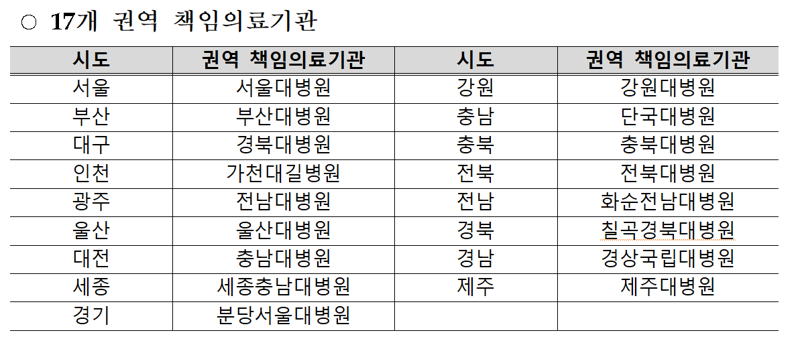
Regional responsible medical institutions have been designated around national university hospitals since 2019 as key hospitals responsible for providing essential high-difficulty medical care and planning and coordinating cooperation systems within the region. Currently, 17 locations are designated in all cities and provinces nationwide, playing a comprehensive role in regional essential healthcare.
In reality, the effects of the support are expected to become visible on-site. Kangwon National University Hospital has secured high-difficulty surgical capabilities by introducing advanced robotic surgical equipment and inviting specialists from large hospitals in the metropolitan area, while Chonnam National University Hospital is enhancing its ability to treat high-risk infectious disease patients by expanding negative pressure isolation wards in intensive care units.
Many regional responsible medical institutions will be able to directly provide final treatment for severe and emergency patients by expanding operating rooms and intensive care units.
Some local governments' proactiveness is also noteworthy. Gyeongbuk, Jeju, and Chungbuk have shown strong determination to solve regional essential healthcare issues by submitting business plans exceeding the allocated budget for each institution to secure additional support.
On the other hand, some areas like Gwangju and Jeonnam, which have not yet met the allocated budget, can receive additional support in the third round of applications in September.
The Ministry of Welfare sees this investment as an opportunity to significantly enhance the final treatment capabilities for severe diseases of regional responsible medical institutions, beyond just expanding equipment.
In particular, due to the project structure based on cooperation between local governments and national university hospitals, it is also expected to institutionally strengthen the responsibility of local governments for regional essential healthcare.
The Ministry of Welfare, in cooperation with related ministries, is also pursuing strategies for the clinical, research, and educational development of regional responsible medical institutions centered around national university hospitals, including △support for specialized research and development (R&D) at regional national university hospitals △increase in full-time faculty at national medical schools (2025-2027) △improvement of regulations that do not match medical realities such as total personnel expenses.
Jeong Tongryeong, Director of Public Health Policy at the Ministry of Welfare, said, "To strengthen weakened regional, essential, and public healthcare, enhancing the final treatment capabilities of regional responsible medical institutions such as national university hospitals must precede," and "We plan to promptly alleviate regional healthcare disparities by solidifying the regional essential healthcare cooperation system based on enhanced clinical capabilities."
[email protected] Kang Jungmo Reporter