Increasing 'Urolithiasis' in the Hot Summer... "Hydration is the Best Prevention" [Weekend Health]
- Input
- 2025-08-22 04:00:00
- Updated
- 2025-08-22 04:00:00
Pain comparable to colic
The most common cause is lack of fluid intake
Excessive intake of salty foods and meat is also a culprit
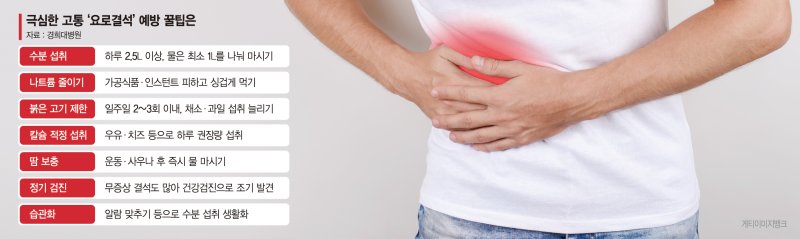
A habit of consuming more than 2.5L of fluids daily is necessary
3D stone modeling based on CT images for customized treatment
The most common cause is lack of fluid intake
Excessive intake of salty foods and meat is also a culprit
A habit of consuming more than 2.5L of fluids daily is necessary
3D stone modeling based on CT images for customized treatment
When stones block the ureter, severe pain occurs, and in severe cases, it can lead to complications such as decreased kidney function or acute pyelonephritis.
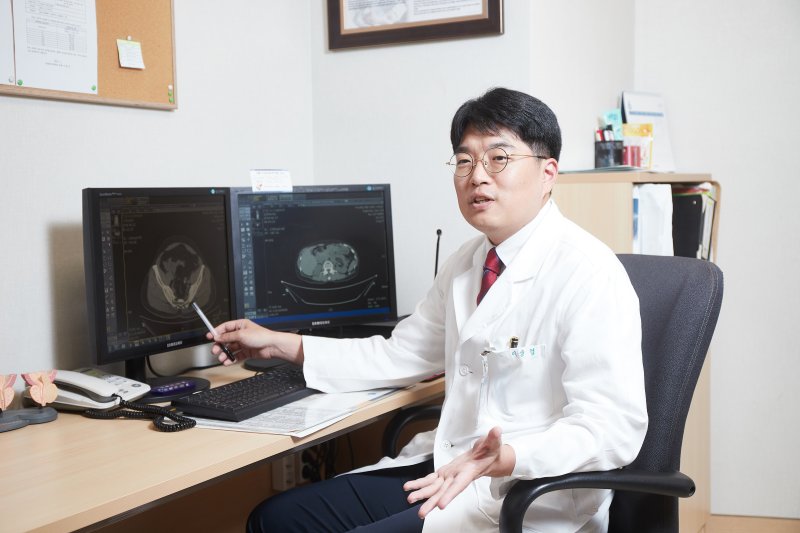
Professor Lee Sang-hyeop of Kyung Hee University Hospital's Urology Department emphasized, "Especially in summer, fluid intake is both prevention and treatment."
■Urolithiasis, Different Symptoms Depending on Location
The urinary tract refers to the entire path from the kidneys where urine is produced, through the ureters and bladder, to the urethra. Symptoms vary depending on where the stone is located.
Kidney stones initially have almost no symptoms. However, as they grow larger, flank pain or hematuria (blood in urine) may occur. Occasionally, stones block urine flow, causing pyelonephritis, accompanied by high fever and chills.
The hallmark symptom of ureteral stones is severe flank pain, described as 'stabbing with a knife.' The pain may spread to the lower abdomen or groin. About 80% of cases are accompanied by hematuria, but there are cases with no hematuria at all, so one should not be reassured by clear urine alone.
Bladder and urethral stones are characterized by dysuria, frequent urination, and urinary retention where no urine is passed. In severe cases, hematuria and difficulty urinating recur.
Professor Lee explained, "Many patients visit the emergency room with 'flank pain' and are diagnosed with urolithiasis," adding, "Especially ureteral stones are so painful that they are compared to labor pain."
Urolithiasis is largely a 'lifestyle disease.' The most common cause is insufficient fluid intake. Salty foods are the enemy of urolithiasis. High sodium levels concentrate urine, increasing the likelihood of stone formation. Excessive meat consumption can also be problematic. Purine, abundant in red meat, increases uric acid, leading to 'uric acid stones.'
Obesity and metabolic syndrome are also causes. Lifestyle diseases such as hypertension, diabetes, and hyperlipidemia are closely related to stone risk. Although not a hereditary disease, family history cannot be ignored.
■Treatment Methods Vary by Stone Size, Location, and Composition
Urolithiasis treatment is determined by the size, location, and nature of the stone. Natural expulsion and medication are possible. If the stone is smaller than 5mm, medication can aid urine expulsion, or it may disappear with simple observation.
Extracorporeal shock wave lithotripsy (ESWL) is a common procedure that is non-surgical and can be done outpatient without anesthesia. It breaks stones into small pieces using shock waves and is most widely used domestically. However, if the stone is hard, multiple procedures may be needed, and the process of stone fragments passing through urine can be painful.
Ureteroscopic surgery uses an endoscope and laser to directly break and remove stones. It can resolve hard stones in one go but requires general anesthesia and hospitalization.
Percutaneous nephrolithotomy and robotic surgery are performed when stones are larger than 2cm or located in complex positions. A small hole is made in the skin to directly remove stones from the kidney, or precise robots are used for surgery.
Kyung Hee Medical Center reconstructs the patient's stones in 3D based on CT images for customized treatment.
Urolithiasis has a high recurrence rate. About half of patients who have experienced stones will develop them again within 5-10 years. Therefore, prevention is crucial. Experts unanimously recommend 'fluid intake.'
It is recommended to consume more than 2.5L of fluids daily. About 1L of fluid can be obtained from meals, so a habit of consistently replenishing 1-1.5L with pure water is necessary. If you sweat a lot after exercise or outdoor activities, you should drink even more. Coffee and alcohol promote diuresis and can cause dehydration, so it is advisable to replenish with water.
Professor Lee emphasized, "Urolithiasis is a small stone but can cause extreme pain and lead to kidney damage," adding, "In summer, fluid intake habits are key to prevention." He also noted, "For those with a history of stones, managing lifestyle and regular check-ups are important to prevent recurrence."
[email protected] Kang Jung-mo Reporter