[fn Editorial] Towards a Progressive Korea-Japan Relationship Surpassing the Kim Dae-jung-Obuchi Declaration
- Input
- 2025-08-21 18:06:19
- Updated
- 2025-08-21 18:06:19
Lee, conciliatory message ahead of Korea-Japan summit
Japan should respond with advanced content
Japan should respond with advanced content
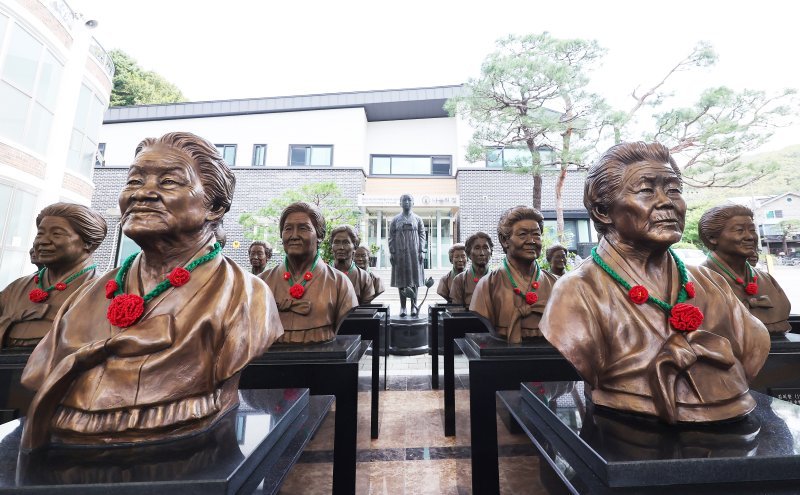
Our country has experienced significant turning points in Korea-Japan diplomatic relations with each new government. This is due to the large differences in perception of historical issues and the methods to resolve them between Korea and Japan. Among them, the issues of comfort women and forced labor have been very sensitive. President Lee did not deny the normalization policy of Korea-Japan relations of the previous government, stating that "it is a very difficult agreement for the Korean people to accept". He chose continuity over changes in relations due to regime change. It is a realistic judgment that it is difficult to respond to the complex international situation without improving Korea-Japan relations, and it does not help to ease tensions on the Korean Peninsula.
We have indeed made considerable concessions to Japan for the normalization of Korea-Japan relations. The 2015 comfort women agreement of the Park Geun-hye government and the 2023 third-party compensation proposal for forced labor of the Yoon Suk-yeol government are representative. It was a decision made while enduring the deterioration of public opinion and the drop in the government's approval rating. President Lee also showed his intention to succeed the restoration of Korea-Japan relations that the previous government had taken through this interview.
However, compared to the sincerity of our government, Japan's response has fallen far short of expectations. A representative example is the non-fulfillment of promises related to Battleship Island. At the time of the 2015 World Heritage registration, Japan promised the international community to inform about the forced labor of Koreans, but it has not been properly implemented until now.
Nevertheless, we cannot revert Korea-Japan relations to the uncomfortable past. The first reason is to jointly respond to the geopolitical risk of North Korea's nuclear threat. Economically, cooperation must be strengthened to overcome the common problem of stagnant growth rates. The interdependence between the two countries is very high both geopolitically and economically. Being entangled in historical issues will result in losing opportunities and effects of cooperation. Korea-Japan relations must now develop into a future-oriented relationship beyond normalization. For this, a proactive change in Japan's attitude is necessary first. The future of Korea-Japan relations depends on Japan's response.
The Korea-Japan summit to be held on the 23rd should be the first step to elevate bilateral relations to a future-oriented level. We hope that the two countries will come up with a new joint declaration that surpasses the 1998 Kim Dae-jung-Obuchi Joint Declaration. Even if a new declaration is made, it is meaningless if it is only flashy on the surface and ends up as an empty echo without substance. Specific measures for practical cooperation and trust-building must be mentioned.
Since our side made concessions during the previous government, and President Lee also expressed an intention of cooperation and reconciliation rather than a rupture in bilateral relations, Japan should approach it with the attitude of filling the remaining half of the glass. By doing so, if trust between the two countries is further built, we can strengthen and expand economic, security, and cultural cooperation and exchanges to embrace a new future together. We expect Japan to respond to President Lee's conciliatory message with more advanced measures for improving relations.