Seoul City, Preemptive Prevention of Manhole Suffocation Accidents... Mandatory Use of Bodycams and Gas Concentration Meters
- Input
- 2025-08-21 11:47:42
- Updated
- 2025-08-21 11:47:42
From September, priority application to city-affiliated offices and workplaces
Revision of confined space work manuals tailored to workplace characteristics
Emergency rescue equipment permanently installed... Creation of a rapid rescue environment
Revision of confined space work manuals tailored to workplace characteristics
Emergency rescue equipment permanently installed... Creation of a rapid rescue environment
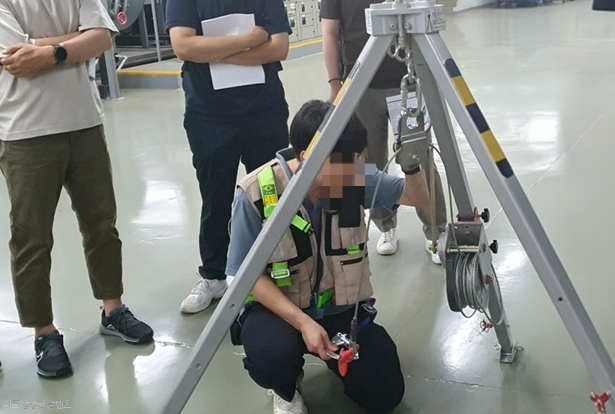
[Financial News] Seoul City is strengthening the prevention of suffocation accidents during confined space work such as manholes, water pipes, and common ducts. The key is to thoroughly adhere to basic safety rules to preemptively prevent accidents for 'zero suffocation disasters,' which have the highest fatality rate among industrial accidents.
Seoul City announced on the 21st that starting in September, it will mandate the use of 'bodycams (cameras attached to the body)' and 'gas concentration meters' during confined space work in all city-affiliated workplaces.
According to the Ministry of Employment and Labor, there have been a total of 298 confined space disaster victims over the past 10 years from 2015 to 2024. Of these, 126 resulted in death, with a fatality rate of 42.3%. In particular, the suffocation fatality rate during manhole work is 54.5%, with 36 out of 66 victims losing their lives.
The 'bodycam' attached to workers' helmets records essential pre-work procedures on video, such as △gas concentration measurement △ventilation device operation △safety protective gear wearing △supervisory agency work permit approval. It plays a role in fundamentally blocking unauthorized entry into confined spaces.
The 'gas concentration meter' is a device that can check oxygen and harmful gas concentrations in real-time. When a dangerous concentration is detected, an alarm sounds automatically, helping workers to immediately stop work and evacuate quickly.
In addition, measures have been taken to permanently install emergency rescue equipment such as air respirators, air supply masks, and tripods on-site to enable rapid worker rescue in case of an accident. The confined space work rules and permit procedures reflecting workplace characteristics have been meticulously revised, and the roles of the executing entities have been clearly defined in the manual to strengthen the safety management system for preventing suffocation accidents.
The city plans to apply these measures first to all 38 offices with confined space work among its affiliated workplaces, and then disseminate them to all 25 autonomous district-affiliated workplaces. This includes 38 offices, 98 workplaces, and 2,399 locations such as the Arisu Headquarters, Water Reclamation Center, Park Leisure Center, Road Office, and City Hall.
On-site practical safety training for supervisors and workers will also be strengthened. The plan is to enhance safety compliance capabilities through systematic education on the use of safety equipment, safe work procedures, and emergency rescue procedures.
In addition, safety rules or risk factors to be observed during confined space work will be distributed through notices, and on-site safety promotion campaigns will also be conducted.
Han Byeong-yong, head of Seoul City's Disaster and Safety Office, said, "Suffocation accidents in confined spaces can be reduced and prevented by checking the work environment in advance and adhering to basic safety rules," adding, "Seoul City will create a safe and disaster-free work environment by promoting systematic preventive measures along with this action."
[email protected] Lee Chang-hoon Reporter