[Interview] Im Hye-ri, Executive Director of Uni-One Communications
- Input
- 2025-08-21 08:43:38
- Updated
- 2025-08-21 08:43:38
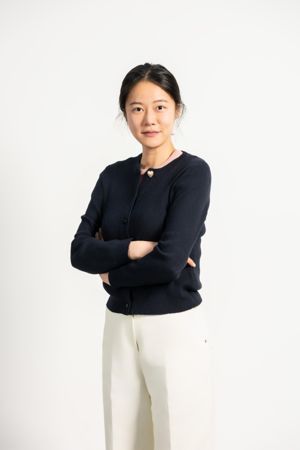
[Financial News] "I hope that visually impaired visitors can fully enjoy the art through this exhibition and experience the emotions conveyed at their fingertips."
Im Hye-ri, Executive Director of Uni-One Communications, who planned the country's first art exhibition for the visually impaired, 'Dark Art Museum for the Visually Impaired', said on the 21st, "This exhibition provides a practical opportunity for visually impaired people to enjoy art and shows the possibility that technology can expand the limits of art appreciation," emphasizing that "it will further serve as a catalyst for new discussions on cultural and artistic accessibility across society."
This exhibition, themed 'Senses; Another Way to Meet Art', will be held at the Ieum Gallery in Daehak-ro, Seoul, from September 4th to 7th. The exhibition offers a special experience of appreciating masterpieces with fingertips, proposing a new approach to art that deviates from the traditional visual-centered viewing method.
Executive Director Im led the overall operation of this exhibition, participating from the early planning stages, and spearheaded the development of the exhibition's concept, content composition, and spatial presentation. She also designed a close collaboration structure between artists, technology teams, and operation teams, coordinating technical and directorial variables that could arise during the exhibition implementation to enhance completeness.
The selection of works and the direction of the exhibition were handled by Artistic Director Im Sang-woo, while the implementation of 3D printing technology was overseen by Technical Director Oh Jun-ho, with students from Hanyang University ERICA's Department of Mechanical Engineering also participating in the production of the works.
From the pre-exhibition stage to on-site operation, the optimal environment for visually impaired visitors was designed. Before the opening, the effects of tactile art were analyzed through a viewing response (appreciation) test of the same works by measuring brainwaves of the general public, and the exhibition tickets included Braille and voice guide QR codes. Braille captions and guide blocks were placed on site, and professional audio description recordings were made to fully convey the shape, texture, content, and context of the works.
She said, "Through planning and operating various cultural and artistic projects, I confirmed that the opportunity for people with disabilities to enjoy culture and art is significantly lower compared to the general public," adding, "This exhibition was planned to reduce the gap with the general public and provide a new art experience for the visually impaired."
According to actual statistics, the non-attendance rate of cultural and artistic activities for non-disabled people is 23.9%, while for people with disabilities, it is 64.5%, about 2.7 times higher.
This exhibition started from the perspective that art can be felt through senses, including fingertips, instead of sight. The brushstrokes, texture, and color of the original paintings were implemented as close to the original as possible, allowing visually impaired people to receive the same level of emotion as the general public. Additionally, a professional commentary audio clip was added to provide a three-dimensional appreciation experience that combines touch and hearing.
Executive Director Im explained, "The process of designing the viewing environment for the visually impaired was the main focus," adding, "We meticulously reviewed the exhibition layout, artwork height and position, lighting, and safety elements from the perspective of the visually impaired, and consulted with the Korea Disabled Artists Association and the Korea Blind Union to enhance understanding of the viewing experience for the visually impaired."
This exhibition, prepared with the visually impaired in mind, does not simply stop at three-dimensionalizing flat images but features detailed analysis of the original brushstrokes, texture, and painting style to implement a customized 3D modeling for the visually impaired. This conveyed the emotions and textures of the original paintings. The related technology is currently patent-pending as a '3D Object Learning and Generation System Using AI'.
She emphasized, "Starting with this exhibition, we will create a culture that everyone can enjoy by combining the values of art, technology, and inclusion," adding, "I hope this exhibition will be the first step in that journey and a driving force for greater change."

rsunjun@fnnews.com Yoo Seon-jun Reporter