'Pickup Desert' is a Thing of the Past... 'K-Pickup Trucks' Go Global
- Input
- 2025-08-21 15:07:44
- Updated
- 2025-08-21 15:07:44
This year's domestic pickup truck exports increased by 76.4% compared to last year
Both domestic and export markets show the fastest growth among all vehicle types
Fierce competition with new models like Kia 'Tasman' and KGM 'Musso EV'
Both domestic and export markets show the fastest growth among all vehicle types
Fierce competition with new models like Kia 'Tasman' and KGM 'Musso EV'
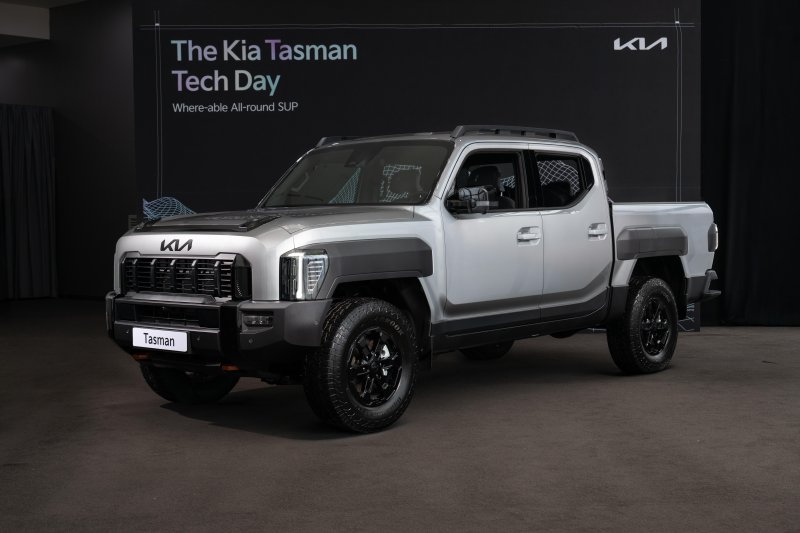
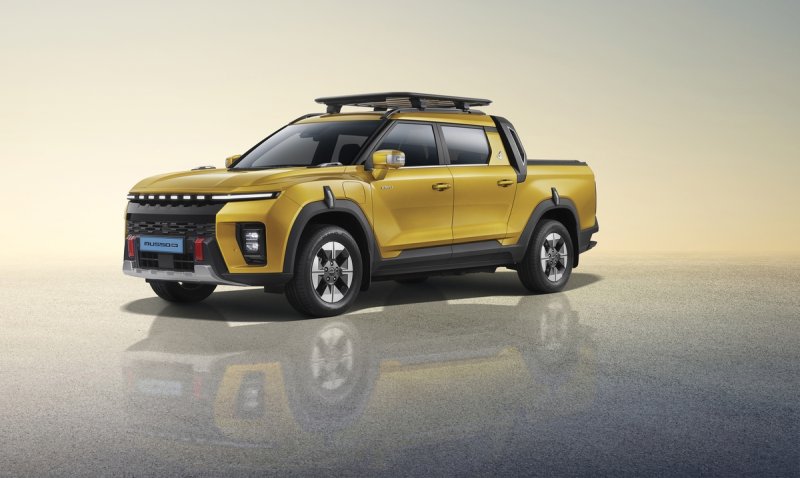
[Financial News] The K-pickup truck, once considered an 'ugly duckling' both domestically and abroad, has been found to have driven exports in the first half of this year.
In particular, this year, it has recorded the highest growth rate, surpassing major vehicle types such as sedans and SUVs, with competitive models being released one after another in the domestic market, leading to an increase in consumers opening their wallets for domestic pickup trucks.
According to the Korea Automobile Mobility Industry Association (KAMA) on the 21st, domestic automakers exported a total of 4,677 pickup trucks last month, a 427.9% increase compared to the same period last year (886 units). Considering that the overall passenger vehicle sales growth, including pickup trucks, was 5.7% during the same period, it can be said that last month's automobile export growth was solely driven by pickup trucks.
Even looking at the cumulative export volume this year, the growth rate of pickup trucks was the steepest among all vehicle types. From January to July this year, a total of 14,295 domestic pickup trucks were exported, a 76.4% increase compared to 8,104 units in the same period last year. In contrast, small cars saw a 27.2% decline, large cars an 18.1% decline, and SUVs a 1.2% decline in export volume during the same period.
Kia has been actively exporting the pickup truck 'Tasman', launched this year, since June. The Tasman is produced entirely at the Autoland Hwaseong plant. Major export regions include the Asia-Pacific region. KG Mobility (KGM), a traditional domestic pickup powerhouse, is targeting emerging markets such as Europe, the Middle East, and Latin America.
The growth of pickup trucks is notable not only in exports but also in the domestic market. Last month, 3,230 domestic pickup trucks were sold domestically, a 156.8% increase compared to the same month last year (1,258 units). The cumulative sales volume up to July also increased from 7,761 units to 14,717 units, an 89.6% increase.
Both the monthly sales volume and the cumulative sales volume showed the fastest growth among all vehicle types in one year. The cumulative sales volume up to July this year has already surpassed the total pickup truck sales volume for last year (13,147 units).
The rapid growth of domestic pickup trucks is largely attributed to the impact of Kia's Tasman, released this year. Until now, the domestic pickup truck market was virtually monopolized by KGM. Hyundai Motor Group lacked a domestic pickup model, and imported pickup trucks, except for Chevrolet's Colorado, did not gain much traction in the domestic market.
However, starting with Kia's Tasman this year, KGM has also been defending the market with new pickup trucks featuring various powertrains, providing consumers with more choices, which is analyzed as the background for the success.
KGM introduced the electrified version 'Musso EV' in addition to its existing main model, the Musso Sports, this year. KGM plans to leverage its accumulated pickup know-how as a market leader and diversify its powertrains to compete in the global market.
Hyundai Motor Group has also started to actively target the pickup truck market. Kia is reportedly considering developing an electrified model of the Tasman, and Hyundai Motor Group has partnered with 'pickup powerhouse' General Motors (GM) to gain pickup truck know-how.
The reason companies are rushing into the pickup truck market is also analyzed as being because pickup trucks can ensure high profitability through derivative products and other means.
An automotive industry official said, "Pickup trucks have a better profit margin compared to sedans or small SUVs," adding, "For automakers, they can maximize profitability by offering various options according to consumer preferences." [email protected] Jeong Won-il Reporter