SM Line, 'Vietnam' Becomes a Bridgehead to the US [Korea-Vietnam Cooperation, Shipping Takes the Lead②]
- Input
- 2025-08-20 14:24:56
- Updated
- 2025-08-20 14:24:56
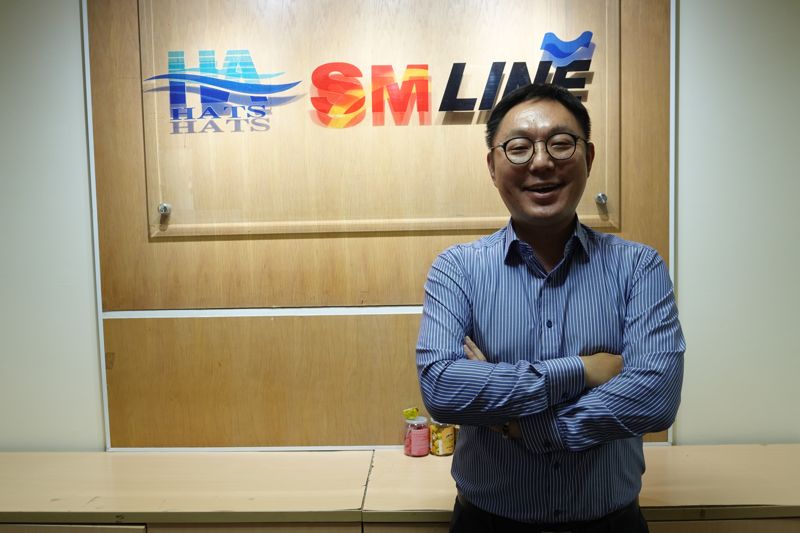
Choi Si-young, SM Line Vietnam Branch Manager
Considering New Service from Haiphong to the Americas
Considering New Service from Haiphong to the Americas
【Ho Chi Minh (Vietnam) = Kang Gu-gwi, reporter】SM Line, a subsidiary of SM Group, is accelerating its business expansion by using 'Vietnam' as a shipping bridgehead to the US. This is a swift move following Vietnam's elevation to a comprehensive strategic partnership (CSP) with the US in September 2023. Especially, as Vietnam is expected to play a role as a complementary production base amid the US-China trade conflict, it is judged that new opportunities can be pioneered.
■Diversification of Shipping Services from the Americas
Choi Si-young, SM Line Vietnam Branch Manager, met with Financial News on the 20th and said, "We are considering new services from Haiphong to the Americas by utilizing the existing intra-Asia network," and "We plan to provide more segmented customized solutions by reflecting the diverse demands of local shippers." The solution to expand supply was found in the US, breaking away from the Asia route structure centered on Korea.
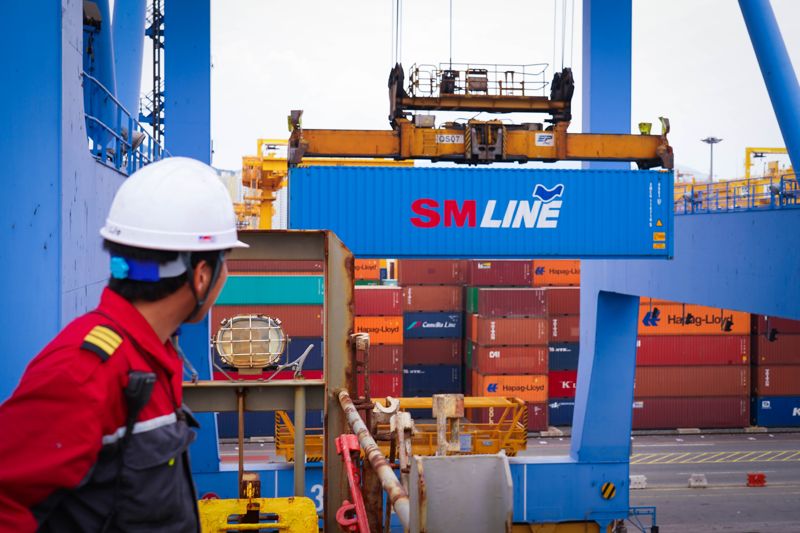
Currently, SM Line provides shipping services from Ho Chi Minh to Shanghai. Through this, it can reach Long Beach Port Terminal in California, USA, and Vancouver Port Terminal in Canada. This shipping service is continuing a growth trend of doubling compared to the previous year. SM Line is considering expanding its American service by newly introducing services from Haiphong, considering the industrial development of northern Vietnam.
Branch Manager Choi said, "SM Line has the rare advantage of being able to provide both American and Asian services simultaneously. From the perspective of the shipper, they can use package services through one partner, enhancing logistics efficiency and operational convenience," and "The American service is highly evaluated for its quick unloading at the destination, fast rail connections, and flexible services tailored to the characteristics of the cargo." Major items for American-bound cargo are furniture and tires. Contracts have been signed with companies like Kumho Tire, taking responsibility for exports.
SM Line's Vietnam branch operates in Ho Chi Minh, Hanoi, and Haiphong. In Ho Chi Minh, 14 personnel oversee sales and customer service in the southern region and manage profits and operations for the entire Vietnam. Hanoi focuses on sales and customer service in the northern region with 6 personnel. Haiphong has 6 personnel in charge of local container arrivals and import cargo management. Cargo bound for Korea is at the level of 600 TEU per week. It transports a variety of products from low-cost items like plywood and wood pallets to footwear, clothing, electronics, and chemicals. Considering that wages in Hanoi are lower than in Ho Chi Minh, clothing transportation is also increasing.
He emphasized, "Each office has clearly defined roles, so there is no duplication of work, but when necessary, they cooperate closely like one team," and "They can respond quickly and flexibly to unexpected variables or market changes." He added, "Since the personnel who know the local situation better than anyone else support decision-making at each base, they can provide faster and more accurate services at the customer interface."
■"Vietnam, Noteworthy for Rapid Deep Seaport Development"
He noted Vietnam's coastline of over 3,200 km and the rapidly growing development of deep seaports. It is judged that this could be an important infrastructure base for large ship berthing and multimodal logistics activation. Rapid development is taking place in the Ho Chi Minh coastal area centered around Vung Tau, as well as in the northern Vietnam Haiphong area. Based on continuous deep seaport development and rapidly increasing import and export cargo volume, Vietnam is seen to have great potential to grow into a hub port.
He explained, "It is showing prominence in the NVOCC (Non-Vessel Operating Common Carrier) field, rapidly expanding its service network and customer base," and "Vietnam is pursuing ship enlargement and service area expansion simultaneously, starting from domestic transportation, and expanding the network to coastal routes including South China."
He further diagnosed, "In the short term, it will play an important role in enhancing intra-regional logistics efficiency, and in the long term, it will serve as a base for the Southeast Asian shipping network," and "As government infrastructure investment and private service innovation coincide, there is a high possibility that the national competitiveness of 'manufacturing and export powerhouse' will continue in the shipping industry."
He also saw the acceleration of production and volume transfer from China to Southeast Asia due to the US-China trade conflict as an opportunity factor.
According to the US shipping research institute JOC as of the first half of this year, exports decreased by 0.2% in China compared to the same period last year, while Vietnam increased by 28% during the same period. Overall, Southeast Asia increased by more than 20%. Cambodia increased by 40% during the same period, but the absolute volume is only one-fifth of Vietnam's.
He said, "Vietnam is strengthening its status as an 'alternative production base to China' in major items, although it is difficult to replace all of China," and "The inflow of Chinese capital into northern Vietnam and the relocation of South China manufacturing plants pose a possibility of supply chain dependency, so Vietnam will establish itself as a key export country complementing China."
[The article was written with support from the Sea's Product Foundation and the Korea Maritime Journalists Association.] [email protected] Kang Gu-gwi, reporter