[fn Editorial] Securing Profitability through Thorough Inspection of Loss-Making Nuclear Power Plant Exports
- Input
- 2025-08-19 19:06:04
- Updated
- 2025-08-19 19:06:04
Barakah Nuclear Power Plant in UAE Turns to Deficit
Need to Break Away from Low-Cost Bidding and Quantitative Growth
Need to Break Away from Low-Cost Bidding and Quantitative Growth
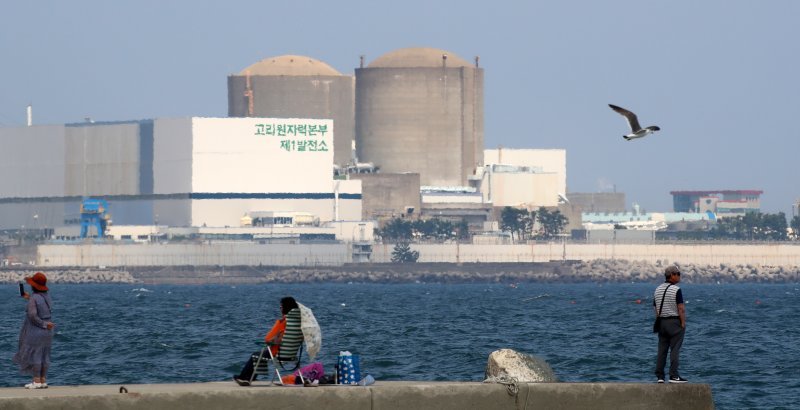
The inability to meet the construction period on time is pointed out as the cause of the deficit. This project, which was won for 22.6 trillion won in 2009, was originally scheduled to be completed in 2020. However, it was delayed by four years, resulting in additional costs amounting to 1.4 trillion won. It is disappointing that the first overseas nuclear power plant order, which was obtained by mobilizing national capabilities, is in deficit. The possibility of receiving additional costs from the ordering party, the UAE, is also unclear. As a result, the public may have to bear that cost.
Moreover, as nuclear power plant exports are expected to increase further, there is concern that there may be consecutive deficits. This is due to the global agreement between Korea Hydro & Nuclear Power and Westinghouse. According to this agreement, every time our country exports a nuclear power plant unit, it is said to include the purchase of goods and services worth about 900 billion won and a technology usage fee of about 240 billion won to Westinghouse. Furthermore, the contract is said to last for 50 years. Even before the contract with Westinghouse, there was a deficit in nuclear power plant exports, so if the agreement is followed, it is unlikely to expect a profitable business. The serious issue is that even for independent exports of next-generation nuclear power plants such as Small Modular Reactors (SMR), which are mentioned as future export mainstays, Westinghouse's technology independence verification must be received. The adverse factors of technological dependence and business viability deterioration are numerous. In fact, during the bidding process for the Dukovany nuclear power plant in the Czech Republic, it was revealed that a significant cost was paid, including providing various business rights to Westinghouse.
Of course, a large infrastructure project like a nuclear power plant cannot be judged solely on business viability from a single export. It is reasonable to comprehensively consider the forward and backward linkage effects that occur when exporting a nuclear power plant unit. Nevertheless, if a deficit of trillions occurs as in the UAE nuclear power plant, it is unacceptable. If a public corporation incurs a deficit, the burden falls on the public.
As the global nuclear power plant market expands, I believe it is time to re-examine our country's nuclear power plant export strategy. First, we need to strengthen qualitative judgment from the existing quantitative victory-oriented approach. It's time to carefully consider profitability rather than just being happy about exporting nuclear power plants. We need to break away from the past method of excessive low-cost bleeding exports that only increase performance.
To do so, a systematic management plan for the entire process from export to project management must be transparently conducted. There is a need to further enhance the structure that refines project management capabilities, risk analysis, and contract conditions.
Vaguely talking about 'comprehensive value' without specific calculation grounds and verifiable data is typical ad-hoc management. We need to establish transparent and objective evaluation criteria that can comprehensively judge the tangible and intangible values of nuclear power plant exports.
Nuclear power plant exports are directly linked to strengthening national competitiveness. However, no matter how national a business it is, unprofitable deals cannot be tolerated. And a losing nuclear power plant business is never sustainable. To truly succeed in nuclear power plant exports, creating a profitable business structure is a priority.