Controversial Work that Turned the 20th Century Art World Upside Down [Lee Hyunhee's 'Art Talk']
- Input
- 2025-08-18 19:00:01
- Updated
- 2025-08-18 19:00:01
Andy Warhol 'Campbell’s Soup II'
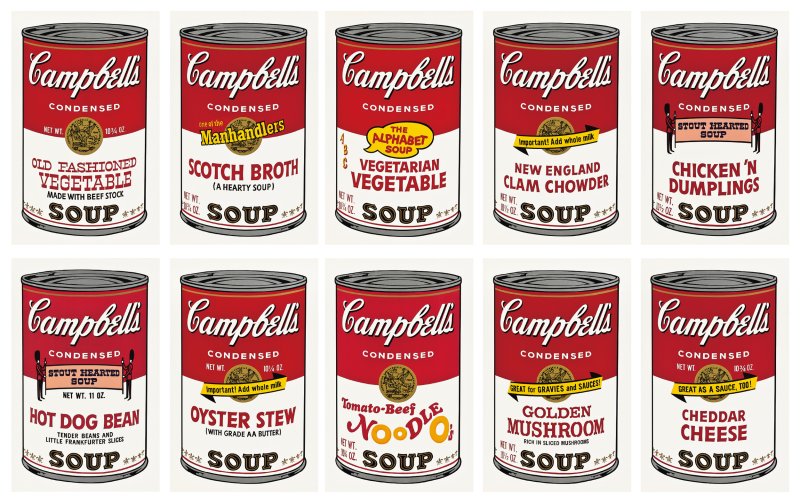
Despite gaining fame in commercial art by winning prestigious awards, Warhol switched to fine art. He explored the relationship between popular culture and art using the silk-screen technique he learned while creating album covers and promotional materials for record companies, and began his full-fledged activities in the 1960s, although he did not make a strong impression in the art world from the start.
While pondering his originality as an artist and his differentiation from other artists, Warhol received a suggestion from his acquaintance Muriel Latow to 'draw something that anyone can easily recognize'. He then thought of the Campbell's Soup can, which was famous for winning the Paris World's Fair award and was enjoyed by many, and began creating works using it as a subject.
In his first exhibition, he standardized the canvas size and depicted 32 types of soup can images on each canvas. When the exhibition opened, his work caused controversy in the global art world. With reflections of commercialism and non-painterly style, reactions like 'Is this art?' erupted. However, as a result of this shock, Warhol and pop art became unique presences in 20th-century art.
Warhol's success and the symbolism of the Campbell's Soup can can be inferred from the cover of the May 1969 issue of the American magazine 'Esquire', which featured an image of him diving into a Campbell's Soup can. The 'Campbell's Soup II' print set he released the same year was composed of more diverse images than before and increased in size, offering another new perspective on the image of the mass production era.
Seoul Auction Archive Team Leader