After the Abbot's Death, Money 'Sneaked' from Account... Supreme Court Recognizes Embezzlement
- Input
- 2025-08-18 13:43:37
- Updated
- 2025-08-18 13:43:37
"No Trust Relationship Recognized for Property"... Second Trial Finds Not Guilty of Embezzlement
Supreme Court Says Property Must Be Protected and Managed Based on Principles of Reason and Good Faith
Supreme Court Says Property Must Be Protected and Managed Based on Principles of Reason and Good Faith
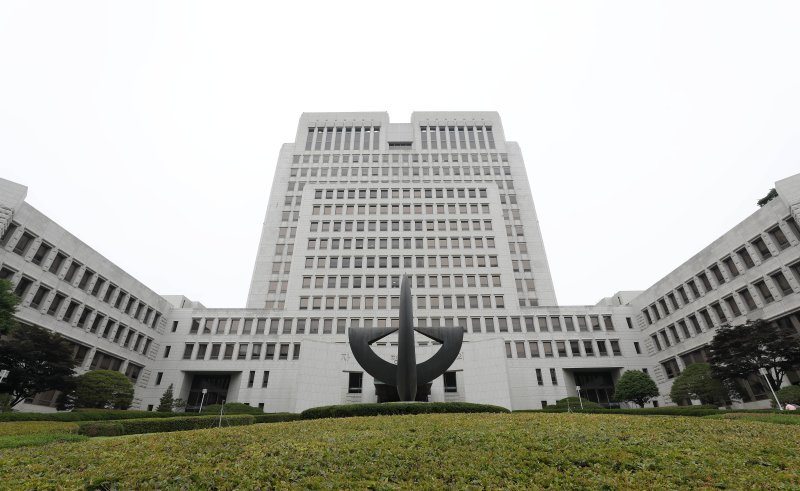
[Financial News] The Supreme Court has ruled that a temple monk and manager who withdrew money from the account of a deceased abbot without the heirs' knowledge can be punished for embezzlement.
According to the legal community on the 18th, the Supreme Court's 3rd Division (Chief Justice Noh Kyung-pil) overturned the original judgment that found A and B not guilty of embezzlement charges, including forgery and forgery instruction of electronic records, and sent the case back to the Seoul Northern District Court.
A person named C, who served as the abbot of a temple in Seoul, died of COVID-19 in March 2022. A, who was the Wonju (the person in charge of temple affairs) of the temple, had managed C's account and was brought to trial on charges of transferring 250 million won from C's account to B, the succeeding abbot.
The prosecution applied embezzlement charges, seeing that the two conspired to embezzle the property of C's heir.
The first trial recognized all charges as guilty and sentenced A to six months in prison with a two-year probation, and B to one year in prison with a two-year probation.
However, the second trial maintained the sentences of the two but found them not guilty of embezzlement. Embezzlement is established when 'a person who holds another's property embezzles or refuses to return it,' but it was judged that there was no trust relationship recognized regarding C's property between A and the heir.
The second trial court explained, "The trust relationship regarding the account between C and A is considered terminated with C's death," and "There is no circumstance found that a contract was made to manage the money in the account between the heir and A after the death of the deceased."
However, the Supreme Court overturned the judgment, stating, "There is sufficient room to consider that A was in a position to hold the money deposited in C's account for the heir based on a trust relationship."
The Supreme Court cited the existing legal principle that 'a trust relationship does not necessarily have to be established by contract and can also be established by business management or custom.'
The Supreme Court stated, "A held the passbook, cash card, and seal connected to C's account by C's delegation and was holding the money deposited in the account," and "A can be seen as a person who substantially dominated the account by the deceased's delegation and was in a position to protect and manage the victim's property based on the principles of reason or good faith."
[email protected] Minji Seo Reporter