"Need Permission to Date a Boyfriend" Bullying and Sexual Harassment Professor... Supreme Court: "Dismissal Justified"
- Input
- 2025-08-17 12:18:53
- Updated
- 2025-08-17 12:18:53
Won in First Trial → Lost in Second Trial... Appeal Dismissed by Supreme Court
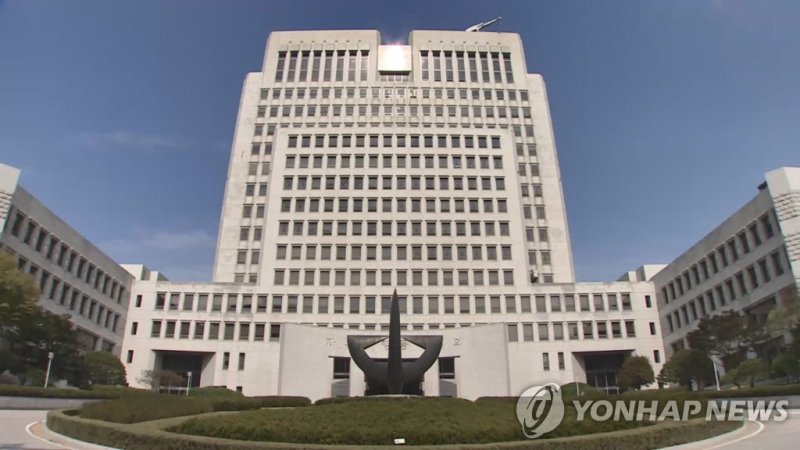
[Financial News] The Supreme Court has ruled that the dismissal of a professor who has been consistently sexually harassing and bullying graduate students is justified.
According to the legal community on the 17th, the Supreme Court's 3rd Division (Chief Justice No Kyung-pil) confirmed the lower court's decision to dismiss the appeal filed by Seoul National University Professor A against the Teacher Appeal Review Committee's decision to dismiss him.
Professor A was dismissed in August 2019 for reasons including sexual harassment of graduate students and duplicate publication of papers. It was investigated that he unfairly reprimanded or controlled students by sending group emails with the intent that "students should pay attention to manners, such as sticking to the advisor like a shadow and serving."
He also excessively interfered in students' private lives by saying to a graduate student, "You need permission to date a boyfriend." Touching a student's thigh or instructing a student to link arms were also reasons for disciplinary action.
Seoul National University notified Professor A of his dismissal, and in response, he filed an appeal with the Teacher Appeal Review Committee. However, when the appeal was dismissed, he filed a lawsuit to cancel the decision.
The lower courts had differing opinions. The first trial sided with Professor A, considering that he was acquitted in the criminal trial related to sexual harassment charges.
The first trial court noted, "Some of the reasons for disciplinary action were not recognized, and evidence collected by the victim's side through illegal means was submitted during the Human Rights Center's investigation," adding, "It was unusual for the Human Rights Center to request a suspension of more than three months, but the heaviest disciplinary action of dismissal was imposed."
However, the second trial's judgment was different. The second trial court stated, "The evidence submitted by the plaintiff alone is insufficient to recognize that the dismissal was a significant abuse of discretion in terms of social norms," and "Even if the sexual harassment part of the disciplinary reasons cannot be recognized, the remaining disciplinary reasons alone are sufficient to acknowledge the validity of the dismissal."
Furthermore, regarding Professor A's actions, it was pointed out that "it stemmed from the vertical and authoritative relationship between the professor and the graduate students, constituting an abuse of authority or bullying using a superior position," and "our society no longer tolerates such types of misconduct and demands strict accountability."
The Supreme Court dismissed Professor A's appeal, seeing no error in the legal interpretation of the lower court's judgment.
During the trial, Professor A argued that the investigation was based on evidence collected through illegal means, but this was not accepted. The Supreme Court, following the first and second trials, also stated, "The principle of exclusion of illegally collected evidence as stipulated in the Criminal Procedure Act cannot be directly applied to administrative litigation."
[email protected] Seo Min-ji Reporter