Clash of Yellow Envelope Act and Commercial Act in August Extraordinary Session... Intensified Confrontation Between Parties
- Input
- 2025-08-17 12:15:24
- Updated
- 2025-08-17 12:15:24
Democratic Party plans to process Yellow Envelope Act and 2nd Commercial Act amendment
People Power Party announces second filibuster
Ruling party accelerates on three major reforms: prosecution, media, and judiciary
People Power Party announces second filibuster
Ruling party accelerates on three major reforms: prosecution, media, and judiciary
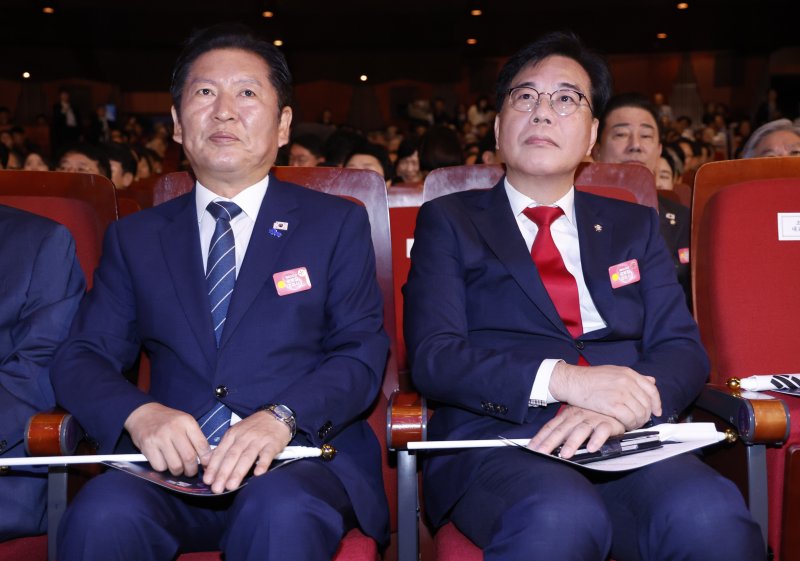
[Financial News] The confrontation between the ruling and opposition parties is intensifying. With the search and seizure of the People Power Party's central office and the special pardon of former leader Cho Kuk of the Cho Kuk Innovation Party, the conflict has deepened. Meanwhile, the Democratic Party plans to address contentious bills such as the Broadcasting Act and the Yellow Envelope Act (amendments to Articles 2 and 3 of the Trade Union Act) this week, making a clash in the August extraordinary session inevitable.
According to political circles on the 17th, the Democratic Party plans to start processing major bills from the first plenary session of the August extraordinary session, which begins on the 21st. Moon Geum-ju, spokesperson for the Democratic Party, told reporters at the National Assembly communication center that "the processing of the bills is expected to proceed as planned" during the August extraordinary session.
In the previous session, due to the People Power Party's filibuster (unlimited debate), only the amendment to the Broadcasting Act, which improves the governance structure of KBS, was passed among the three broadcasting laws. Accordingly, the Democratic Party plans to process the amendments to the Broadcasting Culture Promotion Act, the Korea Educational Broadcasting System Act, the Yellow Envelope Act, and the 2nd Commercial Act amendment when the plenary session is held on the 21st.
The Yellow Envelope Act focuses on limiting companies' claims for damages against striking workers and granting subcontracted workers the right to negotiate with the primary contractor. The core is the 'expansion of the definition of employer.' It means that a person who can practically control and decide on working conditions, even if not a party to the employment contract, is considered an employer. It provides a legal basis for subcontracted workers to demand negotiations with the primary contractor. The 2nd Commercial Act amendment includes the introduction of cumulative voting and the expansion of separate election of audit committee members. The business community expresses concerns that all these will increase the burden on companies.
The People Power Party plans to enter a second filibuster confrontation over contentious bills, but the Democratic Party intends to pass these bills according to the so-called salami tactics. According to the National Assembly Act, if unlimited debate begins, a closure vote is possible if more than three-fifths (180 seats) of the total members agree after 24 hours. Considering this structure, it seems that the contentious bills will pass under the leadership of the Democratic Party as early as the 24th.
Under the leadership of the new leader Jeong Cheong-rae, the Democratic Party is expected to accelerate reform legislation through the special committee on the three major reforms: prosecution, media, and judiciary. Previously, leader Jeong emphasized "a strong reform party leader" during the party convention, stating, "I will complete the reforms of the prosecution, media, and judiciary before Chuseok."
Accordingly, the Democratic Party plans to complete the legislation of the three broadcasting laws and, as early as next month, push for media reform legislation introducing 'punitive damages' against the media. They also plan to push five key agendas before Chuseok: increasing the number of Supreme Court justices, improving the method of recommending Supreme Court justices, improving the judge evaluation system, expanding the disclosure range of lower court judgments, and introducing a pre-examination system for search and seizure warrants. Additionally, they are considering a plan to completely separate investigation and prosecution by abolishing the Prosecutor's Office and establishing the Serious Crime Investigation Office, the Prosecution Office, and the National Investigation Committee. On the 7th, the Democratic Party held the first party-government consultation on prosecution reform with the government and emphasized completing related legislation before Chuseok, with the final draft of the first phase bill to be confirmed on the 26th.
[email protected] Choi Jong-geun Reporter