Era of 1.3 Million Migrant Workers in Korea... "Discrimination and Violence Persist"
- Input
- 2025-08-17 14:55:02
- Updated
- 2025-08-17 14:55:02
Migrant workers have become essential personnel in the industry
Harassment and violence incidents continue in various places
Policy restricting workplace changes criticized as 'forced labor'
Government plans to reform the system by gathering opinions from labor and management
Harassment and violence incidents continue in various places
Policy restricting workplace changes criticized as 'forced labor'
Government plans to reform the system by gathering opinions from labor and management
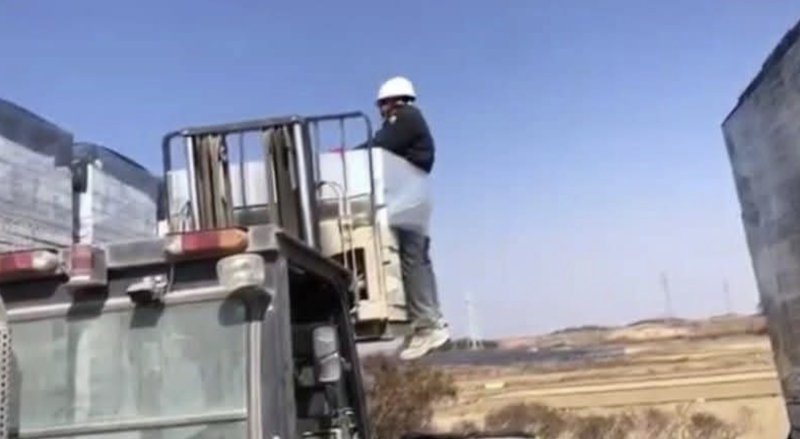
[Financial News] "When my health deteriorated, I told the boss I wanted to work at another workplace with lower work intensity, and that's when the harassment began. I was not given work for three months, and they cursed at me and even threw shoes at me."
Recently, at the 'Migrant Workers Forced Labor Status Report Conference' hosted by the Korean Confederation of Trade Unions (KCTU), Vishal from Nepal stated, "Not only me, but there are many migrant workers who are being harassed while working," revealing this situation.
Although the number of migrant workers in Korea is rapidly increasing and they have become essential personnel in industrial sites, discrimination and harassment against them continue unabated. In particular, the current system that restricts workplace changes is criticized for putting migrant workers in vulnerable positions, forcing them to endure unfair treatment.
According to the '2024 Immigrant Residence Status and Employment Survey' by Statistics Korea on the 17th, as of May, there were 1.561 million foreigners aged 15 and older residing in Korea. Among them, 956,000 were wage workers, and when including about 380,000 undocumented migrants, the total number of migrant workers in Korea is estimated to be about 1.3 million by the labor community.
Although the proportion of migrant workers in the overall domestic industry is increasing, harassment and violence incidents against them continue unabated. Last month, at a brick factory in Naju, Jeonnam, a Sri Lankan migrant worker was lifted while tied to a pile of bricks by a forklift. Earlier, in February, a Nepalese migrant worker at a pig farm in Yeongam suffered from the employer's assault and took his own life.
Udaya Rai, Chairman of the Migrant Workers Union of the KCTU, said, "The migrant worker issue at the Naju brick factory has been revealed, but there are far more undisclosed issues," adding, "The current situation cannot function without migrant workers, but they are not guaranteed basic rights due to differences in nationality and language."
The labor community points out the problems of the domestic migrant labor system as △restriction on workplace changes △exploitation by brokers △wage arrears △lack of victim support, among others. However, the most serious issue is the policy restricting workplace changes.
The current Foreign Employment Act allows foreign workers to change workplaces up to three times within three years after entry, and up to two times during the 1-year and 10-month extension period. However, the reasons for change are limited to exceptional cases where the employer is at fault, such as termination of the employment contract or violation of working conditions, and unfair treatment. Even this must be proven by the worker, making it virtually a 'forced labor' structure.
Jeong Yeong-seop, Executive Director of the Migrant Workers Equality Alliance, pointed out, "In almost all employment visas, migrant workers are restricted from changing workplaces," adding, "This subjugates migrant workers to employers, making them vulnerable and forcing them to endure discrimination, violence, and unfair treatment."
Due to this, migrant workers filed a constitutional complaint in 2007 against Article 25 of the Foreign Employment Act, which limits the number of workplace changes for foreign workers to three times, but the Constitutional Court at the time ruled it constitutional, stating, "It does not exceed the legislative discretion for securing manpower for small and medium-sized enterprises." In 2020, a constitutional complaint was also filed against the current employment permit system, which principally prohibits workplace changes, but the Constitutional Court's judgment did not change.
However, as the issue of migrant worker harassment surfaced due to the recent Naju brick factory incident, the government also recognized the need for system improvement. The Ministry of Employment and Labor stated, "If foreign workers are subjected to unfair treatment or placed in dangerous working environments, workplace changes will be facilitated by sufficiently gathering opinions from labor and management and experts to reform the employment permit system."
[email protected] Jang Yu-ha Reporter