"Japan Wants Korea-Japan Shuttle Diplomacy, Ishiba Cabinet Also Wants It"... Lee Government's Initiative Receives Japan's Response
- Input
- 2025-08-14 14:38:53
- Updated
- 2025-08-14 14:38:53
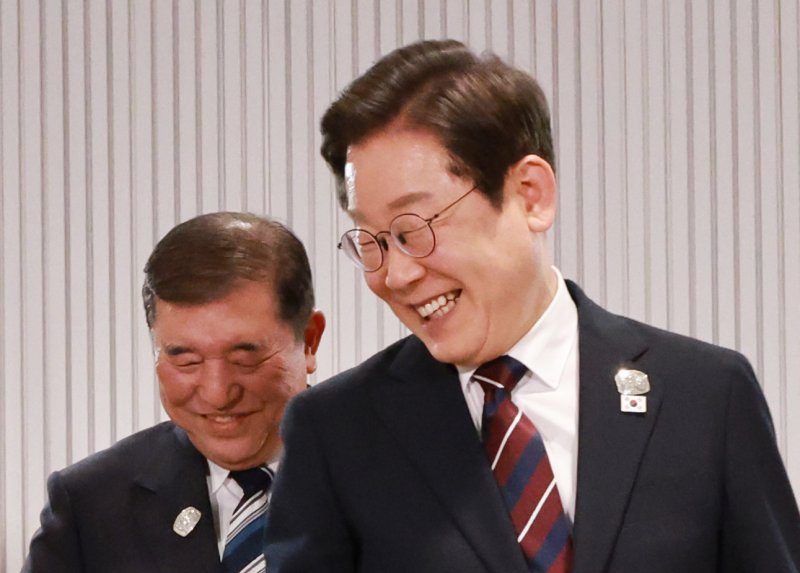
President Lee will visit Japan first from the 23rd to the 24th before the summit meeting with U.S. President Donald Trump at the White House on the 25th (local time) to hold a summit with Prime Minister Ishiba Shigeru. It is unusual for a Korean president to hold his first summit trip to a country other than the United States after taking office.
Moreover, President Lee is facing a significant schedule of concluding the Korea-U.S. trade negotiations at the summit with President Trump. This indicates President Lee's deep interest in shuttle diplomacy between Korea and Japan.
Foreign Minister Cho Hyun commented on President Lee's visit to Japan before the U.S., saying, "It is possible because it is the Lee Jaemyung government that pursues pragmatism," and "it is the philosophy of practical diplomacy being implemented," on the 14th. Minister Cho also recently visited Tokyo before his visit to Washington DC for security and trade negotiations to talk with Prime Minister Ishiba. Minister Cho explained, "I thought it was natural and necessary to talk with Japan, which has a similar position to us in many ways, before visiting the U.S."
A high-ranking government official said that Minister Cho's visit to Japan first was President Lee's directive, adding, "There was a wrong frame or stigma of being anti-Japanese against the Lee Jaemyung government, but I think the prejudice against our government in the U.S. will disappear at once as the president visits Japan first."
The importance of shuttle diplomacy between Korea and Japan has also increased recently, as the two countries have the most similar positions in trade negotiations with the U.S. The U.S. has demanded both Korea and Japan strengthen the Korea-U.S.-Japan alliance.
It is reported that the Japanese Ishiba Cabinet is also actively interested in shuttle diplomacy between Korea and Japan, just like President Lee. On the 9th, Shinjiro Koizumi, Minister of Agriculture, Forestry and Fisheries, who visited Korea, attended the APEC Food Security Ministerial Meeting and the Korea-Japan-China Agricultural Ministers' Meeting and met consecutively with Minister of Agriculture, Food and Rural Affairs Song Myeongryeong and Foreign Minister Cho Hyun.
A government official hinted, "Minister Koizumi took the initiative to request meetings with the ministers." It shows that the Ishiba Cabinet is also highly interested in shuttle diplomacy between Korea and Japan. It is unusual for the head of foreign affairs to meet with the head of another Japanese ministry, not in the field of foreign affairs or security, according to diplomatic circles.
Minister of Agriculture Koizumi is considered a key figure in Japanese politics, having already succeeded in being elected to the House of Representatives six times at the age of 44. He is also among the candidates for the next prime minister. His father, former Japanese Prime Minister Junichiro Koizumi, is credited with opening the door to 'shuttle diplomacy' between Korea and Japan. Former President Roh Moo-hyun and former Prime Minister Koizumi held several summits since 2003, conducting practical cooperation such as resolving historical issues, developing future-oriented relations, cooperating on the North Korean nuclear issue, negotiating the Korea-Japan Free Trade Agreement (FTA), and visa waivers. At the 2004 summit, they first started active 'shuttle diplomacy' by aiming for a 'steadfast neighbor' relationship, promoting permanent visa waivers and increasing flights. However, shuttle diplomacy has repeatedly been interrupted and restored due to issues such as visits to the Yasukuni Shrine by former Japanese prime ministers, the comfort women issue, and the Dokdo dispute.
[email protected] Kim Kyungsoo Reporter