"If 1 Million Overseas Talents Are Attracted, GDP 6% Economic Effect"... Urgent Talent Attraction Strategy
- Input
- 2025-08-13 09:12:06
- Updated
- 2025-08-13 09:12:06
Korea Chamber of Commerce and Industry, Analysis of Economic Effects of Attracting Overseas Citizens
Jointly Conducted with Professor Kim Deokpa's Team from Korea University
Jointly Conducted with Professor Kim Deokpa's Team from Korea University
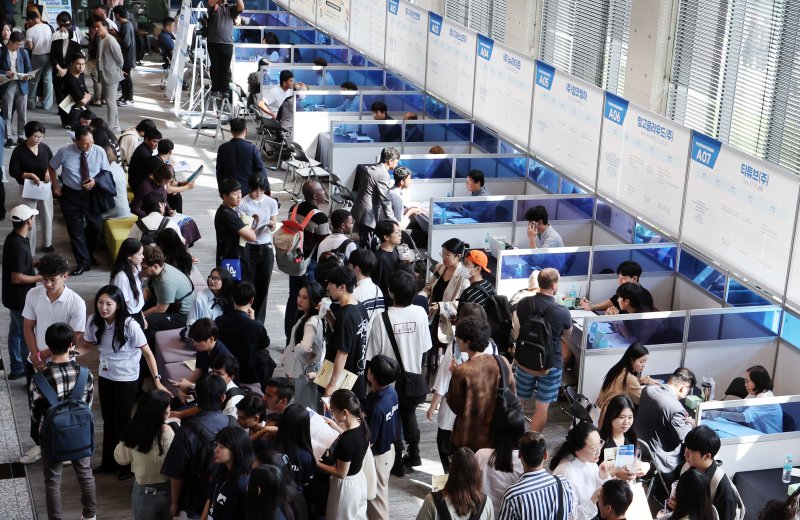
The Korea Chamber of Commerce and Industry announced on the 13th that this conclusion was drawn through the 'Analysis of Economic Effects of Attracting Overseas Citizens' jointly conducted with Professor Kim Deokpa's team from Korea University.
According to the Chamber, an analysis of the economic effects of the annual increase in registered foreigners in 17 cities and provinces nationwide (2012∼2023) showed that if the proportion of registered foreigners compared to the economically active population increases by 1%, the per capita Gross Regional Domestic Product (GRDP) increases by approximately 0.11%. When estimated nationwide, when 1 million registered foreigners are attracted, an economic effect equivalent to 6.0% of the national GDP, or 145 trillion won, occurs. The research team estimated that if the current 1.35 million registered foreigners in the country increase to 5 million, a total economic effect of 361 trillion won will occur.
The research team defined the scope of 'overseas talents' as those who have received a professional visa (E-7) or higher. However, they explained that since the number of subjects is small, making meaningful analysis difficult, the research target was set as all registered foreigners, and the induced economic effect was set as the minimum.
Professor Kim Deokpa said, "From the perspective of total demand, it is not just a simple population expansion, but an increase in consumption due to the inflow of overseas high-level personnel with professional knowledge, technology, or skills," and "Maximizing the ripple effect through improved labor productivity, industrial competitiveness, and industrial structure advancement is the key to the inflow of overseas personnel."
The report emphasized that attracting overseas talents is the key to solving the 'A·B·C·D' four issues for Korea's growth, including Artificial Intelligence (AI), Birth rate, Competitiveness, and Domestic market.
As a strategy for attracting overseas talents, it proposed △foreign resident specialized cities △attracting global fabs (semiconductor production plants) △customized nurturing of overseas talents domestically.
The report explained that foreign resident specialized cities could be possible by attracting global companies related to industrial clusters in areas with the capacity to accommodate residential infrastructure and supporting visa benefits, tax reductions, and the establishment of educational and medical infrastructure.
The inflow of overseas talents through attracting global fabs is expected to provide companies with a stable foundation to secure professional talents and give regions the opportunity to leap forward as growth hubs equipped with advanced industrial bases.
The 'pre-nurturing, post-introduction' strategy of nurturing high-level personnel through education and training tailored to domestic industries overseas and attracting them domestically was also proposed. The report explained that this could be possible through a 'talent nurturing-employment-residence' linkage program targeting students from excellent universities in Southeast Asia, such as Vietnam and Indonesia, who are friendly to Korea.
Lee Jongmyeong, head of the Industrial Innovation Headquarters of the Korea Chamber of Commerce and Industry, said, "As the era of Artificial Intelligence (AI) opens, the tug-of-war for talent acquisition around the globe is becoming more intense," and "It is time to urgently create related policies so that overseas talents can quickly settle and promote economic growth by creating globally competitive cities as mega sandboxes."
[email protected] Eunhyo Cho Reporter