Choi Tae-won, who advocated an 'economic community' early on... Will he meet Ishiba at APEC? [80 Years Since the End of War, 80 Years of Liberation (Part 1)]
- Input
- 2025-08-12 18:35:08
- Updated
- 2025-08-12 18:35:08
Conceptualized since the 2019 materials regulation
Possibility of concretization through October event
Possibility of concretization through October event
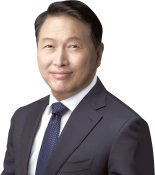
"Korea and Japan should create an economic community like the European Union (EU)."
Choi Tae-won, Chairman of the Korea Chamber of Commerce and Industry and Chairman of SK Group (pictured), is publicly proposing the establishment of a Korea-Japan economic community, the world's fourth-largest economic bloc with a scale of 6 trillion dollars, as the future vision of the two countries.
Considering the 80 years since liberation and the 60 years of diplomatic relations between Korea and Japan, it can be said to be a very bold approach. The essence of the Korea-Japan economic community theory is that the two countries, which are accelerating with low birth rates, aging populations, low growth, and high-cost economic structures, should join hands to share each other's domestic markets and actively cooperate in advanced industries. External factors such as the U.S. tariff policy and protection of domestic industries, and the intensification of U.S.-China conflicts also add to the necessity of cooperation between the two countries.
On the 12th, the business community predicts that Chairman Choi Tae-won will further concretize the Korea-Japan economic community theory through the Asia-Pacific Economic Cooperation (APEC) summit and the global CEO summit in October. In September 2022, Chairman Choi was the first among business leaders to meet with then-Japanese Prime Minister Kishida Fumio, and in late May, he was again the first among business leaders to visit Prime Minister Ishiba Shigeru. There is speculation that he will take another step towards the Korea-Japan economic community by meeting with the Japanese Prime Minister through the October APEC summit.
Chairman Choi believes that Korea should form an economic community, like European countries such as Germany and France, which expanded their markets and increased their influence in the international community through the EU, and that Japan should be the first partner. He argues that both countries should actively join hands, recognizing common issues such as domestic market contraction, aging populations, and declining industrial competitiveness amid U.S.-China competition.
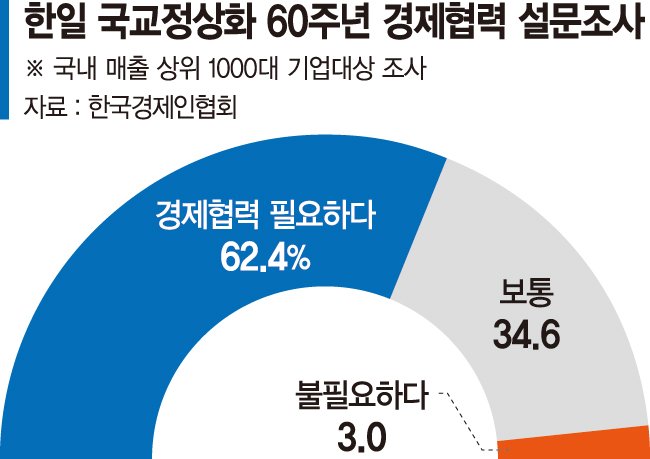
He explained that combining the Gross Domestic Product (GDP) of Korea and Japan would reach about 6 trillion dollars, creating a 6 to 7 trillion dollar economic community, the fourth largest in the world after the United States (30 trillion dollars), the EU (20 trillion dollars), and China (19 trillion dollars). This year, Korea's nominal GDP is 1.7903 trillion dollars, and Japan's is 4.1864 trillion dollars. By 2030, it is expected to expand to a total of 7.1444 trillion dollars.
Chairman Choi began to actively view Japan as Korea's economic partner ironically during the time when the Abe Shinzo administration imposed export restrictions on semiconductor materials to Korea in 2019. During what was called the worst period since the 1965 Korea-Japan diplomatic relations, Chairman Choi held the first Tokyo Forum under the theme of 'Future Design' through the SK Group's Chey Jong-hyun Academy, inviting global IT giants such as Son Masayoshi (Korean name Son Jeong-ui) of SoftBank Group and Jack Ma, former founder of Alibaba. It was the starting point of a major shift in the group's strategy, which had continued for 20 years with the idea of 'creating another SK in China,' and a grand proposal towards the nation and economy beyond corporate units.
The 'Japan Exploration,' which began with the intention of responding to the geopolitical crisis at the time, was concretized into the Korea-Japan Economic Community (2023 Jeju Forum) about three years later. The Korea-Japan economic community theory is also valid as a way to break through the manufacturing-centered growth method. Chairman Choi's position is that forming an economic community with Japan is one of the solutions for transitioning to a low-cost economic structure and establishing 'economies of scale.'
[email protected] Cho Eun-hyo Reporter