[fn Editorial] Rising House Prices Again, Urgent Need for Extraordinary Supply Measures
- Input
- 2025-08-11 19:06:30
- Updated
- 2025-08-11 19:06:30
House prices rise after 6 weeks of loan regulation
Quick supply of well-located housing is key
Quick supply of well-located housing is key
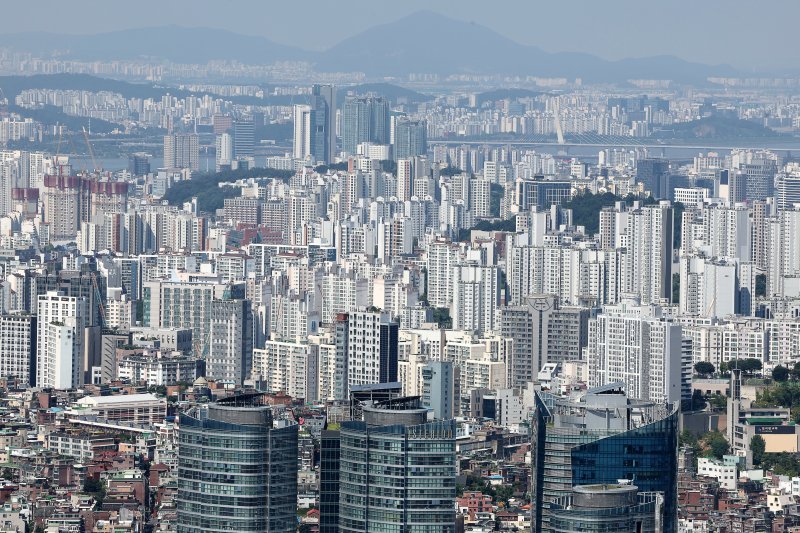
Despite the 6·27 loan regulation, recent Seoul house prices are unusual. The real estate market, which had temporarily paused due to the '600 million won mortgage loan limit', has turned upward again, centered around Seoul's Gangnam area, Mayongseong (Mapo, Yongsan, Seongdong).
According to the Korea Real Estate Board on the 11th, Seoul apartment sales prices in the first week of August rose by 0.14%. The increase was larger compared to the previous week's 0.12%. Some complexes in Gangnam and Seocho set new record prices. Nearby Gyeonggi Bundang and Gwacheon are also seeing larger increases. The market's anxiety seems to be spreading as the upward trend returns just 6 weeks after the announcement of the 6·27 measures.
The waning effect of loan regulations is a result of a combination of supply shortages, persistent real estate invincibility psychology, and increased market liquidity due to expectations of interest rate cuts. This year's new apartment supply in the capital region is about 80,000 units, the lowest level since the 2000s.
Next year's apartment occupancy in the capital region is expected to decrease by about 20% compared to this year's 140,000 units, to 110,000 units. In 2027, the capital region's occupancy is expected to shrink further to 100,000 units. With an overwhelming shortage of supply in the capital region, where job and living preferences are highest, house prices are bound to rise.
Moreover, despite the ultra-strong loan regulations, the household loan balance of the five major commercial banks in the first week of August increased by nearly 2 trillion won compared to the previous week. The increase in demand for credit loans needed for public offering subscriptions is the cause, but in a situation where house prices have turned upward, it is uncertain when it will become a catalyst for a bull market again. The omission of real estate tax from the first tax reform plan announced by the Lee Jae-myung government on July 31 also increases market anxiety. The fact that the level of domestic real estate holding tax is lower than the OECD average is also a factor encouraging the inflow of market funds into real estate. The Lee Jae-myung government's call for 'KOSPI 5000' for 'diversification of investment destinations' while excluding the real estate tax reform plan does not make sense.
The expectation that the Bank of Korea will soon cut interest rates to stimulate the economy and boost domestic demand is also a bad signal for the real estate market. It is clear that patchwork prescriptions can no longer stabilize house prices. During the Moon Jae-in administration, a total of 27 real estate measures were introduced, but the effect did not last long, and after repeated 'temporary declines followed by rebounds', the increase in house prices was the highest among all administrations.
Under the Yoon Seok-youl administration, the housing market recession caused by high interest rates and soaring construction costs, and the supply cliff phenomenon due to the chain of bankruptcies of construction companies have accumulated for three years. Real estate is psychology. The more people think 'I can hold out' despite strong regulations, the more likely house prices are to rise. The Lee Jae-myung government has announced plans to release housing supply measures encompassing the use of idle land and public facilities in urban areas, revitalization of redevelopment and reconstruction, and resolving polarization between the capital region and provinces, but there is still no news. The key is to give the market confidence that many houses will be supplied in well-located areas that are easy to commute to and live in.