"The Gray Everyday Became Colorful" A 2-Night, 3-Day Dream
- Input
- 2025-08-11 18:55:36
- Updated
- 2025-08-11 18:55:36
3-Day 'Dream Festival' in Pyeongchang
500 Young Artists from Around the World Participate
Learn to Communicate and Collaborate Through Art
Showcase Joint Stage 'My Tomorrow'
Expect Growth of International Art Education Platform
Visually Impaired Child Tamiya from Japan
"Received Great Comfort from a Stage Without Discrimination"
500 Young Artists from Around the World Participate
Learn to Communicate and Collaborate Through Art
Showcase Joint Stage 'My Tomorrow'
Expect Growth of International Art Education Platform
Visually Impaired Child Tamiya from Japan
"Received Great Comfort from a Stage Without Discrimination"
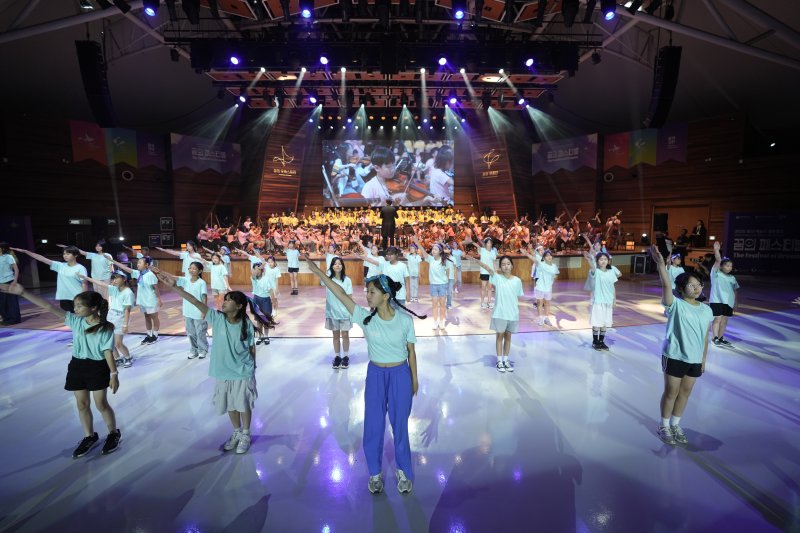
【Financial News Pyeongchang (Gangwon-do)=Shin Jin-a Reporter】 Although nationalities and languages differed, everyone shone as artists on stage and as audience members off stage. From the 6th to the 8th, at Alpensia Resort in Pyeongchang, Gangwon-do, over 500 young artists from Korea, Japan, Malaysia, and Thailand united through music, dance, and theater at the '2025 Dream Festival'. The three-day joint art camp, hosted by the Ministry of Culture, Sports and Tourism and the Korea Arts and Culture Education Service, became a stage that emphasized communication and collaboration over competition, and the joy of the process over results.
■ Overseas Youths "United Through Music"
"It was really enjoyable to meet friends from other countries, exchange, and get close while singing together."
Hayato Tamiya (16) from the Tokyo Children's Ensemble, which embraces visually impaired children, said, "It was my first overseas visit to Korea, so I was initially worried," before the highlight joint performance of the camp on the 7th.
This year's 'Dream Festival' was a success with over 60 international exchange youths and 380 members of the 'Dream Art Troupe' participating. The 'Dream Art Troupe', a representative cultural and arts education project that started as the 'Dream Orchestra' in 2010, has expanded its scope to dance, theater, and visual arts, and since last year, has been holding joint art camps where members gather in one place.
Rinkotake Hijirotadano (13) from the Soma Children's Orchestra & Chorus, which was founded to heal the trauma of the Great East Japan Earthquake through music, is active in the group.
He recalled, "I became more and more joyful as we sang together," and "The process of learning the festival theme song 'My Tomorrow' in Korean was particularly impressive. Although I didn't fully understand the lyrics, I especially liked the melody and the climax."
Both students mentioned the impact music had on their daily lives. Tamiya, who joined the choir in 5th grade, said, "Before, the world seemed gray," and "Life became much more colorful through singing. There was no discrimination due to visual impairment, and everyone treated me equally, which was a great comfort."
Hijirotadano said, "Thanks to choir activities, I gained confidence," and "Although the earthquake happened before I was born, I have come to remember and overcome the community's pain through choir."
Both students cited the performance with participants from diverse languages and cultures as the most memorable moment of this camp. Tamiya said, "The moment we practiced together in an environment where Japanese didn't work at all will be remembered for a long time," and "I would like to participate again if given the opportunity."
■ "Communication, Not Competition" A New Experiment in Art Education
This year, unlike the first edition, participants were expanded overseas, and a general director system was introduced for artistic advancement. Composer Choi Woo-jung, a professor at Seoul National University's College of Music, served as the general director, with vocalist Samuel Yoon and choreographer Kim Bo-ra as co-directors. The three emphasized the importance of communication and collaboration across genres in youth art education, highlighting the significance of this camp.
Choi, who felt the limitations of competition-centered art education in academia, said, "Art is the most effective educational tool for understanding oneself and harmonizing with others," and "It must be internalized as part of life, not as a short-term achievement. The power of change is exerted when it permeates life to the extent that the word 'art' is unnecessary."
Samuel Yoon emphasized, "I wanted to share the excitement of the 'first breath' when I first started art with the children," and "This stage will return as a great fruition in the lives of the children ten years later."
Kim Bo-ra, who started dance in a culturally marginalized area as a child, said, "At that time, it was difficult to find a teacher to teach dance or friends to share art with, but once I went to school, the competition had already begun," and "After experiencing overseas art camps as an adult, I realized that communication and collaboration are more important than competition. This camp was a precious time that provided that experience to domestic and international youths."
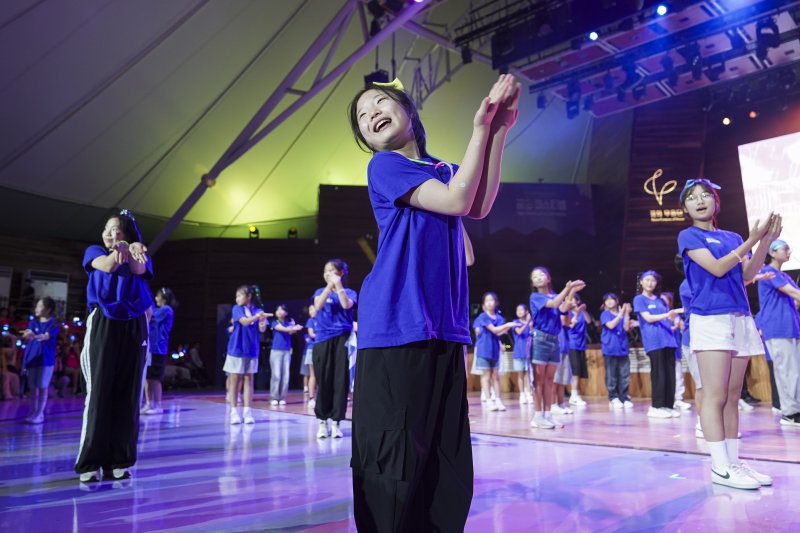
The joint performance 'My Tomorrow' presented a touching moment where all participants voiced their own artistic language. 'My Tomorrow', composed by General Director Choi for this festival, was inspired by writings from Dream Art Troupe members with 'dream' as the keyword, and was composed in the K-pop genre. The performance opened with the Dream Dance Troupe dancing to 'My Tomorrow', and the overseas youth choir and Samuel Yoon singing together heated up the venue.
Park Eun-sil from the Korea Arts and Culture Education Service emphasized, "I hoped art education would become a magical experience for children beyond result-centeredness," and "I expect this camp to grow into an international art education platform beyond Korea."
jashin@fnnews.com