'Proven by Numbers' Lee Jae-myung Government's First National Task Focused on Growth
- Input
- 2025-08-11 17:13:06
- Updated
- 2025-08-11 17:13:06
Potential Growth Rate 3%·KOSPI 5000 Expected
Differentiation from Moon Jae-in Government's 'Eradicating Deep-rooted Evils'
Differentiation from Moon Jae-in Government's 'Eradicating Deep-rooted Evils'
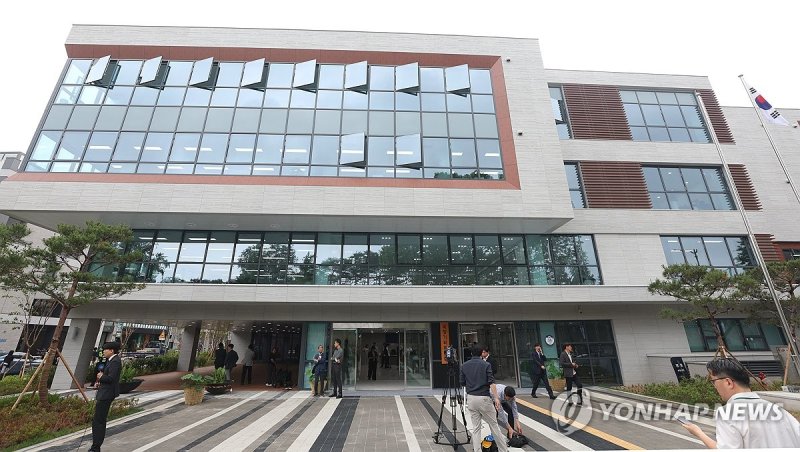
[Financial News] The National Planning Committee has virtually finalized about 120 national tasks and is preparing for a public report, drawing attention to the first national task. Contrary to the expectation that the national task would focus on 'ending rebellion' immediately after launch, it is expected that the first national task will include measures to raise the potential growth rate to 3%. This shows that the Lee Jae-myung government is focusing on securing future growth engines rather than correcting past government mistakes.
According to the National Planning Committee on the 11th, the Lee Jae-myung government's key strategy tasks include the 'real growth' strategy and the 'KOSPI 5000 era'.
The 'real growth' referred to by the Lee Jae-myung government means sustainable growth that raises growth potential, rather than artificial economic stimulation or imitation.
Previously, the National Planning Committee also presented specific goals for real growth. The so-called 3·3·5 vision includes becoming one of the top three AI nations, achieving a potential growth rate of 3%, and being among the top five global powers. Measures to achieve this include △supporting strategic industries and infrastructure such as AI and bio △establishing an innovation ecosystem for SMEs and scientific technology △building a fair and mutually beneficial market order.
Major tasks to achieve KOSPI 5000 include △strict punishment and improvement of detection systems for unfair trading △introduction of separate taxation on dividend income △inclusion in the MSCI developed market index.
The characteristic of these major key strategy tasks is that success can be judged by specific 'numbers'. This clearly reveals the president's characteristic of valuing practicality over ideology. While past governments typically shared the status of national task implementation at least once a year, it seems that the president will also directly monitor the implementation status while managing the state affairs.
National tasks have symbolic significance as they can be said to represent the government's identity. In particular, the first national task reflects the president's will significantly, as it can show a differentiated appearance from past governments.
In the case of the previous two governments, they included the will to correct the mistakes of the previous government in the first national task. The first national task of the Moon Jae-in government was eradicating deep-rooted evils. It was interpreted as a will to continue the spirit of the candlelight vigil that led to the impeachment of former President Park Geun-hye.
In fact, the Moon government organized task forces (TF) in each department to identify the reality of state affairs manipulation and published a government-wide anti-corruption white paper. It also checked the status of system improvements through the Cultural Blacklist Truth Investigation and System Improvement Committee.
In the case of the Yoon Seok-yeol government, 'complete recovery and new leap of small business owners and self-employed' was presented as the first national task. Former President Yoon criticized the Moon Jae-in government during the 20th presidential election for causing significant losses to small business owners and self-employed during the COVID-19 quarantine measures.
In addition, former President Yoon presented the normalization of the real estate tax system as a major national task. One of the factors cited for the regime change was the failure of the Moon government's real estate policy. In this way, governments that achieved regime change have implemented a differentiation strategy by pointing out and correcting the mistakes of the previous government.
For this reason, there was a forecast that 'eradication of rebellion' would be a major national task immediately after the launch of the Lee Jae-myung government. Since it was a regime change achieved through the impeachment of former President Yoon after the 12.3 martial law incident, it was interpreted that the first national task would focus on punishing rebellion forces, prosecutorial reform, and constitutional amendment.
However, the tasks mentioned as key strategies by the National Planning Committee are focused on growth. The task of ending rebellion is left to the ruling party, focusing on practicality. The Lee Jae-myung government's order to form an emergency economic response task force (TF) as the first executive order is in this context. The fact that the National Planning Committee did not exclude the six major economic groups, including chaebols, from discussions on national tasks is a point of differentiation from progressive governments.
Of course, constitutional amendments, prosecutorial reform, and judicial reform related to overcoming rebellion are also expected to be included in major national tasks. However, the possibility of being the first is low. This contrasts with the Moon government's emphasis on eradicating deep-rooted evils.
Therefore, it is expected to push policies quickly with a focus on growth and leap rather than recovery and restoration. Cho Seung-rae, spokesperson for the National Planning Committee, previously said, "The key strategy tasks are being discussed with a focus on content related to the high public perception and identity of the Lee Jae-myung government," adding, "Contents related to artificial intelligence (AI), balanced growth strategy, and real growth strategy are included."
[email protected] Seo Ji-yoon Reporter