US Economic Experts Warn of Stagflation Rather Than Recession
- Input
- 2025-08-11 15:00:53
- Updated
- 2025-08-11 15:00:53
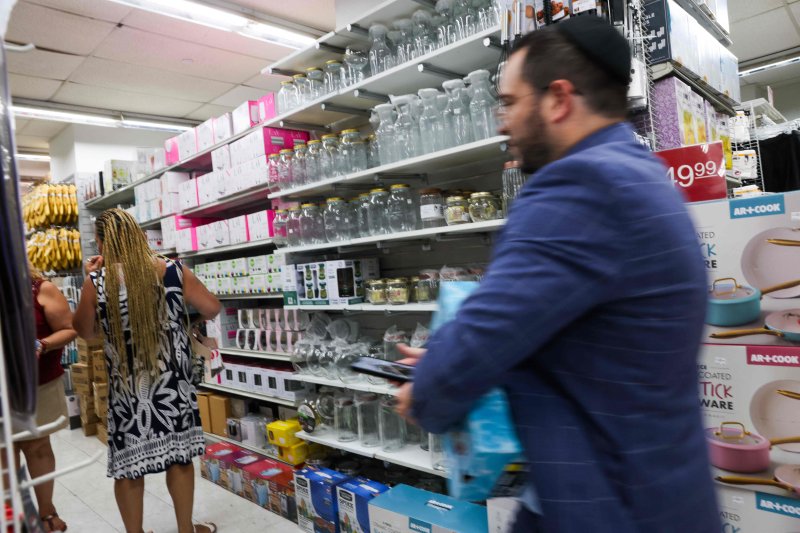
[Financial News] Concerns are growing that the US economy may experience stagflation, where inflation and unemployment surge amid a recession.
Recently, economic media such as Business Insider and Fortune reported that the US economy is leaning towards stagflation, which is more difficult to resolve than a recession, as indicated by various indicators. They analyzed that high inflation is also making it difficult for the Federal Reserve (Fed) to cut interest rates.
Stagflation was detected as a possibility when Donald Trump, the US President, announced a large-scale imposition of reciprocal tariffs in early April.
The imposition of high tariffs on imports is expected to trigger inflation, prompting companies to raise product prices due to tariff burdens, which is slowly appearing in recent indicators as a factor that will slow economic growth.
The PCE (Personal Consumption Expenditures) price index, an inflation indicator of the Fed, recorded 2.6% year-on-year in June, exceeding expectations. The month-on-month increase was also 0.3%, the highest in the past four months.
Regarding these figures, Skanda Amarnath, a former Fed economist and now a director at Employ America, analyzed in a note that the decline in US inflation seen earlier this year has clearly ended, stating, "The US economy seems to have entered a mild form of stagflation."
Emily Bowersock Hill, CEO of financial services firm Bowersock Capital Partners, predicted that if the market judges that the impact of tariff imposition is emerging, the risk of stagflation will increase.
She said that in the second half of this year, as companies raise product prices and low growth and high inflation appear, "the trade war will cause a stagflation shock."
Economic experts see the fact that only 73,000 new non-farm jobs were created in July, and the figures for May and June were also revised downward, as well as the July ISM Services PMI rising to 69.9%, as signs of stagflation.
The July Services PMI showed an upward trend for 98 consecutive months, recording the highest level since October 2022.
Regarding this upward trend, Torsten Slok, an economist at Apollo Global Management, said, "The rise in service prices predicts an overall rise in prices," explaining that "stagflation is due to tariffs, the deportation of illegal immigrants, and the devaluation of the dollar."
Economists at Bank of America (BofA) also stated in a note that the risk of stagflation is higher than a recession for the US economy, and that the Fed will not be able to cut rates this year despite weak employment indicators.
This is due to concerns that lowering rates to fight stagflation in the future will worsen the economy.
BofA strategists said that Wall Street was shocked by the downward revision of new jobs in May and June, analyzing that "the market is also seeing it as a combination of recession and stagflation."
[email protected] Jaejun Yoon Reporter