[fn Editorial] Growth is possible in an environment where companies can freely operate
- Input
- 2025-08-10 19:00:13
- Updated
- 2025-08-10 19:00:13
The government to announce growth-centered policy this week
Reconsider various legislations that constrain companies
Reconsider various legislations that constrain companies
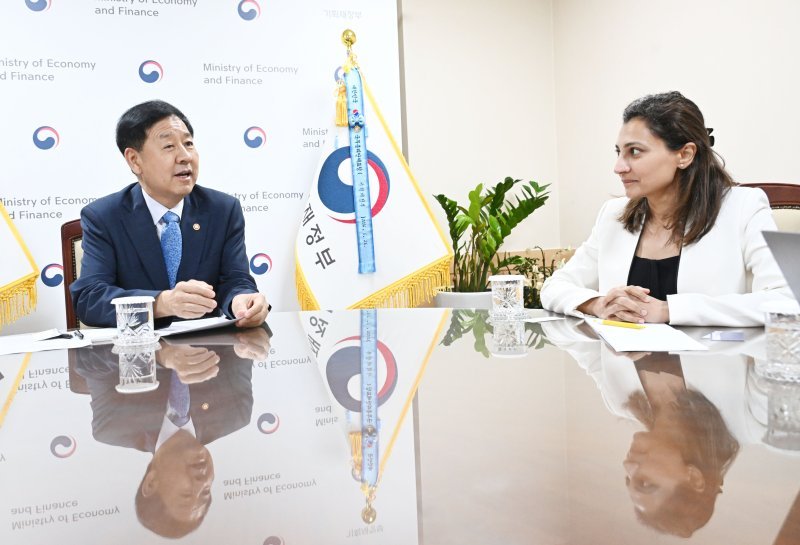
The government is said to announce an economic policy with growth as the core keyword this week. In particular, in order to break away from the stagnant industrial structure, the government plans to focus on super-innovation in advanced industries such as artificial intelligence (AI) and declare its intention to boost potential growth rates through fostering new industries, improving corporate regulations, and balanced regional development.
The government's direction setting is both natural and correct. It is also fortunate that it alleviates concerns about the distribution-centered policy that was raised at the time of the inauguration of the Lee Jae-myung administration. Growth and distribution are ideologies of equal value that cannot lean towards one side. Conservative regimes cannot neglect distribution, and progressive regimes cannot ignore growth. Since distribution is impossible without growth, the importance of growth needs no further emphasis. This is why Russia and China abandoned communism and embraced a de facto capitalist system through market opening. China is pursuing a strong growth-centered national strategy, pondering over increasing the growth rate every year more than any other country.
The heavy chemical industry, which supported Korea's export-oriented economy, is now gradually entering a period of decline, and it is time to devise a new growth strategy. The government should promptly push for industrial restructuring by boldly promoting the restructuring of less competitive manufacturing industries and increasing the proportion of the service industry. In this regard, the policy to foster advanced industries centered on artificial intelligence and focus on innovation is also the right choice.
The United States is already leading the way in advanced industries and is promoting the revival of manufacturing industries such as automobiles and shipbuilding, while China is pursuing a grand strategy to surpass competitors like the United States in advanced industries and rise to the world's top economic power. If we hesitate in between, we risk falling out of the competitive ranks and regressing to a country below the top 10 economic scale.
The government must also recognize this point. If we do not cultivate high-value-added advanced industries and secure new future growth engines, the Korean economy could fall into a critical moment of crisis. The more fundamental task is to raise the declining potential growth rate. It is a problem that requires a 'steadfast policy' to boost economic strength, not populist symptomatic policies.
To pursue a growth-led policy, a pro-business policy that alleviates the difficulties of companies, the real drivers of growth, is required. However, looking at the government's actions, while they claim 'corporate-centered economic growth' in words, in reality, they are constraining companies with the enactment and revision of laws such as the Yellow Envelope Act, the Commercial Act, and the Tax Act, which cannot escape criticism for being inconsistent.
On one hand, they are distributing consumption coupons to the entire nation with a huge budget, while on the other hand, they are waving the growth card. In good terms, it is 'catching two rabbits,' but in bad terms, it is contradictory. The best way is to prioritize the growth strategy and use the created national wealth for distribution. Otherwise, the 'one-shot two-kill' strategy of simultaneously achieving growth and distribution may fail to achieve any goal.
The government announced that it would improve 30% of the economic punishment regulations that constrain corporate activities by creating an 'Economic Punishment Rationalization TF.' Not only in punishment but also in other areas, a consistent corporate-centered policy must be pursued to reap the fruits of growth. Companies should be allowed to operate freely.