China's Production Share of 30 Elements Exceeds Half... Indium and Bismuth Surpass 70%
- Input
- 2025-08-10 14:04:16
- Updated
- 2025-08-10 14:04:16
Nihon Keizai Shimbun Analyzes US Geological Survey Results
"Rare Metals Used as Political Bargaining Chips"
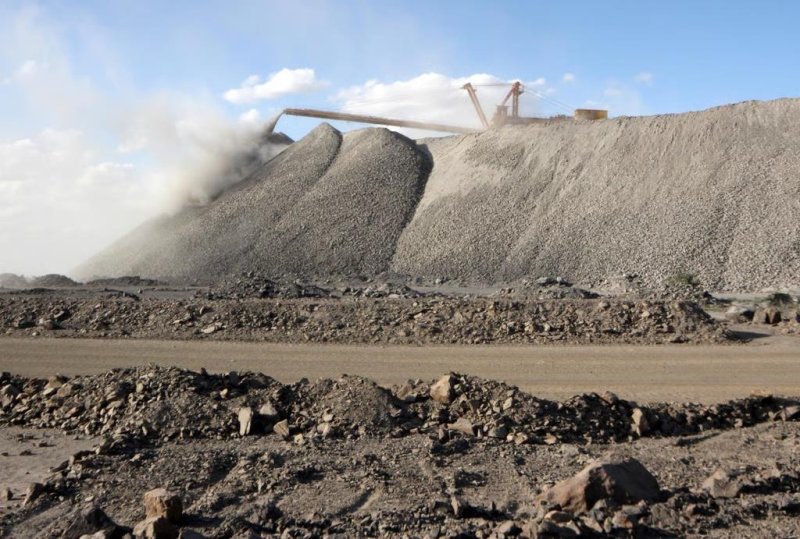
On the 10th, Nihon Keizai Shimbun (Nikkei) cited the results of the US Geological Survey (USGS), reporting that "out of 118 elements, 65 can be identified by country share, and among them, 36 elements, including 33 rare metals, had a majority share held by one country last year."
According to the report, China holds 30 out of the 36 elements. Furthermore, for indium used in liquid crystal displays and bismuth used as an ingredient in antacids, China's refined product share exceeds 70%.
Nikkei pointed out that "China is using metals and minerals controlled by the government as political bargaining chips." The media presented as evidence the case where some automotive companies in the US and Japan halted production after China restricted rare earth exports in response to US tariff measures.
Additionally, Nikkei reported that Brazil accounts for 91% of niobium production, used to enhance steel heat resistance, and Chile produces 67% of iodine used in perovskite solar cells. Indonesia, which produces about 60% of nickel, has banned nickel ore exports.
Moreover, Nikkei analyzed that "mineral mining often leads to human rights violations and environmental destruction," noting that many countries abandon mining due to restrictions or lack of profitability, leading to production concentration in certain countries.
The media also noted that there is a trend of regulating specific elements in countries other than China, warning that "if the use of elements as political tools spreads globally, all industries could be affected."
Meanwhile, Japan plans to start trial mining in January next year in the exclusive economic zone (EEZ) near Minamitorishima in the Ogasawara Islands to secure rare elements, including rare earths.
Sumitomo Metal Mining plans to complete a commercial plant to recycle lithium-ion batteries by June next year, and Nissan Motor and Waseda University are pushing experiments to extract neodymium from hybrid and electric vehicles.
In response, Nikkei predicted that "for Japan to stably procure rare metals, it needs to create a system to retain resources domestically and hone its technology."
[email protected] Hong Chae-wan Reporter