Time Bomb in the Home... You Could Lose Your House by Neglecting 'This'
- Input
- 2025-08-08 07:44:35
- Updated
- 2025-08-08 07:44:35
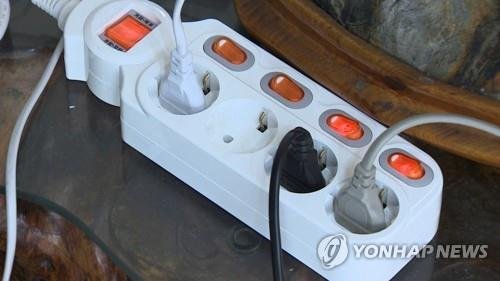
[Financial News] Power strips are often cited as a cause of household fires, increasing interest in their usage cycle and management methods. In most households, power strips are used for long periods unless they break or become damaged. However, recent fire incidents have led to suggestions that power strips also need to be replaced or managed periodically.
According to the industry on the 8th, there is no legally defined standard for the lifespan or replacement cycle of power strips. However, from the perspective of electrical safety and fire prevention, experts share a common view that power strips should be considered consumables, requiring periodic replacement and inspection depending on the usage environment.
Power strip manufacturers generally recommend replacing them every 1~2 years. One reason is the dust that accumulates inside the power strip. Power strips are usually installed in places where dust accumulates, such as under desks or behind furniture, and this environment can lead to electrical leakage or overheating, potentially causing a fire. Over time, dust enters the product through gaps, and when it absorbs moisture, it becomes a conductor that transmits electricity, becoming a risk factor.
When power strips are used for extended periods, the internal contact points can become loose, leading to excessive heat generation. This heat accumulation, combined with surrounding dust, can ignite and cause a fire. This is why power strips need to be replaced periodically.
Rather than setting the replacement time solely based on the usage period, it is advisable to also consider usage frequency, cleanliness of the installation location, and the surrounding environment. If installed in dusty places or used continuously with high power, it is better to shorten the replacement cycle.
When purchasing a power strip, it is essential to check the product's rated capacity. Typically, the voltage (V) and current (A) are indicated on the back of the product, and multiplying these gives the maximum power capacity the power strip can handle. For example, a product labeled 250V, 16A has a maximum allowable power of 4,000W. However, for safety, it is recommended to use below 80% of this capacity.
Additionally, the use of power strips should be distinguished based on the power consumption of appliances. High-power-consuming products like air conditioners, washing machines, dryers, and induction cookers should use dedicated wall outlets instead of power strips. The thickness of the wire is also an important criterion. For general household use, 1.0㎟ or 1.5㎟ is suitable, while places with high power usage like offices or factories should use wires of 1.5㎟ or more.
Inspecting the exterior of power strips is also essential. If there are signs of bent or pressed wires, damaged insulation, or blackened scorch marks, they should be replaced immediately. If there is a clicking sound from inside when shaken or if the components feel loose, safety cannot be guaranteed.
Cleaning power strips is also important. Especially in places like behind refrigerators where they are not easily visible, extra care should be taken to remove dust. Do not twist and tie the wires; it is best to lay them out straight. Tying wires tightly can damage the internal copper wires or expose the insulation, increasing the risk of electrical leakage.
[email protected] Jeong Ji-woo Reporter