[fn Editorial] Samsung and Hyundai Collaborate with Major US Companies as a Breakthrough to Overcome Tariffs
- Input
- 2025-08-07 19:13:07
- Updated
- 2025-08-07 19:13:07
Samsung Electronics partners with Apple, Hyundai Motor with GM
New growth foothold in a stagnant market
New growth foothold in a stagnant market
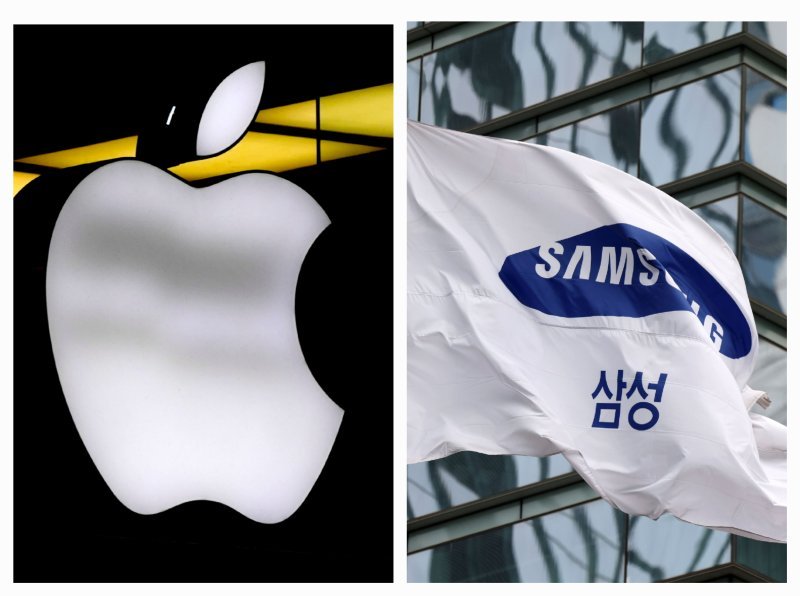
Samsung breaking into the supply chain for Apple parts is significant in itself. In the smartphone market, Samsung and Apple are fierce competitors. However, due to Trump's tariff war, Apple is in an urgent situation where it needs to strengthen its supply chain within the US and diversify its existing supply chain. At this time, Apple judged that joining hands with Samsung, which has embarked on a massive local offensive, would be beneficial in many ways. By pioneering sales channels from Tesla to Apple, Samsung's foundry can now run towards the top of the system semiconductor market. The resilience of strong Korean companies is confirmed once again in times of crisis.
The chip that Samsung will supply to Apple is known to be an image sensor, a market that Sony has dominated. Image sensors are referred to as the eyes of smartphones. As a core component that determines camera quality, Sony's global market share exceeded half last year. Samsung Electronics is chasing Sony with 15%, and China's OmniVision with 12%. Having penetrated Apple's supply chain, which sells over 200 million iPhones annually, Samsung has created an excellent opportunity to outpace China and close the gap with Sony. We hope to speed up the revival by boosting the performance of Samsung's foundry, the 'painful finger' of Samsung semiconductors.
Hyundai Motor announced a vehicle joint development plan with General Motors (GM) of the United States, with which it formed a strategic relationship last year. They plan to jointly develop a total of five types, including four types for the Central and South American market, such as small and medium-sized pickups and small passenger cars, and electric commercial vans for the North American market. GM will lead the development of the medium truck platform, and Hyundai Motor will lead the development of small models and electric vehicle platforms. The vehicles are scheduled to be launched in 2028, and once mass production is in full swing, an annual production system of 800,000 units will be established.
Hyundai Motor expects to cut platform costs in half through joint development and achieve significant efficiency in supply chain and logistics. If the two leading companies in the global automobile market make the most of each other's strengths, the goal will be fully achievable. It is a good example of establishing a new growth foothold in a stagnant market through collaboration between Korean and American companies.
The government and political circles should also support the struggles of our companies to overcome tariff barriers. The US-initiated tariff war is becoming a long-term battle with no end in sight. Although the major hurdle of mutual tariffs has been overcome, follow-up detailed negotiations remain, and it is still too early to let down our guard. Product-specific tariff negotiations are just beginning. On this day, US President Donald Trump stated, "We can impose a 100% tariff on semiconductors," and "All integrated circuits and semiconductors entering the United States are subject to tariffs."
Our government believes that the possibility of imposing high tariffs on Korean semiconductors is low based on the most-favored-nation treatment promised by the United States, but the results cannot be predicted. If US semiconductor tariffs become a reality, domestic companies will suffer enormous damage. The government must strive to protect national interests to the end. It is also necessary to continuously emphasize the large-scale investment in the US and localization promises made by companies. As much as companies are running, the government should also run.