Trump "$550 billion from Japan, at our disposal" vs Japan "That's not it..." Concerns become reality
- Input
- 2025-08-06 11:21:39
- Updated
- 2025-08-06 11:21:39
Trump refers to Japan's investment announcement as a down payment, defining it as 'our funds'
The Japanese government explains it as a private-centered investment through government financial institutions
The U.S. presidential decree specifies relief measures limited to the EU
Japan protests immediately, saying "We were supposed to receive the same treatment as the EU"
Akazawa visits the U.S. to coordinate differences in perception
The Japanese government explains it as a private-centered investment through government financial institutions
The U.S. presidential decree specifies relief measures limited to the EU
Japan protests immediately, saying "We were supposed to receive the same treatment as the EU"
Akazawa visits the U.S. to coordinate differences in perception
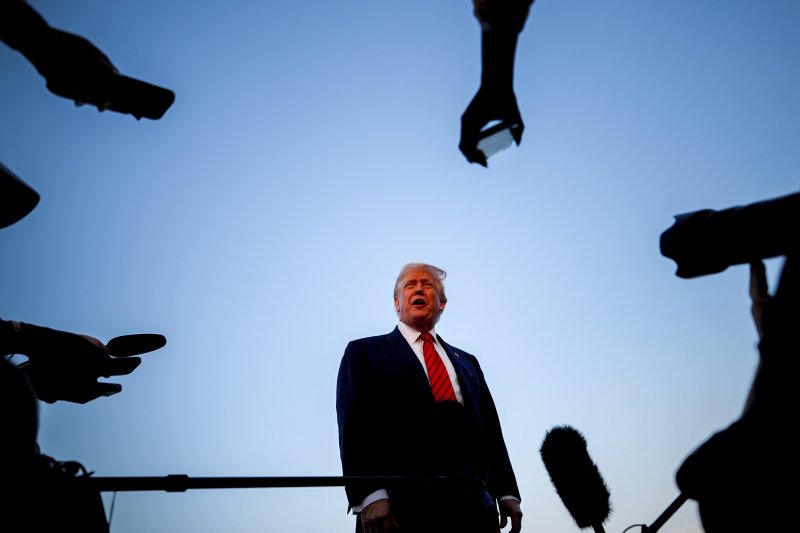
【Tokyo=Kim Kyung-min Special Correspondent】 Donald Trump, the President of the United States, has highlighted the differences in perception between the two countries by referring to the U.S.-Japan tariff agreement as "funds we can invest as we please." Additionally, it has been confirmed that Japan is excluded from the tariff relief measures announced by the U.S. government, prompting calls for urgent coordination between the two sides.
President Trump, in a CNBC interview on the 5th (local time), described Japan's agreed investment of up to $550 billion (approximately 760 trillion won) in the U.S. as "a concept similar to the signing bonus received by baseball players," stating that "we can invest in anything we want." He further claimed that "Japan has completely opened its borders and agreed to import American rice," asserting that this agreement is an achievement previously considered impossible.
However, the Japanese government maintains that the funds in question are private-centered investments composed of contributions, loans, and loan guarantees through government financial institutions. In response to President Trump's consideration of these funds as 'American funds,' the Japanese government plans to request confirmation of facts and coordination of positions from the U.S. side. Akazawa Ryosei, the Japanese negotiation representative, is visiting the U.S. from the 5th to conduct discussions with the U.S.
The controversy does not end here. On the same day, the U.S. government published a new presidential decree in the Federal Register regarding tariff reductions, limiting the application of relief measures to the European Union (EU). The Japanese government had previously confirmed with the U.S. side during the U.S.-Japan agreement on July 22nd that Japan would be included in these measures.
The problematic measure involves unifying the total tariff rate to a maximum of 15% by adding the existing tariff and reciprocal tariffs. For example, if Japanese clothing with an existing tariff rate of 4% is subject to the measure, the total tariff rate would be limited to 15%, but if excluded, the existing tariff rate of 4% plus a reciprocal tariff of 15% would result in a total of 19%. The U.S. Customs and Border Protection (CBP) also notified importers on the 4th that Japan was excluded.
The Japanese government still insists that their interpretation is correct. Akazawa, the Minister for Economic Revitalization, stated at the House of Councillors Budget Committee on the same day, "We have requested reconfirmation from the U.S. side and received a definitive answer that 'Japan will be treated the same as the EU, so do not worry.'" However, since the U.S. has officially excluded Japan through the Federal Register, it seems that the perception gap between the two sides has not been narrowed.
In the same interview, President Trump emphasized that the $600 billion investment from the EU included in the agreement can also be "used for anything we want." The EU side explains that these funds are autonomous private investments, indicating a similar perception mismatch as with Japan.
Meanwhile, President Trump also mentioned the trade negotiations with China, stating that "we are very close to an agreement" and "a summit with Chinese President Xi Jinping could be held within the year."
[email protected] Kim Kyung-min Reporter