[fn Editorial] Transform Tariff Negotiations into a Korea-U.S. 'Technology Alliance'
- Input
- 2025-08-05 19:35:17
- Updated
- 2025-08-05 19:35:17
Hankyung Association Roundtable, Suggestion to Expand Defense Cooperation
Hope for Shipbuilding Cooperation to Spread to Other Fields
Hope for Shipbuilding Cooperation to Spread to Other Fields
Jeffrey Schott, Senior Fellow at the Peterson Institute for International Economics, said regarding shipbuilding cooperation, "It seems that the U.S. shipbuilding industry can strengthen its capabilities and expand into defense cooperation." Patrick Cronin, Chair of Asia-Pacific Security at the Hudson Institute, said, "Korea is not just a simple collaborator but a key pillar," adding that "the Korea-U.S. alliance should evolve from a traditional security perspective into a fully integrated defense industry partnership." It is suggested that joint development and production should be pursued across air and missile defense systems, autonomous systems, and unmanned platforms.
The United States and Korea are allies in terms of security and are each other's largest trading partners economically, but there are not many fields of industrial cooperation. While the U.S. has the world's best competitiveness in various industries, Korea, which used to learn American technology, now possesses many manufacturing industries that surpass the U.S. This includes semiconductors and shipbuilding. As Korea's economic scale grows and its technological level improves, it has been in a competitive rather than cooperative relationship.
This tariff negotiation is expected to have a negative impact on our industry, but it is seen as having a positive effect by providing an opportunity for cooperation in areas where each side is superior or inferior. The roundtable suggested the direction of cooperation from that perspective. The easiest field to cooperate in is the defense industry. While there are many things Korea's defense industry can learn from the U.S., we also have fields where we hold a comparative advantage.
In that regard, if we expand the cooperative relationship starting with shipbuilding to major industries including the defense sector, it can greatly contribute to the economic development of both countries. Although our major industries such as semiconductors, automobiles, and steel have built factories in the U.S. and maintain substantial cooperative relationships, there are still many ways to cooperate, such as research and development and joint production.
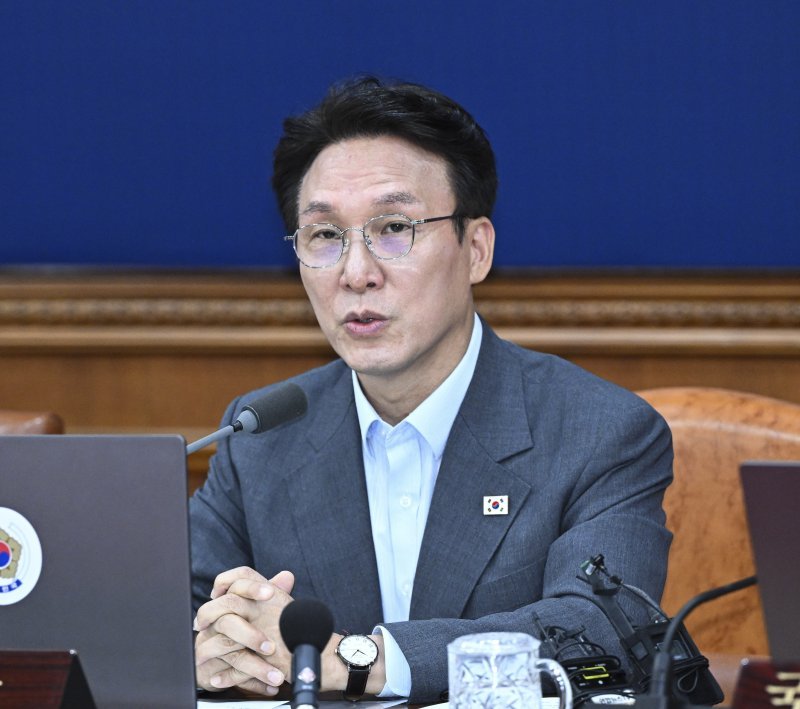
The government should actively support companies whose competitiveness has been weakened by tariff burdens, as suggested at the roundtable. Yoo Myung-hee, former Trade Negotiation Headquarters Chief, said, "The government should support the manufacturing industry to maintain its competitiveness domestically through active deregulation and enhancement of labor flexibility." It is said that the government's growth strategy task force, held on the same day, also discussed ways to minimize the damage from the negotiations.
Although negotiations have ended, there are areas where disagreements are exposed and parts where additional detailed agreements are needed. It is hoped that the conclusion of the negotiations will be made without any gaps, with the highest priority on protecting national interests until the end. Additionally, the technology alliance in the three advanced technology fields of artificial intelligence (AI), nuclear power, and quantum, which we proposed at the recent Korea-U.S. foreign ministers' meeting, must be realized through various diplomatic channels.